Clinical Pearls


Relevance of Pioglitazone in Indian T2DM Care Continuum

India is experiencing a rising burden of type 2 diabetes (T2D), affecting 11.4% of adults...



Latest News


Early Triple Therapy Significantly Enhances Glycemic Control in Newly Diagnosed T2DM Patients with High Baseline HbA1c
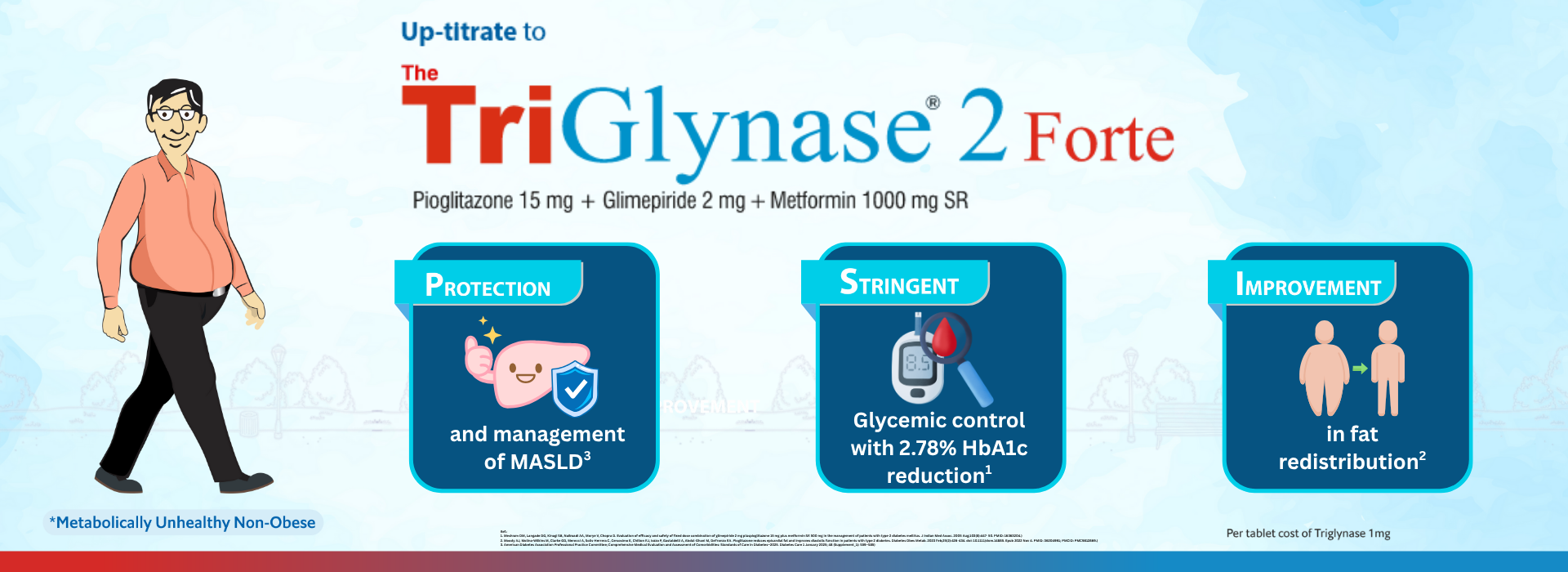
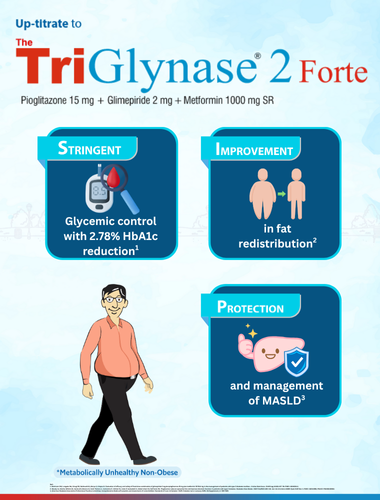
Initiating triple-drug therapy with metformin, glimepiride, and pioglitazone at diagnosis in T2DM patients with HbA1c ≥9% leads to a greater reduction in HbA1c, improved LDL levels, minimal hypoglycemia, and enhanced patient well-being compared to traditional stepwise add-on approaches.

Reference :-

Chauhan, V., Ramesh, Mokta, A., Mokta, K., Ranjan, A., & Mokta, J.K. (2025). Sustained Glycemic Control and Improved Well-being on Early Induction of Triple Drug Therapy in Newly Diagnosed Type 2 Diabetes Mellitus Patients with HbA1c ≥9%: A Prospective, Cross-sectional, and Observational Study. Journal of The Association of Physicians of India, 73(5), 44–48.

Read More
Management of MASLD in Patients With Type 2 Diabetes: A Consensus Report by the American Diabetes Association
Pioglitazone is the only antidiabetic agent with strong evidence supporting its use in patients with type 2 diabetes and biopsy-proven MASH. According to the ADA 2025 consensus, it improves liver histology—reducing steatosis, inflammation, and ballooning—and should be considered in appropriate patients, with caution in those at risk for heart failure or bone loss.

Reference :-

Bril, F., Cusi, K., Lai, L. L., et al. (2024). Management of MASLD in Patients With Type 2 Diabetes: A Consensus Report by the American Diabetes Association. Diabetes Care, 47(6), 637–652.

Read More
Management of MASLD in Patients With Type 2 Diabetes: A Consensus Report by the American Diabetes Association
The 2025 ADA consensus report identifies pioglitazone as a key therapeutic option for patients with type 2 diabetes and biopsy-confirmed MASH, citing evidence from randomized controlled trials demonstrating improvements in steatosis, inflammation, and ballooning. It remains the only glucose-lowering agent with consistent histological benefit in MASH, though caution is advised in patients with heart failure or fracture risk.

Reference :-

Bril, F., Cusi, K., Lai, L. L., et al. (2024). Management of MASLD in Patients With Type 2 Diabetes: A Consensus Report by the American Diabetes Association. Diabetes Care, 47(6), 637–652.

Read More