Study Reveals Real-Time Monitoring Sharply Reduces Postoperative Desaturation Events
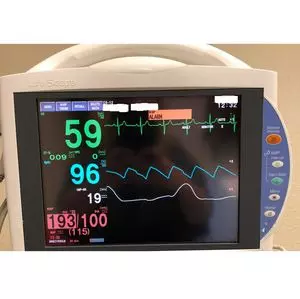


Could your patients be spending less time hypoxemic after noncardiac surgery simply by switching to continuous vital sign monitoring? In an era where postoperative complications can be catastrophic, a new cluster randomized crossover trial offers timely insight into the impact of continuous vs intermittent monitoring on surgical wards.
Study Design: Cluster Randomized Crossover Trial on Surgical Wards
Researchers randomized two postoperative hospital wards to alternate between unblinded continuous monitoring and standard intermittent checks every four weeks for a year. All adult patients recovering from noncardiac surgery and at increased cardiovascular risk (either age ≥65 or age ≥45 with comorbidities) were included in the analysis.
Continuous monitoring involved wrist-mounted devices recording blood pressure, heart rate, and oxygen saturation every 15 seconds. When vital signs breached set thresholds—mean arterial pressure (MAP) <65 mm Hg, SpO2 <90%, heart rate >110 bpm—alerts were sent to the clinical team for immediate action.
Key Findings: Continuous Monitoring Reduces Hypoxemia, Not Hypotension
Duration of hypoxemia (SpO2 <90%) over 48 hours was cut by about 30 minutes in the continuously monitored group compared to intermittent monitoring (median 71 vs 104 minutes; P = .002).
No significant reduction was seen in the duration of hypotension or tachycardia with continuous monitoring.
Both groups had similar rates of clinical interventions, including new oxygen therapy, rapid response calls, ICU transfer, naloxone use, and in-hospital mortality.
Composite Outcomes and Clinical Implications
Composite measures incorporating multiple vital sign abnormalities were improved with continuous monitoring. However, most improvements were driven by reductions in hypoxemia duration, and the clinical significance of a 30-minute reduction remains to be established.
Despite more sensitive detection of abnormalities, overall intervention rates and patient outcomes, including ICU transfer and mortality, did not differ significantly—possibly due to alarm fatigue or the need for larger trials focused on patient-centric endpoints.
Why This Matters: Early Intervention and Patient Safety
Postoperative respiratory events are a leading cause of preventable harm. By catching desaturation events in real time, continuous monitoring may provide opportunities for early, targeted nursing interventions—potentially preventing severe complications. However, more robust studies are needed to determine if these reductions in hypoxemia translate into measurable improvements in hard clinical outcomes.
Conclusion
Continuous postoperative vital sign monitoring significantly reduces the duration of hypoxemia among high-risk patients after noncardiac surgery. While broader clinical benefits remain unproven, these findings support further research and thoughtful consideration of continuous monitoring systems in surgical wards.
Key points
Continuous monitoring reduced time spent with SpO2 <90% by around 30 minutes over 48 hours post-surgery.
No significant change was seen in hypotension or tachycardia duration with continuous monitoring.
Clinical intervention rates (e.g., oxygen therapy, rapid response) were similar between groups.
Composite outcomes of vital sign abnormalities favored continuous monitoring, driven by less hypoxemia.
Larger, patient-centric trials are needed to confirm improved outcomes and guide implementation.
Citation:
Khanna AK, O’Connell NS, Saha AK, et al. Continuous vs Intermittent Postoperative Vital Sign Monitoring: A Cluster Randomized Crossover Trial. JAMA Network Open. 2026;9(3):e263290. doi:10.1001/jamanetworkopen.2026.3290