Study Suggests New Nomogram Accurately Predicts Nosebleed Risk After Nasotracheal Intubation
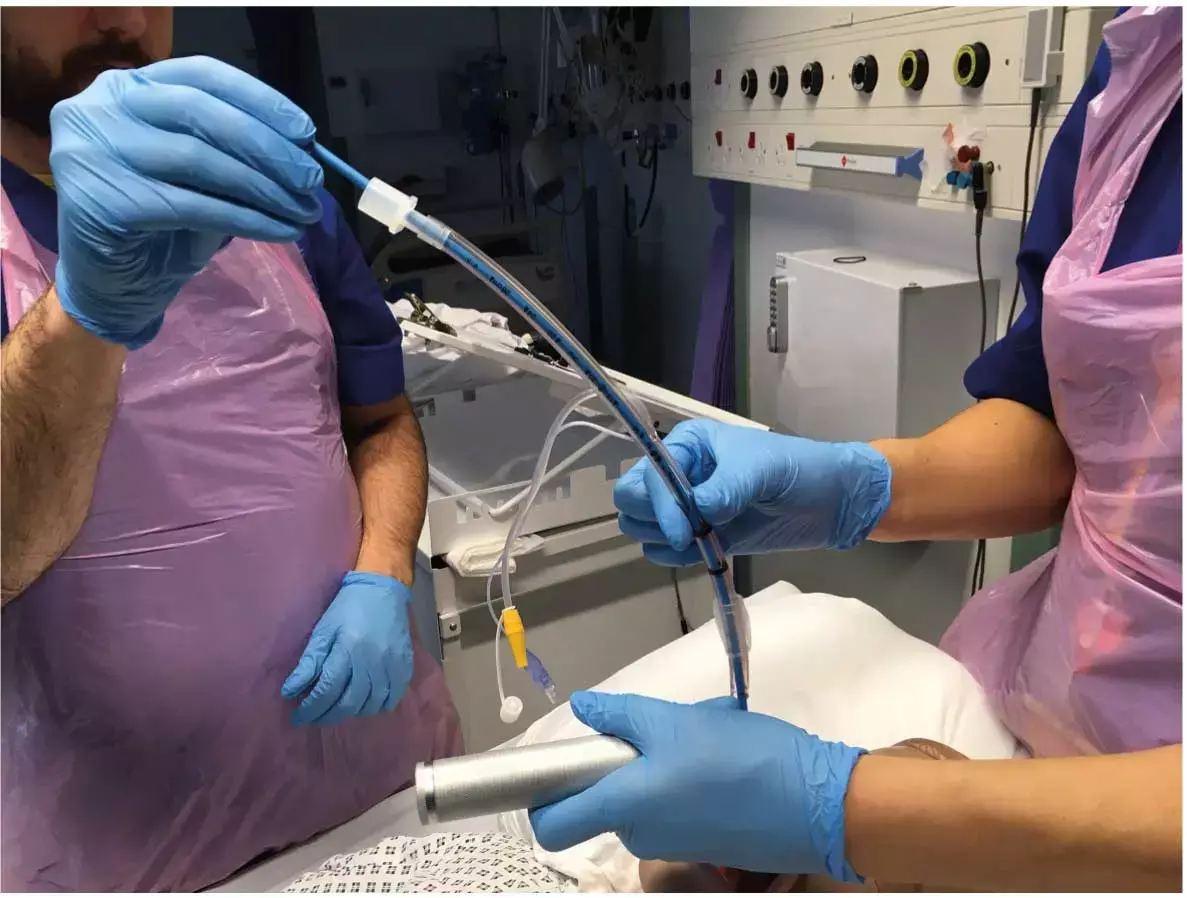


Why Nasotracheal Intubation Matters—and Its Risks
For oral and maxillofacial surgeries, nasotracheal intubation (NTI) is the gold standard for securing the airway, as it keeps the surgical field unobstructed. However, this procedure carries a significant risk: epistaxis (nosebleed), which can complicate surgery, obscure the airway, and in rare cases, threaten patient safety. While strategies like tube softening and vasoconstrictor drops have been used to lower this risk, clinicians have lacked a reliable tool to assess a patient’s likelihood of bleeding before intubation—until now.
Constructing a Practical Risk Prediction Model
A research team at Shanghai Ninth People’s Hospital conducted a retrospective study involving 574 adults who underwent NTI for oral surgery. Researchers collected comprehensive clinical and imaging data, including CT assessments of nasal septum deviation. They used advanced statistical techniques—LASSO regression and multivariate logistic regression—to pinpoint key predictors of post-NTI epistaxis and build a user-friendly nomogram (visual prediction tool) to guide risk assessment.
The Five Key Risk Factors
The study identified five independent predictors of epistaxis after NTI:
Age – Older adults were more likely to experience bleeding due to age-related changes in the nasal mucosa and blood vessels.
History of Radiotherapy/Chemotherapy – Patients with prior treatments were at higher risk, likely because of increased tissue fragility and coagulation issues.
Nasal Intubation Duration – Longer intubation times, often due to resistance, increased the risk of trauma and bleeding.
Maximum Nasal Septum Deviation (Coronal Plane) – Greater deviation, especially in the coronal plane, meant a higher risk of intubation-induced trauma.
Location of Nasal Septum Deviation (Cross-Sectional Plane) – Deviation in the anterior/posterior versus central nasal septum altered bleeding risk.
Excellent Predictive Accuracy and Clinical Utility
The resulting nomogram demonstrated high predictive accuracy, with an area under the curve (AUC) of 0.957 in the training set and 0.900 in the validation set—both well above benchmarks for excellent prediction. Calibration and decision curve analyses confirmed that the model’s risk estimates closely matched real-world outcomes, and its use could guide more beneficial clinical decisions.
Implications for Safer Surgeries
This intuitive model allows anesthesiologists to quickly and objectively assess a patient’s risk of epistaxis before NTI, supporting personalized preventive measures. Incorporating imaging findings, especially septum deviation, into risk stratification can help clinicians choose the best intubation pathway and anticipate complications.
Key Takeaways
Five factors (age, prior radiotherapy/chemotherapy, intubation time, septal deviation amount and location) strongly predict epistaxis risk after NTI.
The nomogram demonstrated superior accuracy (AUC 0.957/0.900) and clinical utility.
Preoperative imaging, particularly for septal deviation, is essential for risk assessment.
The tool supports tailored preventive strategies and improved safety in oral/maxillofacial surgeries.
Future multicenter studies and larger datasets are needed to further validate and refine this model.
Citation:
Chen J, Fan H, Wang Y, Zhu Y, Zhou R, Kang H, Jiang H. Construction and evaluation of a nomogram prediction model for the risk of epistaxis following nasotracheal intubation: a single-center retrospective cohort study. BMC Anesthesiology. 2025;25:264. https://doi.org/10.1186/s12871-025-03132-9