Cutting and Noncompliant Balloons Equal IVL in Safety and Efficacy for Calcified Coronary Lesions: Study


Researchers have identified in a new study that both super-high-pressure noncompliant balloons and cutting balloons are associated with clinical and imaging results similar to intravascular lithotripsy (IVL) in patients with highly calcified coronary lesions treated with percutaneous coronary intervention (PCI). The results, which were submitted at TCT 2025 in San Francisco, indicate that less expensive balloon technologies could be viable and effective substitutes for IVL without undermining procedural safety or stent expansion achievement.
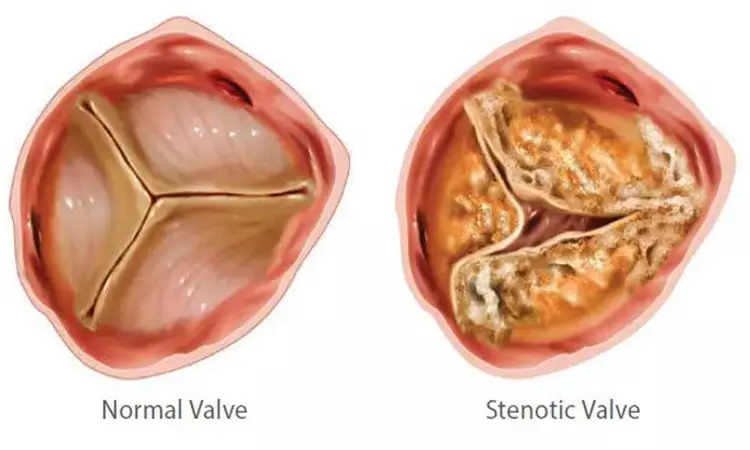
Treatment of highly calcified coronary lesions is still among the most difficult fields of PCI. Intravascular lithotripsy (IVL), FDA-approved in 2021, transformed the practice by employing sonic pressure waves to break up calcified plaques reliably and safely. Nevertheless, its prohibitive cost and restricted reimbursement have been deterrents to its extensive utilization, particularly in resource-poor environments.
Two randomized clinical trials, VICTORY and Short-Cut, were done to assess whether noncompliant balloons (NCBs) and cutting balloons can provide similar procedural and clinical results as IVL, giving interventionalists evidence-based alternatives that lower the total cost of treatment. Both studies contrasted balloon-based calcium modification devices with Shockwave IVL in patients who need stent implantation due to moderately to severely calcified coronary lesions.
• Short-Cut Trial: Performed at 21 US centers, enrolled 413 patients (mean age 72 years; ~75% men).
• VICTORY Trial: Performed in Canada and Switzerland, enrolled 282 patients (mean age 71 years; ~85% men).
Patients with stable or unstable angina or non-ST-elevation acute coronary syndrome (NSTE-ACS) and lesions with ≥70% stenosis or hemodynamic evidence of importance were enrolled. Intravascular imaging (IVUS or OCT) was required before and after lesion preparation in both trials to accurately measure calcium burden and stent expansion.
The major endpoints were:
• In Short-Cut: postprocedural minimal stent area (MSA) at maximal calcification site by IVUS.
• In VICTORY: final stent expansion percentage via OCT.
Secondary endpoints were procedural success, 30-day clinical outcomes, and device-related complications. Short-Cut and VICTORY proved that cutting and noncompliant balloons were noninferior to IVL for primary and secondary outcomes:
Results:
• Mean MSA: 8.6 mm² (IVL) vs 8.0 mm² (cutting balloon).
• Difference of 0.6 mm², establishing noninferiority (P = 0.007).
• Rates of complications and 30-day clinical outcomes were comparable.
• Balloon reduction by cutting saved about $3,602 per case, mostly from reduced costs of devices.
• Both devices had low rates of crossover, suggesting high procedural success.
VICTORY Results:
• Final stent expansion mean: 85.0% (NCB) compared with 84.0% (IVL).
• Noninferiority verified with P < 0.0001, but no superiority identified.
• Procedural time was trending shorter with NCB (mean 70 vs 79 min; P = 0.061).
• Device deployment: 1.35 devices per lesion with NCB vs 1.04 with IVL (P < 0.001).
• Safety: No disparity in 30-day MACE, perforation, or dissection rates.
The Short-Cut and VICTORY trials, which were reported at TCT 2025, represent robust proof that super-high-pressure noncompliant balloons and cutting balloons are noninferior to IVL in preparing heavily calcified coronary lesions in PCI.
Reference:
Bossard M. A randomized, multicenter, non-inferiority comparison of intravascular lithotripsy and super-high-pressure noncompliant balloons for treatment of calcified and refractory coronary lesions: the VICTORY trial. Presented at: TCT 2025. October 26, 2025. San Francisco, CA.