Concomitant PCI With TAVR Appears Feasible in Selected Patients of aortic stenosis: Study
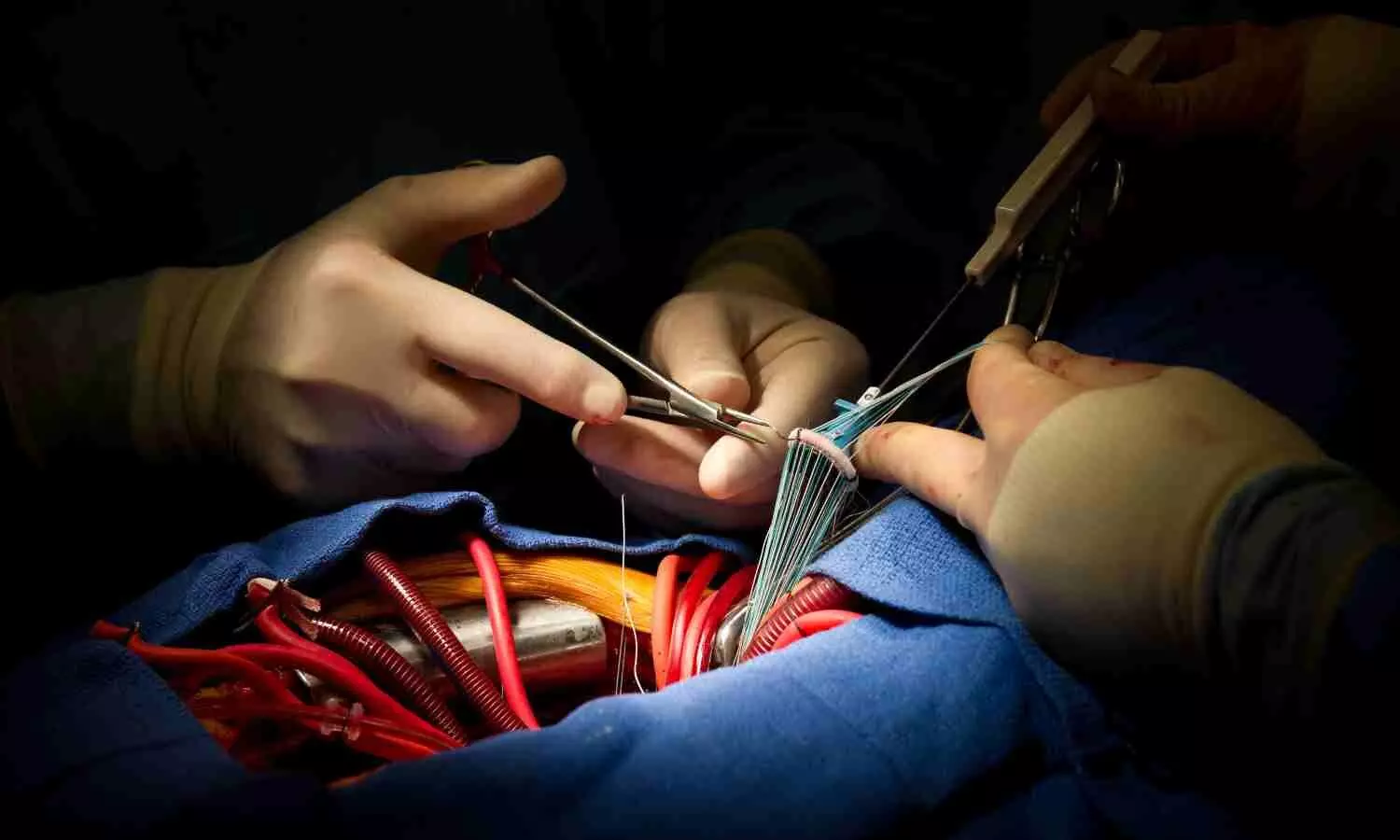


In a small retrospective two-center cohort, concomitant PCI during TAVR was not associated with an observed increase in bleeding or vascular complications compared with TAVR alone among patients with aortic stenosis. The findings support the feasibility of a combined approach in carefully selected patients at experienced, high-volume centers, but are hypothesis-generating and do not establish safety equivalence. The study was published in the Indian Heart Journal by Ravinder S. and colleagues.
To determine the procedural safety and feasibility of one stage intervention, a retrospective two-center case control study was performed, involving consecutive patients with a planned simultaneous procedure of TAVR and PCI. The study subjects included 30 consecutive patients with concomitant TAVR and PCI procedures, in addition to 30 age, sex, and valve type matched control subjects with only TAVR procedures done in the same study period. Percutaneous coronary interventions were done based on angiographic evidence of proximal coronary artery stenosis of at least 70%.
The primary endpoint was the occurrence of any bleeding or vascular complications, based on Valve Academic Research Consortium-3 (VARC-3) criteria until hospital discharge. The secondary endpoints included mortality, myocardial infarction, stroke, acute renal injury, permanent pacemaker placement, fluoroscopy time, and contrast volume administered.
Key findings:
- Comparative analysis between the 30 concomitant TAVR-PCI patients and 30 matched TAVR-alone controls yielded specific quantitative outcomes.
- VARC-3 defined bleeding or vascular complications through hospital discharge occurred in 3 patients (10.0%) in the concomitant TAVR-PCI group compared to 2 patients (6.7%) in the TAVR-alone control group (p > 0.99), demonstrating a non-significant risk difference of 3.3 percentage points (95% CI, −12.7 to 19.7).
- Zero major or life-threatening bleeding complications were observed in either patient cohort prior to discharge.
- Concomitant PCI required significantly longer fluoroscopy time (38.6 ± 23.2 minutes vs. 26.8 ± 10.0 minutes; p < 0.01) and higher total radiocontrast volume (166.7 ± 65.5 mL vs. 99.6 ± 37.7 mL; p < 0.001) relative to TAVR alone.
- Zero in-hospital or 30-day deaths, acute myocardial infarctions, or strokes occurred across both study cohorts.
In summary, performing PCIs alongside TAVRs does not seem to cause increased acute bleeding or vascular complications in certain patients. It is important to note that although the conclusions of this study indicate that these exploratory findings support the feasibility of performing the procedures together, more randomized studies are needed to prove their safety equivalence.
Reference:
Singh, R. R., Prashanth, G. A., Durga, K. L., Chandra, K., Vardhney, P., Narayan, S., Vinod Kumar, B., Shanmugasundaram, S., Sankaran, R., Satyanarayana, M. J., Thanikachalam, S., & Boopathy, S. N. (2026). Outcomes of concomitant PCI and TAVR versus TAVR alone in patients with severe aortic stenosis: A retrospective study. Indian Heart Journal. https://doi.org/10.1016/j.ihj.2026.09.001