
Coronary CT Angiography Adds Limited Predictive Value beyond calcium scoring for First Coronary Events: JAMA
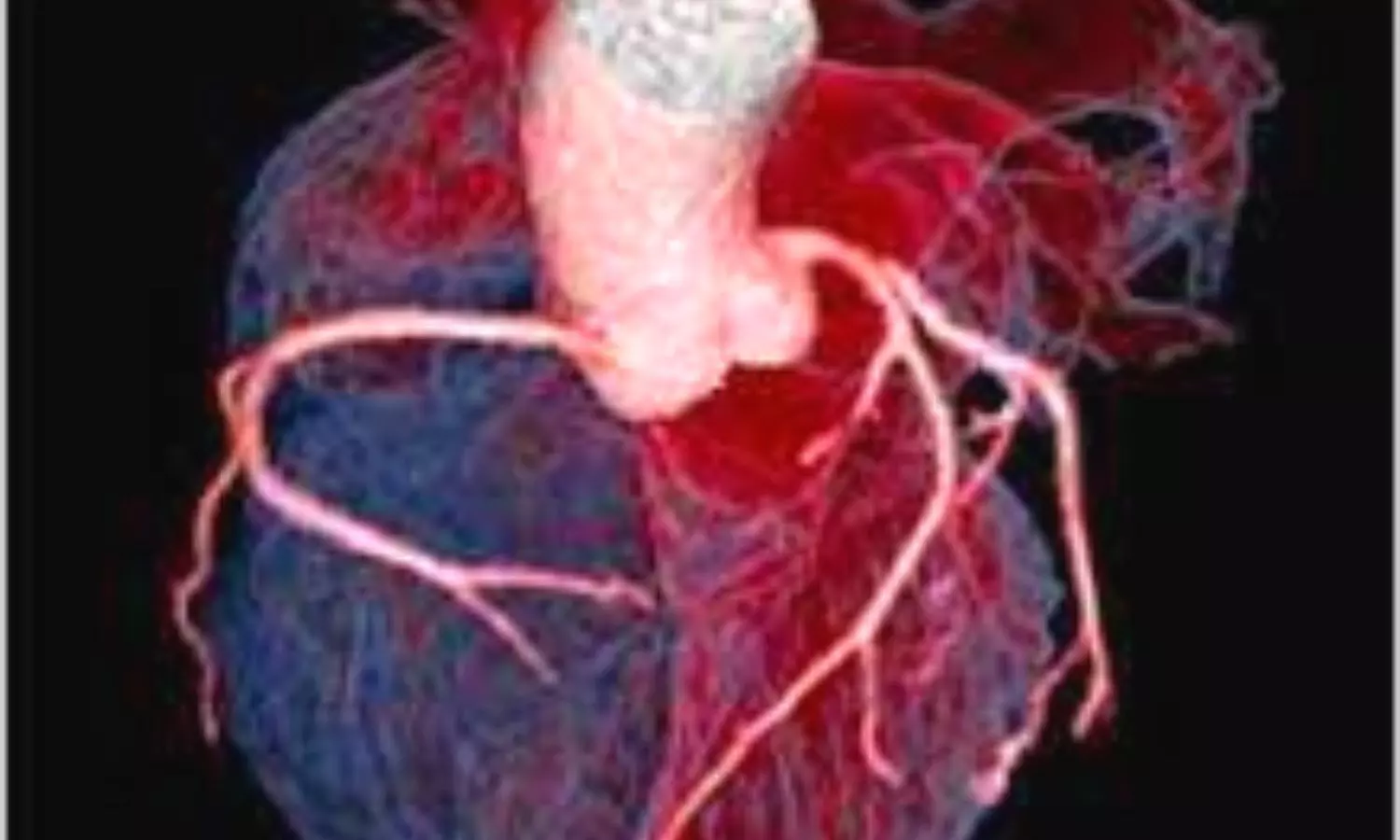


A recent study suggests published in The Journal of the American Medical Association revealed that coronary computed tomography angiography (CCTA) provided only modest improvement beyond traditional risk factors and calcium scoring in identifying individuals at high risk for their first coronary event.
The observational cohort study, across 6 university hospitals in Sweden between 2013 and 2018, assessed 24,791 adults aged 50 to 64 years with no prior cardiovascular disease. The participants were randomly selected from the general population and underwent comprehensive testing, including coronary CT angiography, cardiopulmonary imaging, lab work, and physical examinations. This research monitored outcomes over a median follow-up period of 7.8 years, tracking participants through national registers until September 2024.
The primary outcome measured was the first occurrence of either nonfatal myocardial infarction or death due to coronary heart disease. Over the study period, 304 such events were recorded which represented a relatively low event rate within the cohort.
This research analyzed 3 key indicators from the CCTA scans: the segment involvement score (reflecting the number of coronary artery segments with atherosclerosis), the presence of non-calcified plaque, and evidence of obstructive coronary disease defined as at least 50% narrowing of the artery.
Risk of coronary events increased sharply with more extensive artery involvement. The individuals with a segment involvement score of 3 to 4 had a hazard ratio of 2.71, and those with scores over 4 had a hazard ratio of 5.27, which indicated more than a 5-fold increased risk compared with participants showing no measurable plaque. Non-calcified atherosclerosis was also linked to significantly higher risk, with a hazard ratio of 1.66.
When CCTA results were added to a predictive model using the established pooled cohort equation (PCE) and coronary artery calcium score (CACS), this research observed a modest but statistically significant improvement in overall risk prediction. The accuracy measure known as the C statistic improved from 0.764 to 0.779, with a P-value of .004.
The net reclassification improvement was 0.133, meaning that 14.2% of individuals who experienced coronary events were more accurately moved into a higher-risk category, while only 1.6% without events were incorrectly shifted upward. Since most participants were classified at low risk by the PCE alone, the greatest change occurred in the lowest-risk group.
Source:
Bergström, G., Engström, G., Björnson, E., Adiels, M., Andersson, J. S. O., Andersson, T., Carlhäll, C.-J., Cederlund, K., Erlinge, D., Fagman, E., Good, E., Gummesson, A., Hagström, E., James, S., Janzon, M., Katsoularis, I., Kuhl, J., Löfmark, H., Markstad, H., … Jernberg, T. (2025). Coronary computed tomography angiography in prediction of first coronary events. JAMA: The Journal of the American Medical Association. https://doi.org/10.1001/jama.2025.21077

