DCB-Based PCI safe and Improves Outcomes in High Bleeding Risk Patients, suggests study
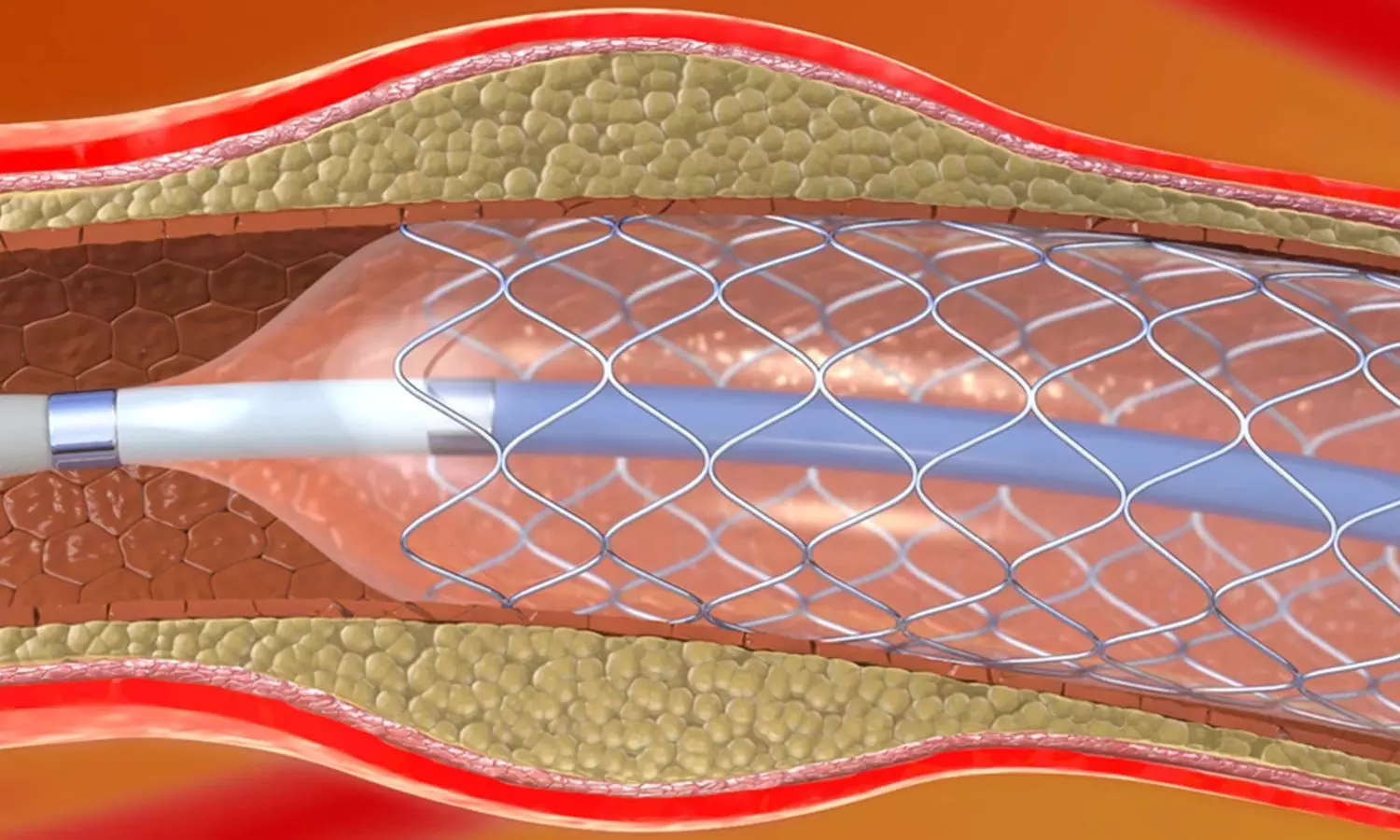


Researchers have found in a new study that among patients with high bleeding risk, percutaneous coronary intervention using drug-coated balloons was associated with a significantly lower risk of major adverse cardiovascular events compared with treatment using drug-eluting stents alone. These findings indicate that drug-coated balloon-based percutaneous coronary intervention may be an effective and safer treatment strategy for improving clinical outcomes in patients with high bleeding risk.
Managing patients with high bleeding risk who require percutaneous coronary intervention remains challenging, and available data are limited. This study investigated the clinical outcomes of drug-coated balloon-based percutaneous coronary intervention compared with drug-eluting stent-only percutaneous coronary intervention in patients with high bleeding risk undergoing percutaneous coronary intervention. The investigators included 652 consecutive patients with high bleeding risk undergoing drug-coated balloon-based percutaneous coronary intervention and compared them with 652 propensity-matched patients who received conventional percutaneous coronary intervention with second-generation drug-eluting stents. Patients were followed for two years to assess major adverse cardiovascular events.
Results showed that baseline clinical characteristics were comparable between the groups. In the drug-coated balloon-based percutaneous coronary intervention group, 71.6 percent of patients were successfully treated with drug-coated balloon alone. Patients in the drug-coated balloon-based percutaneous coronary intervention group had lower cardiac mortality at two years compared with those in the drug-eluting stent-only group (2.0 percent versus 5.2 percent; hazard ratio 0.37; 95 percent confidence interval 0.18 to 0.74; p = 0.005). Rates of target vessel revascularization (2.5 percent versus 6.0 percent; hazard ratio 0.43; 95 percent confidence interval 0.24 to 0.78; p = 0.005) and major bleeding events (1.4 percent versus 5.4 percent; hazard ratio 0.26; 95 percent confidence interval 0.12 to 0.58; p = 0.001) were also lower with drug-coated balloon-based percutaneous coronary intervention than with drug-eluting stent-only percutaneous coronary intervention. Myocardial infarction events were comparable between the two groups. In a multivariable model, drug-coated balloon-based percutaneous coronary intervention was independently associated with a reduced risk of two-year cardiac death, target vessel revascularization, and major bleeding.
In patients with high bleeding risk, drug-coated balloon-based percutaneous coronary intervention was associated with a significantly lower risk of major adverse cardiovascular events compared with drug-eluting stent-only treatment. These findings suggest that drug-coated balloon-based percutaneous coronary intervention may be a viable treatment strategy for improving outcomes in patients with high bleeding risk.