
Eating an avocado a day lowers heart disease risk factor for people with obesity: Study shows
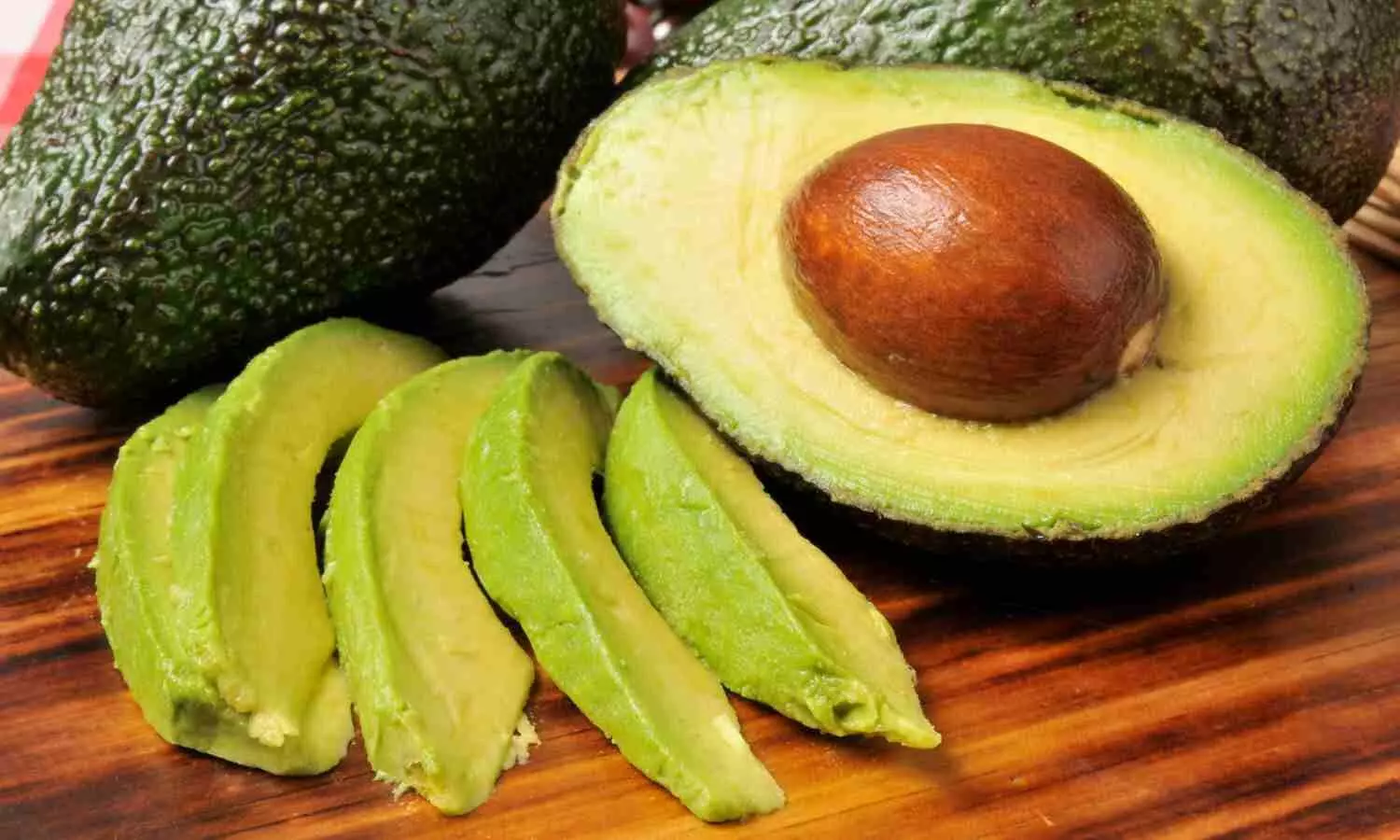


Eating an avocado every day may decrease heart disease risk in adults with obesity, according to a recent study led by researchers in the Penn State Department of Nutritional Sciences and published in the Journal of Clinical Lipidology.
The team found that regular avocado consumption was associated with a reduced concentration of low-density lipoprotein (LDL) particles — proteins that transport cholesterol through the body — in the blood by an amount that corresponds to an approximate 4% reduction in heart disease risk.
“If people want to improve the quality of their diet, making one small change might be a more feasible strategy than attempting to change their entire diet,” said Janhavi Damani, postdoctoral scholar at Penn State and first author of the study. “For people with obesity, including avocados in their daily diet might be a good starting place.”
LDL particles are a separate risk factor for heart disease from LDL cholesterol — the so-called “bad cholesterol” that is a significant risk for heart disease. The risk posed by LDL particles is typically higher in people with abdominal obesity, the researchers said.
LDL cholesterol must be transported through the body by a protein particle. When there are more protein particles carrying LDL, this increases the risk for heart disease, even if the amount of cholesterol remains the same.
“Imagine two people with the same high levels of LDL cholesterol,” Damani said. “Person A carries their cholesterol in fewer, larger LDL particles, and Person B carries their cholesterol in more, smaller LDL particles. Person B’s heart disease risk would be higher because their overall particle count is higher even though a test of their LDL cholesterol would look identical.”
These small particles can more easily penetrate artery walls and contribute to build-up on artery walls known as plaque, Damani explained. Plaque contributes to heart disease risk by restricting the amount of blood that can fit through a blood vessel and reducing the blood vessel’s flexibility. This means that when a person’s heart is working the hardest — due to exertion, heat, stress or any reason — their blood pressure will increase more because the blood vessel is unable to compensate for the increased load, which can trigger a cardiac event like a heart attack.
In this study, the researchers analyzed data originally collected from 786 participants in the Habitual Diet and Avocado Trial, a six-month study of adults 25 years and older. Men were eligible for the study if they had a waist circumference greater than 40 inches, and women were eligible if they had a waist circumference greater than 35 inches.
Half of the participants were instructed to maintain their normal diet and activity. The other half were provided with one avocado to consume each day and were instructed to maintain their normal diet and activity.
Researchers in the Habitual Diet and Avocado Trial found that adding avocado to the diets of people with obesity did not change weight or waist circumference, but that it could reduce levels of LDL cholesterol.
In the current study, the researchers compared blood samples taken at the beginning and end of the study. Over the course of the study, levels of LDL particles in the avocado-per-day group decreased by 49 nanomoles per liter, which corresponds to an approximate 4% reduction in heart disease risk, the researchers said.
"Four percent is a modest reduction compared with the 14–29% lower heart disease risk associated with improving the overall diet,” Damani said. “However, it is a step in the right direction."
Additionally, regardless of study participants’ sex, race, ethnicity, age or body mass index, they were equally likely to experience improvement in the LDL particle levels. This indicates that anyone with obesity could benefit from avocado consumption, the researchers explained, with the added caution that people should speak to a registered dietitian nutritionist or their physician for personalized, expert guidance on improving their diets.
“Penn State researchers demonstrated several years ago that avocado consumption could reduce LDL cholesterol and levels of LDL particles,” said Kristina Petersen, associate professor of nutritional sciences and senior author of this study. “But in that study, the researchers controlled participants’ entire diets throughout the experiment. This study demonstrated benefits in the real world, where people’s diets are much less predictable. In the course of people’s normal lives, avocado consumption still contributes to a healthier diet.”
Reference:
Damani J, Kris-Etherton P, Matthan N ... Effect of incorporating 1 avocado per day on lipoprotein particle concentrations compared to habitual intake in adults with abdominal obesity: An ancillary study of the Habitual Diet and Avocado Trial, a randomized controlled trial, Journal of Clinical Lipidology, DOI: 10.1016/j.jacl.2026.06.005
