Medical Dialogues
  • Dermatology
Login Register
This site is intended for healthcare professionals only
Login Register
  • MD Brand Connect
  • Webinars
  • Vaccine Hub
  • MDTV
    • Breaking News
    • Medical News Today
    • Health News Today
    • Latest
    • Journal Club
    • Medico Legal Update
    • Latest Webinars
    • MD Shorts
    • Health Dialogues
  • Fact Check
  • Health Dialogues
Medical Dialogues
  • Medical News & Guidelines
      • Anesthesiology
      • Cardiology and CTVS
      • Critical Care
      • Dentistry
      • Dermatology
      • Diabetes and Endocrinology
      • ENT
      • Gastroenterology
      • Medicine
      • Nephrology
      • Neurology
      • Obstretics-Gynaecology
      • Oncology
      • Ophthalmology
      • Orthopaedics
      • Pediatrics-Neonatology
      • Psychiatry
      • Pulmonology
      • Radiology
      • Surgery
      • Urology
      • Laboratory Medicine
      • Diet
      • Nursing
      • Paramedical
      • Physiotherapy
  • Health news
      • Doctor News
      • Government Policies
      • Hospital & Diagnostics
      • International Health News
      • Medical Organization News
      • Medico Legal News
      • NBE News
      • NMC News
  • Fact Check
      • Bone Health Fact Check
      • Brain Health Fact Check
      • Cancer Related Fact Check
      • Child Care Fact Check
      • Dental and oral health fact check
      • Diabetes and metabolic health fact check
      • Diet and Nutrition Fact Check
      • Eye and ENT Care Fact Check
      • Fitness fact check
      • Gut health fact check
      • Heart health fact check
      • Kidney health fact check
      • Medical education fact check
      • Men's health fact check
      • Respiratory fact check
      • Skin and hair care fact check
      • Vaccine and Immunization fact check
      • Women's health fact check
  • AYUSH
    • Ayurveda
    • Homeopathy
    • Siddha
    • Unani
    • Yoga
  • State News
      • Andaman and Nicobar Islands
      • Andhra Pradesh
      • Arunachal Pradesh
      • Assam
      • Bihar
      • Chandigarh
      • Chattisgarh
      • Dadra and Nagar Haveli
      • Daman and Diu
      • Delhi
      • Goa
      • Gujarat
      • Haryana
      • Himachal Pradesh
      • Jammu & Kashmir
      • Jharkhand
      • Karnataka
      • Kerala
      • Ladakh
      • Lakshadweep
      • Madhya Pradesh
      • Maharashtra
      • Manipur
      • Meghalaya
      • Mizoram
      • Nagaland
      • Odisha
      • Puducherry
      • Punjab
      • Rajasthan
      • Sikkim
      • Tamil Nadu
      • Telangana
      • Tripura
      • Uttar Pradesh
      • Uttrakhand
      • West Bengal
  • Medical Education
      • Ayush Education News
      • Dentistry Education News
      • Medical Admission News
      • Medical Colleges News
      • Medical Courses News
      • Medical Universities News
      • Nursing education News
      • Paramedical Education News
      • Study Abroad
  • Industry
      • Health Investment News
      • Health Startup News
      • Medical Devices News
      • Pharma News
      • Pharmacy Education News
      • AI and healthcare
      • Industry Perspective
  • MDTV
      • Health Dialogues MDTV
      • Health News today MDTV
      • Latest Videos MDTV
      • Latest Webinars MDTV
      • MD shorts MDTV
      • Medical News Today MDTV
      • Medico Legal Update MDTV
      • Top Videos MDTV
      • Health Perspectives MDTV
      • Journal Club MDTV
      • Medical Dialogues Show
This site is intended for healthcare professionals only
LoginRegister
Medical Dialogues
LoginRegister
  • Home
  • Medical news & Guidelines
    • Anesthesiology
    • Cardiology and CTVS
    • Critical Care
    • Dentistry
    • Dermatology
    • Diabetes and Endocrinology
    • ENT
    • Gastroenterology
    • Medicine
    • Nephrology
    • Neurology
    • Obstretics-Gynaecology
    • Oncology
    • Ophthalmology
    • Orthopaedics
    • Pediatrics-Neonatology
    • Psychiatry
    • Pulmonology
    • Radiology
    • Surgery
    • Urology
    • Laboratory Medicine
    • Diet
    • Nursing
    • Paramedical
    • Physiotherapy
  • Health news
    • Doctor News
    • Government Policies
    • Hospital & Diagnostics
    • International Health News
    • Medical Organization News
    • Medico Legal News
    • NBE News
    • NMC News
  • Fact Check
    • Bone Health Fact Check
    • Brain Health Fact Check
    • Cancer Related Fact Check
    • Child Care Fact Check
    • Dental and oral health fact check
    • Diabetes and metabolic health fact check
    • Diet and Nutrition Fact Check
    • Eye and ENT Care Fact Check
    • Fitness fact check
    • Gut health fact check
    • Heart health fact check
    • Kidney health fact check
    • Medical education fact check
    • Men's health fact check
    • Respiratory fact check
    • Skin and hair care fact check
    • Vaccine and Immunization fact check
    • Women's health fact check
  • AYUSH
    • Ayurveda
      • Ayurveda Giuidelines
      • Ayurveda News
      • Top Ayurveda News
    • Homeopathy
      • Homeopathy Guidelines
      • Homeopathy News
    • Siddha
      • Siddha Guidelines
      • Siddha News
    • Unani
      • Unani Guidelines
      • Unani News
    • Yoga
      • Yoga Guidelines
      • Yoga News
  • State News
    • Andaman and Nicobar Islands
    • Andhra Pradesh
    • Arunachal Pradesh
    • Assam
    • Bihar
    • Chandigarh
    • Chattisgarh
    • Dadra and Nagar Haveli
    • Daman and Diu
    • Delhi
    • Goa
    • Gujarat
    • Haryana
    • Himachal Pradesh
    • Jammu & Kashmir
    • Jharkhand
    • Karnataka
    • Kerala
    • Ladakh
    • Lakshadweep
    • Madhya Pradesh
    • Maharashtra
    • Manipur
    • Meghalaya
    • Mizoram
    • Nagaland
    • Odisha
    • Puducherry
    • Punjab
    • Rajasthan
    • Sikkim
    • Tamil Nadu
    • Telangana
    • Tripura
    • Uttar Pradesh
    • Uttrakhand
    • West Bengal
  • Medical Education
    • Ayush Education News
    • Dentistry Education News
    • Medical Admission News
    • Medical Colleges News
    • Medical Courses News
    • Medical Universities News
    • Nursing education News
    • Paramedical Education News
    • Study Abroad
  • Industry
    • Health Investment News
    • Health Startup News
    • Medical Devices News
    • Pharma News
      • CDSCO (Central Drugs Standard Control Organisation) News
    • Pharmacy Education News
    • AI and healthcare
    • Industry Perspective
  • Home
  • Cardiology-CTVS
  • Cardiology & CTVS News
  • From Obesity to Heart...

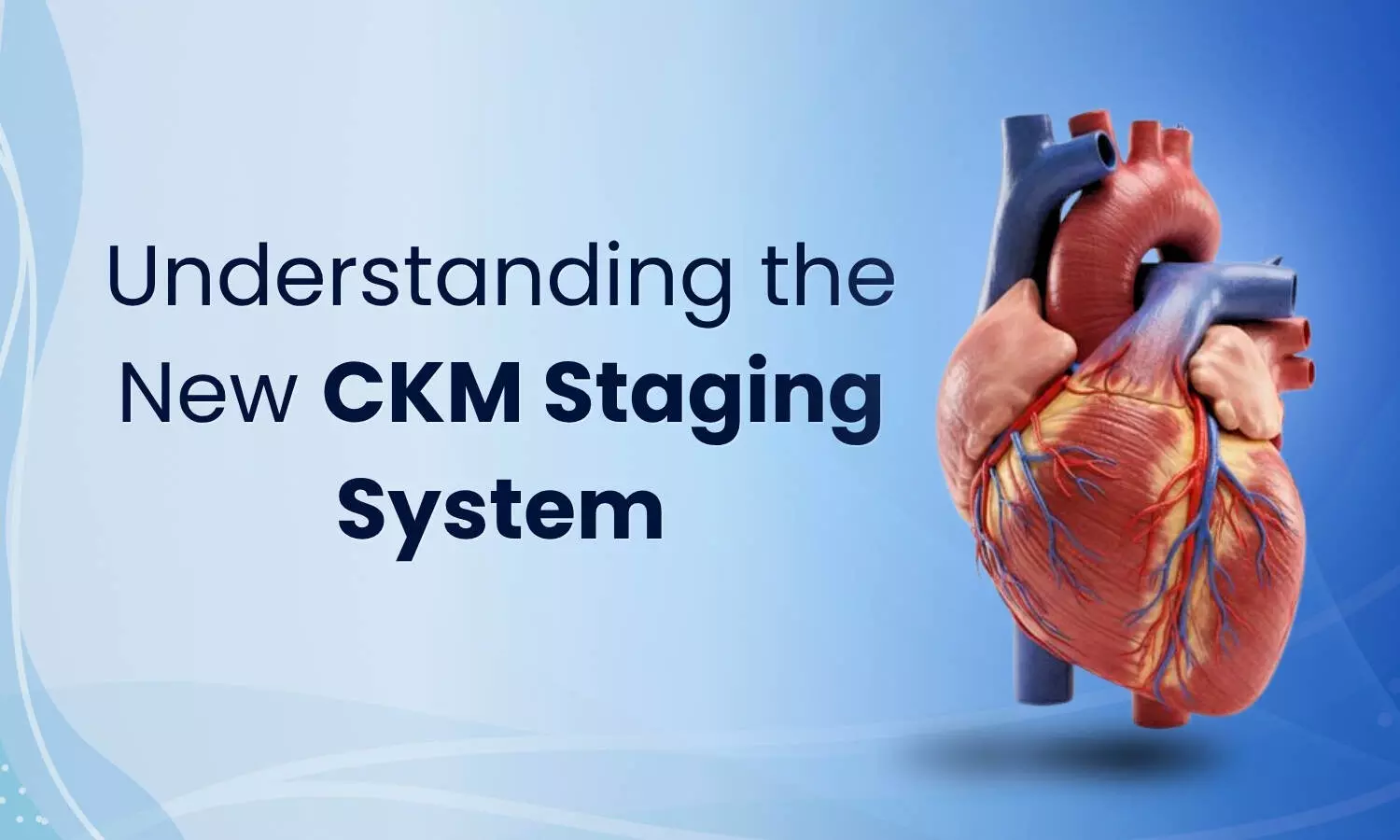
From Obesity to Heart Failure: Understanding the New CKM Staging System
Written By : Prem Aggarwal Published On 2026-06-18T16:00:28+05:30  |  Updated On 18 Jun 2026 4:00 PM IST
From Obesity to Heart Failure: Understanding the New CKM Staging System
  • facebook
  • twitter
  • linkedin
  • whatsapp
  • Telegram
  • Email
For decades, medicine has treated obesity, diabetes, kidney disease, and heart disease as separate conditions. A patient would visit one specialist for diabetes, another for kidney disease, and a third for heart disease. However, modern science increasingly shows that these conditions are deeply interconnected and often represent different stages of the same disease process.
Recognizing this reality, the American Heart Association (AHA), American College of Cardiology (ACC), American Diabetes Association (ADA), and American Society of Nephrology (ASN) have jointly released the 2026 Guideline for the Prevention, Detection, Evaluation, and Management of Cardiovascular-Kidney-Metabolic (CKM) Syndrome.
The guideline introduces a revolutionary concept: CKM Syndrome—a unified framework that links obesity, diabetes, chronic kidney disease, and cardiovascular disease into one continuum of health and disease. For countries like India, where obesity, diabetes, hypertension, chronic kidney disease, and cardiovascular disease are increasing simultaneously, this framework may fundamentally change how we approach prevention and treatment.
What is CKM Syndrome?
In simple terms, CKM Syndrome recognizes that excess body fat, abnormal metabolism, kidney dysfunction, and cardiovascular disease are not isolated disorders. They interact continuously and accelerate one another. An overweight person develops insulin resistance. Insulin resistance progresses to diabetes. Diabetes damages the kidneys and blood vessels. Kidney disease increases cardiovascular risk. Ultimately, the patient develops heart attack, stroke, heart failure, or kidney failure.
The guideline therefore defines CKM Syndrome as a systemic disorder arising from interactions between metabolic risk factors, kidney disease, and cardiovascular disease, leading to adverse health outcomes.
Why a Staging System?
The primary objective of CKM staging is not merely classification. Its purpose is to identify patients early enough to prevent progression. Just as cancer staging helps determine treatment intensity, CKM staging helps physicians identify risk, personalize therapy, and intervene before irreversible complications occur. The earlier the stage, the greater the opportunity to prevent future cardiovascular and kidney disease.
Stage 0: The Healthy Stage
Stage 0 represents individuals who do not have obesity, diabetes, kidney disease, or cardiovascular disease. These individuals may still have genetic risk but currently have no significant metabolic abnormalities.
The focus at this stage is health preservation through healthy nutrition, regular physical activity, adequate sleep, smoking avoidance and maintenance of ideal body weight.
The message is simple: The best treatment for CKM Syndrome is never entering the syndrome at all.
Stage 1: The Obesity Stage
According to the guideline, the journey often begins with excess or dysfunctional adiposity. This means abnormal body fat accumulation, particularly central obesity. A patient may appear healthy and may not yet have diabetes or hypertension. However, obesity has already initiated inflammatory, metabolic, and hormonal changes that increase future risk. In India, where abdominal obesity is common even among individuals with relatively normal BMI, this stage deserves special attention. The goal is aggressive lifestyle intervention and weight reduction before metabolic complications emerge. This stage reminds us that obesity is not merely a cosmetic issue—it is a disease that initiates the CKM pathway.
Stage 2: The Metabolic and Kidney Disease Stage
Stage 2 is reached when metabolic abnormalities or chronic kidney disease become evident. Common examples include type 2 diabetes, prediabetes, hypertension, dyslipidemia, chronic kidney disease. At this stage, the patient may still have no symptoms. Unfortunately, many Indians first enter the healthcare system at this stage after routine testing reveals elevated blood sugar, abnormal kidney function, or uncontrolled blood pressure. This stage offers one of the greatest opportunities for prevention. Evidence-based therapies, including blood pressure control, glucose management, lipid lowering, and kidney-protective treatments, can dramatically alter the patient’s future trajectory.
Stage 3: Silent Cardiovascular Disease
Stage 3 is perhaps the most important and least understood stage. Here, cardiovascular disease has already begun but remains clinically silent. Patients may have coronary artery calcium deposits, subclinical atherosclerosis, early heart failure changes, very high cardiovascular risk scores, advanced kidney disease associated with markedly increased cardiovascular risk. The patient feels well. The ECG may be normal. The clinical examination may be unremarkable. Yet the disease process is already active. This stage highlights the growing importance of advanced risk assessment tools, coronary calcium scoring, biomarkers, and modern cardiovascular risk calculators. The guideline emphasizes that identifying Stage 3 patients allows clinicians to intensify therapy before the first heart attack or stroke occurs.
Stage 4: Clinical Cardiovascular Disease
Stage 4 represents established cardiovascular disease. Examples include heart attack, angina, stroke, heart failure, peripheral arterial disease. By this stage, the interaction between obesity, diabetes, kidney disease, and cardiovascular disease has become clinically evident. Management is no longer purely preventive. The goal now is to reduce hospitalizations, prevent disability, slow kidney deterioration, improve quality of life, and reduce mortality. The guideline strongly emphasizes comprehensive management of all CKM components rather than focusing on only one disease.
What Does This Mean for India?
India is often referred to as the diabetes capital of the world. Simultaneously, obesity is increasing in both urban and rural populations. Chronic kidney disease is rising rapidly, while cardiovascular disease remains the leading cause of death. Traditionally, healthcare systems have managed these conditions separately. The CKM framework encourages a more integrated approach. A diabetic patient should be assessed for kidney disease. A kidney patient should undergo cardiovascular risk assessment. An obese patient should be screened for metabolic abnormalities. A cardiology patient should be evaluated for diabetes and CKD. This integrated model may be particularly valuable in India, where late presentation and fragmented care remain major challenges.
The Most Important Message
The greatest contribution of the CKM guideline is its shift in thinking. It asks clinicians to move away from treating isolated diseases and instead manage a connected biological system. The future of medicine may no longer be about asking: “Does this patient have diabetes?” or “Does this patient have heart disease?”
Instead, the more relevant question may become: “What CKM stage is this patient in, and how can we prevent progression to the next stage?”
That simple shift in perspective has the potential to prevent millions of cardiovascular events, kidney failures, and premature deaths worldwide.
The CKM era has begun. The challenge now is to translate this scientific framework into routine clinical practice.
References:
  • 1.Sadiya S. Khan,Nicole Bhave,Roger S. Blumenthal,Josef Coresh,Xiaoning Huang,Joshua J. Joseph,Amit Khera,Jennifer E. Ho,Donald M. Lloyd-Jones,Cecilia C. Low Wang,Yuan Lu,Pamela B. Morris,Khurram Nasir,Pradeep Natarajan,Janani Rangaswami,Fatima Rodriguez,Laurence S. Sperling,Salim S. Virani,Sui Zhang,Chiadi E. Ndumele, Use of Predicted Risk and Expected Benefit to Guide Decision-Making in Cardiovascular-Kidney-Metabolic Syndrome for the Primary Prevention of Cardiovascular Disease: A Scientific Statement From the American Heart Association and American College of Cardiology Circulation -
obesityheart failureckm stagingcardiovascular disease
Prem Aggarwal
Prem Aggarwal

Dr Prem Aggarwal, (MD Medicine, DNB Medicine, DNB Cardiology) is a Cardiologist by profession and also the Co-founder and Chairman of Medical Dialogues. He focuses on news and perspectives about cardiology, and medicine related developments at Medical Dialogues. He can be reached out at drprem@medicaldialogues.in

Show Full Article
Next Story

Editorial

From Obesity to Heart Failure: Understanding the New CKM Staging System

From Obesity to Heart Failure: Understanding the New CKM Staging System

Safety and Effectiveness of Vedolizumab in Indian Patients with Inflammatory Bowel Disease: Results from a Phase 4 Study

Safety and Effectiveness of Vedolizumab in Indian Patients with Inflammatory Bowel Disease: Results...

Targeted Primary Prevention with Low-Dose Aspirin in Chronic Kidney Disease: The Predictive Role of Lipoprotein(a) Bio-Stratification- Dr Pradeep Kumar Meena

Targeted Primary Prevention with Low-Dose Aspirin in Chronic Kidney Disease: The Predictive Role of...

Dengue in India: Understanding the Drivers of a Rising Burden & Evolving Patterns

Dengue in India: Understanding the Drivers of a Rising Burden & Evolving Patterns

Dengue in Adults: From Early Warning Signs to Hospitalization, Recovery, and Long-Term Impact

Dengue in Adults: From Early Warning Signs to Hospitalization, Recovery, and Long-Term Impact

View All

Journal Club Today

New Review Questions Benefits of Calcium and Vitamin D for Stronger Bones

New Review Questions Benefits of Calcium and Vitamin D for Stronger Bones

View All

Health News Today

Health Bulletin 17/June/2026

Health Bulletin 17/June/2026

View All
© 2022 All Rights Reserved.
Powered By: Hocalwire
X
We use cookies for analytics, advertising and to improve our site. You agree to our use of cookies by continuing to use our site. To know more, see our Cookie Policy and Cookie Settings.Ok