
"Goldilocks Zone" of Lipid Range to Minimize Mortality Risk: JACC Adv., February 2026
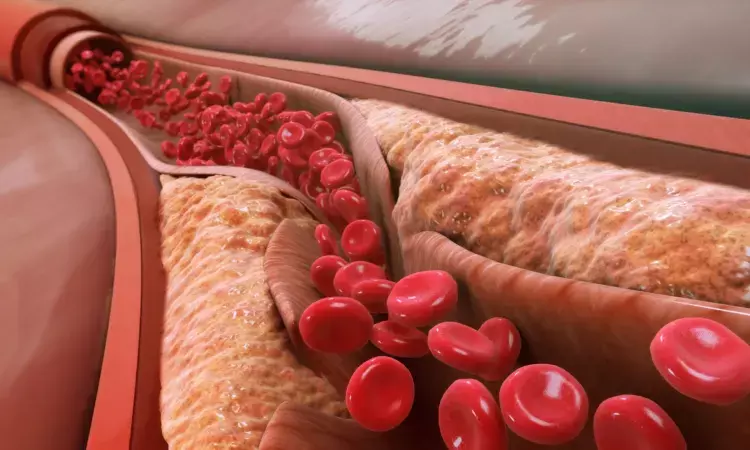


Targeting a precise "Goldilocks zone" where low-density lipoprotein cholesterol (LDL-C) remains within 3.600 to 4.204 mmol/L and high-density lipoprotein cholesterol (HDL-C) stays between 1.421 and 1.699 mmol/L may be the definitive strategy for minimizing mortality and cardiovascular risk in the aging population, as a recent study has shown.
The study was published in the Journal of the American College of Cardiology (JACC): Advances in February 2026.
Addressing the Lipid Management Gap in Geriatrics
While traditional guidelines advocate for aggressive cholesterol reduction, the foundational assumption that lower levels always equal better outcomes remains unproven in the elderly, creating a clinical gap in managing aging populations. To address this, the study aimed to evaluate the relationships of LDL-C and HDL-C with cardiovascular disease (CVD) risk in older adults.
Study Overview
The prospective cohort study utilized the U.K. Biobank (UKB) to monitor 150,798 participants aged 60 and older over a multi-year follow-up ending in 2022, employing multivariable Cox regression and restricted cubic splines (RCS) for data analysis. Investigators excluded individuals with pre-existing malignancies or baseline heart conditions to ensure a primary prevention focus, evaluating primary endpoints of incident disease and cardiovascular mortality across six percentile-stratified lipid subgroups.
Key Findings of the Study Include:
- Study-identified Paradoxical LDL-C Risks: A U-shaped link revealed that low-density lipoprotein cholesterol levels below 2.211 mmol/L were associated with a 27% higher risk of cardiovascular death compared to the reference range.
- Research-validated HDL-C Complexity: Findings showed that high-density lipoprotein cholesterol displays an L-shaped curve for incident disease but a U-shaped mortality curve, with the highest concentrations over 2.174 mmol/L linked to a 26% increase in fatal cardiovascular events.
- Investigative Synergistic Hazard Escalation: When both lipid metrics deviated simultaneously from the optimal thresholds, participants experienced a 55% higher risk of developing new cardiovascular conditions.
- Cohort-confirmed Age Gradients: For every incremental rise in the risk tier, cardiovascular mortality increased by 12% in the younger-old group, significantly higher than the 7% rise seen in those aged 65 and older.
- Evidence-based Goldilocks Thresholds: Minimal risk was consistently observed within the "Goldilocks zone" of 3.600-4.204 mmol/L for LDL-C and 1.421-1.699 mmol/L for HDL-C.
Potential Clinical Implications
For practicing physicians, these results highlight the necessity of transitioning from a single-marker focus to integrated risk models that evaluate both lipid metrics simultaneously, as concurrent deviations from ideal ranges create a compounded risk for cardiovascular events. The data support moving away from uniform aggressive reduction strategies toward personalized, age-stratified approaches that maintain metabolic equilibrium and prevent the potential dangers of excessively low cholesterol levels in older populations.
Reference
Ye X, Du S, Chen S, et al. U-Shaped Lipid-CVD Links in Older Adults: Reversed LDL-C and HDL-C Associations and Goldilocks Zone. JACC Adv. 2026;5(2):102544.
