Left Atrial Appendage Closure Not Noninferior to Medical Therapy in High-Risk Atrial Fibrillation: Study
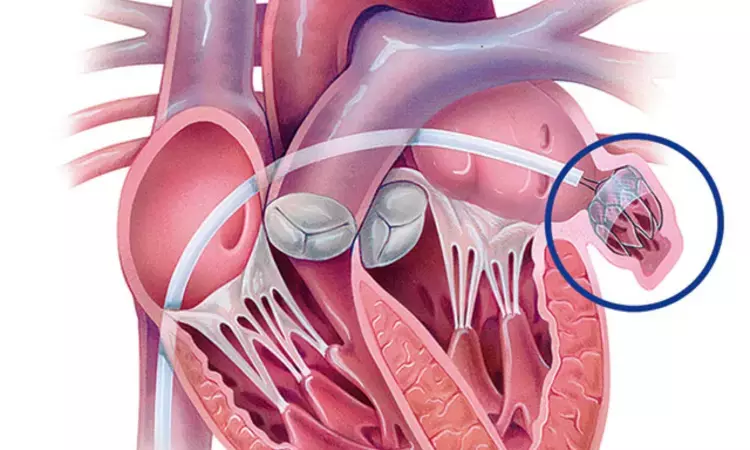


Researchers have discovered in a new research that among patients with atrial fibrillation at high risk for both stroke and bleeding, left atrial appendage closure failed to demonstrate noninferiority compared to physician-directed best medical care. There was no advantage in the composite outcome, including stroke, systemic embolism, major bleeding, or cardiovascular/unexplained death. The study was published in The New England Journal of Medicine by Ulf L. and colleagues.
Atrial fibrillation is associated with a high risk of thromboembolic complications, particularly stroke, and managing it is challenging in patients with high bleeding risks. Although LAA closure has emerged as an alternative for managing such patients, evidence on its relative effectiveness compared with physician-directed therapy, including DOACs, is limited.
This multicenter randomized clinical trial recruited 912 adult patients from Germany with AF at high risk of both stroke and bleeding. Patients were randomized to undergo catheter-based LAA closure or receive best medical therapy according to the physician's choice, including direct oral anticoagulants when appropriate.
The main outcome event was a composite of stroke (ischemic or hemorrhagic), systemic embolism, major bleeding, or cardiovascular or unexplained death. Time-to-event data were used to analyze the outcome. The trial was designed as a noninferiority trial with a noninferiority margin of a hazard ratio of 1.3.
Key findings:
With a median follow-up of 3 years (interquartile range of 1.7 to 4.7 years), there was an increased incidence of primary endpoint events in the device group compared to the medical therapy group.
A total of 155 patients in the LAA closure group experienced a primary endpoint event, which translates into an incidence of 16.8 per 100 patient-years, compared to 127 patients in the medical therapy group, resulting in an incidence of 13.3 per 100 patient-years.
In addition, the restricted mean survival time was -0.36 years (95% CI: -0.70 to -0.01).
Moreover, the study did not fulfill the noninferiority criterion (P = 0.44).
These observations clearly illustrate that LAA closure did not yield comparable outcomes to physician-directed therapy.
Serious adverse events were observed in both groups, with 368 (82.5%) of the patients in the device group and 342 (77.4%) in the medical therapy group.
In patients with atrial fibrillation and a high risk of stroke and bleeding, a catheter-based approach for closing the left atrial appendage was not non-inferior to physician-directed best medical therapy for the prevention of major cardiovascular events. These data reinforce the importance of medical therapy in these patients and suggest that routine use of LAA closure should be reevaluated in light of these findings.
Reference:
Landmesser, U., Skurk, C., Kirchhof, P., Lewalter, T., Hartung, J., Rroku, A., Pieske, B., Brachmann, J., Akin, I., Jacobshagen, C., Meder, B., Zeiher, A., Anker, S. D., Thiele, H., Blankenberg, S., Massberg, S., Schunkert, H., Frey, N., Joost, A., Bergmann, M., … CLOSURE-AF Trial Investigators (2026). Left Atrial Appendage Closure or Medical Therapy in Atrial Fibrillation. The New England journal of medicine, 10.1056/NEJMoa2513310. Advance online publication. https://doi.org/10.1056/NEJMoa2513310