Medical Dialogues
  • Dermatology
Login Register
This site is intended for healthcare professionals only
Login Register
  • MD Brand Connect
  • Webinars
  • Vaccine Hub
  • MDTV
    • Breaking News
    • Medical News Today
    • Health News Today
    • Latest
    • Journal Club
    • Medico Legal Update
    • Latest Webinars
    • MD Shorts
    • Health Dialogues
  • Fact Check
  • Health Dialogues
Medical Dialogues
  • Medical News & Guidelines
      • Anesthesiology
      • Cardiology and CTVS
      • Critical Care
      • Dentistry
      • Dermatology
      • Diabetes and Endocrinology
      • ENT
      • Gastroenterology
      • Medicine
      • Nephrology
      • Neurology
      • Obstretics-Gynaecology
      • Oncology
      • Ophthalmology
      • Orthopaedics
      • Pediatrics-Neonatology
      • Psychiatry
      • Pulmonology
      • Radiology
      • Surgery
      • Urology
      • Laboratory Medicine
      • Diet
      • Nursing
      • Paramedical
      • Physiotherapy
  • Health news
      • Doctor News
      • Government Policies
      • Hospital & Diagnostics
      • International Health News
      • Medical Organization News
      • Medico Legal News
      • NBE News
      • NMC News
  • Fact Check
      • Bone Health Fact Check
      • Brain Health Fact Check
      • Cancer Related Fact Check
      • Child Care Fact Check
      • Dental and oral health fact check
      • Diabetes and metabolic health fact check
      • Diet and Nutrition Fact Check
      • Eye and ENT Care Fact Check
      • Fitness fact check
      • Gut health fact check
      • Heart health fact check
      • Kidney health fact check
      • Medical education fact check
      • Men's health fact check
      • Respiratory fact check
      • Skin and hair care fact check
      • Vaccine and Immunization fact check
      • Women's health fact check
  • AYUSH
    • Ayurveda
    • Homeopathy
    • Siddha
    • Unani
    • Yoga
  • State News
      • Andaman and Nicobar Islands
      • Andhra Pradesh
      • Arunachal Pradesh
      • Assam
      • Bihar
      • Chandigarh
      • Chattisgarh
      • Dadra and Nagar Haveli
      • Daman and Diu
      • Delhi
      • Goa
      • Gujarat
      • Haryana
      • Himachal Pradesh
      • Jammu & Kashmir
      • Jharkhand
      • Karnataka
      • Kerala
      • Ladakh
      • Lakshadweep
      • Madhya Pradesh
      • Maharashtra
      • Manipur
      • Meghalaya
      • Mizoram
      • Nagaland
      • Odisha
      • Puducherry
      • Punjab
      • Rajasthan
      • Sikkim
      • Tamil Nadu
      • Telangana
      • Tripura
      • Uttar Pradesh
      • Uttrakhand
      • West Bengal
  • Medical Education
      • Ayush Education News
      • Dentistry Education News
      • Medical Admission News
      • Medical Colleges News
      • Medical Courses News
      • Medical Universities News
      • Nursing education News
      • Paramedical Education News
      • Study Abroad
  • Industry
      • Health Investment News
      • Health Startup News
      • Medical Devices News
      • Pharma News
      • Pharmacy Education News
      • AI and healthcare
      • Industry Perspective
  • MDTV
      • Health Dialogues MDTV
      • Health News today MDTV
      • Latest Videos MDTV
      • Latest Webinars MDTV
      • MD shorts MDTV
      • Medical News Today MDTV
      • Medico Legal Update MDTV
      • Top Videos MDTV
      • Health Perspectives MDTV
      • Journal Club MDTV
      • Medical Dialogues Show
This site is intended for healthcare professionals only
LoginRegister
Medical Dialogues
LoginRegister
  • Home
  • Medical news & Guidelines
    • Anesthesiology
    • Cardiology and CTVS
    • Critical Care
    • Dentistry
    • Dermatology
    • Diabetes and Endocrinology
    • ENT
    • Gastroenterology
    • Medicine
    • Nephrology
    • Neurology
    • Obstretics-Gynaecology
    • Oncology
    • Ophthalmology
    • Orthopaedics
    • Pediatrics-Neonatology
    • Psychiatry
    • Pulmonology
    • Radiology
    • Surgery
    • Urology
    • Laboratory Medicine
    • Diet
    • Nursing
    • Paramedical
    • Physiotherapy
  • Health news
    • Doctor News
    • Government Policies
    • Hospital & Diagnostics
    • International Health News
    • Medical Organization News
    • Medico Legal News
    • NBE News
    • NMC News
  • Fact Check
    • Bone Health Fact Check
    • Brain Health Fact Check
    • Cancer Related Fact Check
    • Child Care Fact Check
    • Dental and oral health fact check
    • Diabetes and metabolic health fact check
    • Diet and Nutrition Fact Check
    • Eye and ENT Care Fact Check
    • Fitness fact check
    • Gut health fact check
    • Heart health fact check
    • Kidney health fact check
    • Medical education fact check
    • Men's health fact check
    • Respiratory fact check
    • Skin and hair care fact check
    • Vaccine and Immunization fact check
    • Women's health fact check
  • AYUSH
    • Ayurveda
      • Ayurveda Giuidelines
      • Ayurveda News
      • Top Ayurveda News
    • Homeopathy
      • Homeopathy Guidelines
      • Homeopathy News
    • Siddha
      • Siddha Guidelines
      • Siddha News
    • Unani
      • Unani Guidelines
      • Unani News
    • Yoga
      • Yoga Guidelines
      • Yoga News
  • State News
    • Andaman and Nicobar Islands
    • Andhra Pradesh
    • Arunachal Pradesh
    • Assam
    • Bihar
    • Chandigarh
    • Chattisgarh
    • Dadra and Nagar Haveli
    • Daman and Diu
    • Delhi
    • Goa
    • Gujarat
    • Haryana
    • Himachal Pradesh
    • Jammu & Kashmir
    • Jharkhand
    • Karnataka
    • Kerala
    • Ladakh
    • Lakshadweep
    • Madhya Pradesh
    • Maharashtra
    • Manipur
    • Meghalaya
    • Mizoram
    • Nagaland
    • Odisha
    • Puducherry
    • Punjab
    • Rajasthan
    • Sikkim
    • Tamil Nadu
    • Telangana
    • Tripura
    • Uttar Pradesh
    • Uttrakhand
    • West Bengal
  • Medical Education
    • Ayush Education News
    • Dentistry Education News
    • Medical Admission News
    • Medical Colleges News
    • Medical Courses News
    • Medical Universities News
    • Nursing education News
    • Paramedical Education News
    • Study Abroad
  • Industry
    • Health Investment News
    • Health Startup News
    • Medical Devices News
    • Pharma News
      • CDSCO (Central Drugs Standard Control Organisation) News
    • Pharmacy Education News
    • AI and healthcare
    • Industry Perspective
  • Home
  • Cardiology-CTVS
  • Cardiology & CTVS News
  • Managing CKM Stage 3:...

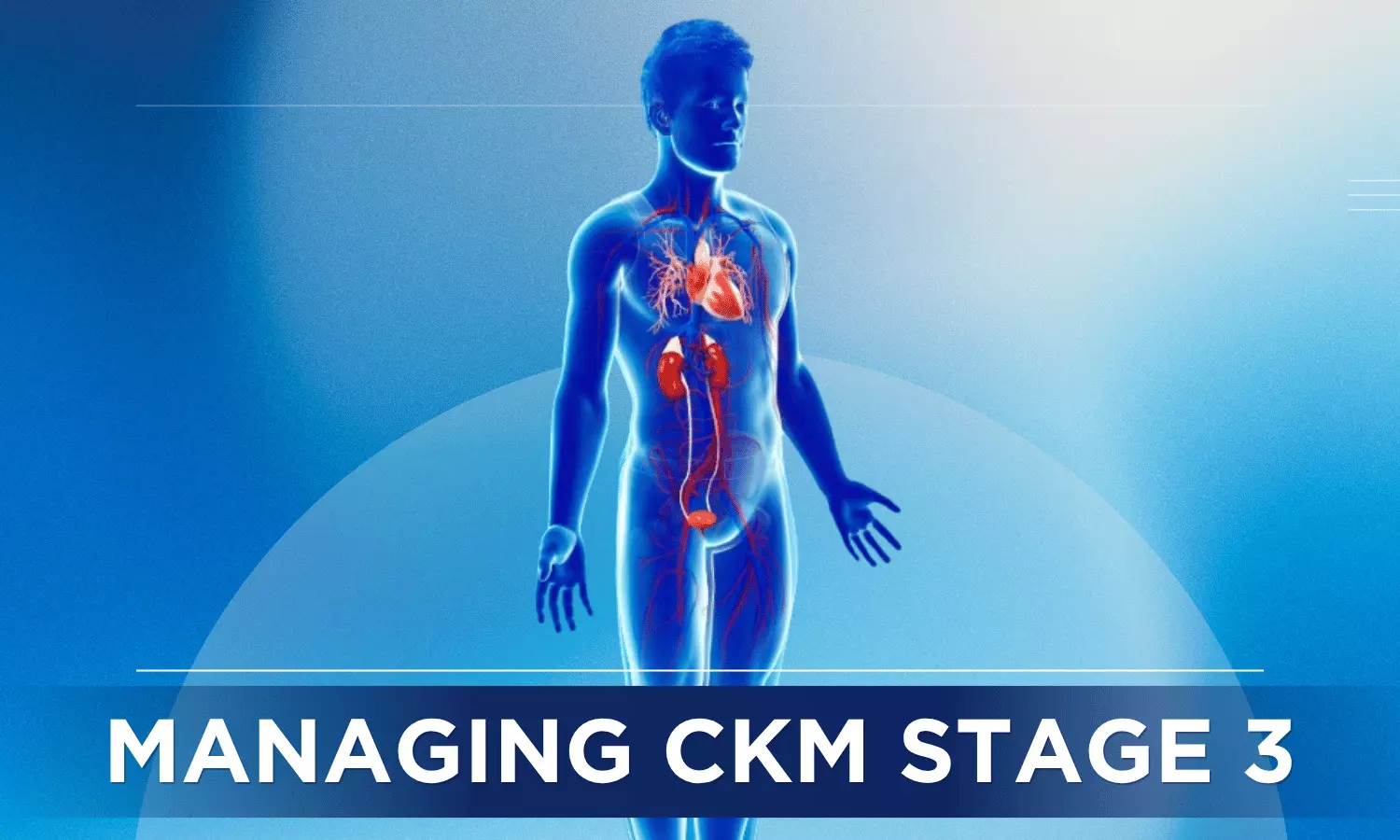
Managing CKM Stage 3: Detecting Silent Cardiovascular Disease Before It Becomes a Heart Attack
Written By : Prem Aggarwal Published On 2026-06-19T09:00:09+05:30  |  Updated On 19 Jun 2026 9:00 AM IST
Managing CKM Stage 3: Detecting Silent Cardiovascular Disease Before It Becomes a Heart Attack
  • facebook
  • twitter
  • linkedin
  • whatsapp
  • Telegram
  • Email

The newly released 2026 AHA/ACC/ADA/ASN Guideline on Cardiovascular-Kidney-Metabolic (CKM) Syndrome introduces a powerful concept in preventive medicine. Many patients do not suddenly develop a heart attack, stroke, or heart failure. Years before these events occur, silent disease is already progressing within the arteries, heart, kidneys, and metabolic system. This phase is recognized as CKM Stage 3. It represents the stage where cardiovascular disease is present but has not yet become clinically apparent. The patient feels healthy. The patient may have no symptoms. Yet the biological processes leading to future cardiovascular events are already active. For clinicians, Stage 3 may represent the final opportunity to intervene before irreversible damage occurs.

What Defines CKM Stage 3?
According to the CKM Guideline, Stage 3 includes individuals with:
- Subclinical cardiovascular disease
- Very high-risk chronic kidney disease
- High predicted cardiovascular risk
Importantly, these patients have not yet experienced a clinical cardiovascular event such as myocardial infarction, stroke, or heart failure. However, their risk has become substantially elevated. The guideline emphasizes that Stage 3 patients require intensified evaluation and treatment because their absolute cardiovascular risk is much higher than in earlier CKM stages.
The Silent Nature of Stage 3
One of the greatest challenges in cardiovascular medicine is that atherosclerosis develops quietly. A coronary artery may be progressively narrowing for years without causing chest pain. The heart may be undergoing structural changes long before symptoms of heart failure appear. Kidney dysfunction may be worsening while routine daily activities remain unaffected. Consequently, many patients first present with a heart attack, stroke, or heart failure despite having felt perfectly well. The purpose of Stage 3 identification is to recognize disease before that first catastrophic event occurs.
Detecting Silent Atherosclerosis
The guideline places considerable emphasis on identifying subclinical cardiovascular disease. One of the most useful tools is Coronary Artery Calcium (CAC) scoring. Calcium deposition within coronary arteries is evidence of atherosclerosis. A patient with a high calcium score may have significant cardiovascular risk even in the absence of symptoms. The presence of coronary calcium helps physicians identify individuals who may benefit from more intensive preventive therapy. In many ways, CAC scoring acts as a “window into the arteries.” It allows clinicians to visualize disease before disease becomes clinically evident.
Looking for Pre-Heart Failure
The guideline also highlights the concept of pre-heart failure. Heart failure does not begin when breathlessness develops. The disease process starts years earlier. Patients with obesity, diabetes, hypertension, chronic kidney disease, and structural cardiac abnormalities may already be progressing toward heart failure despite feeling entirely normal.
The guideline recommends consideration of biomarkers such as BNP, NT-proBNP, High-sensitivity cardiac troponin. These markers can identify individuals at increased risk and guide further evaluation. Early recognition allows intervention before hospitalization and symptomatic heart failure occur.
The Importance of Cardiovascular Risk Assessment
Not every Stage 3 patient will have detectable coronary calcium or abnormal biomarkers. For this reason, the guideline recommends formal cardiovascular risk assessment using contemporary risk prediction tools. Risk estimation helps identify patients whose future probability of cardiovascular events is sufficiently high to justify more intensive treatment. Risk assessment transforms prevention from a generalized approach into a personalized strategy. The higher the predicted risk, the greater the benefit from aggressive intervention.
How Should Stage 3 Be Managed?
The management philosophy of Stage 3 is simple: Treat aggressively before clinical disease develops.
The objective is to prevent progression to Stage 4. Continue Intensive Weight Management as obesity remains a central driver of CKM progression. Lifestyle modification remains essential. Patients should continue weight reduction programs, structured physical activity, nutritional intervention, sleep optimization. Weight loss at Stage 3 continues to provide substantial cardiovascular and metabolic benefits. Intensify Lipid Lowering At this stage, lipid management becomes particularly important. The goal is to stabilize atherosclerotic plaque, slow disease progression, and reduce the likelihood of future cardiovascular events. LDL cholesterol should be managed aggressively according to overall cardiovascular risk. Optimize Blood Pressure Control as hypertension accelerates both cardiovascular disease and kidney damage.
Strict blood pressure control reduces the risk of stroke, heart attack, heart failure, CKD progression. Blood pressure control remains one of the most effective preventive interventions available.
Utilize Cardioprotective Therapies
Patients with diabetes, CKD, obesity, or elevated cardiovascular risk may benefit from therapies that provide cardiovascular and renal protection in addition to their primary therapeutic effects. The guideline emphasizes the expanding role of:
- SGLT2 inhibitors
- GLP-1–based therapies
These medications have demonstrated benefits in reducing cardiovascular and renal outcomes across multiple patient populations.
Protect Kidney Function since kidney disease and cardiovascular disease are closely linked. The progression of CKD substantially increases cardiovascular risk.
Management should therefore include regular eGFR assessment, UACR monitoring, Kidney-protective therapies when indicated. Protecting kidney function is simultaneously a cardiovascular prevention strategy.
Why Stage 3 Is So Important in India
India faces a growing burden of premature cardiovascular disease. Many patients develop coronary artery disease at younger ages compared with Western populations. Diabetes, abdominal obesity, hypertension, and CKD frequently coexist. Unfortunately, cardiovascular disease is often diagnosed only after a major event. The CKM framework encourages physicians to identify high-risk individuals before symptoms occur. This shift from reactive medicine to preventive medicine may be one of the most important contributions of the CKM Guideline.
The Goal: Never Reach Stage 4
The objective of Stage 3 management is not simply risk reduction. The objective is event prevention. Every intervention at this stage seeks to prevent heart attack, stroke, heart failure, cardiovascular death, progressive kidney failure. Once Stage 4 develops, treatment becomes more complex, more expensive, and less effective than prevention.
Conclusion
CKM Stage 3 represents silent but significant disease. The patient may feel healthy, but cardiovascular injury is already present or imminent. The 2026 CKM Guideline encourages clinicians to actively search for subclinical disease using risk assessment tools, coronary calcium scoring, biomarkers, kidney evaluation, and comprehensive cardiovascular risk assessment. Stage 3 may be the last opportunity to prevent the first heart attack. In many patients, identifying and treating CKM Stage 3 successfully can mean the difference between lifelong health and lifelong cardiovascular disease. The future of preventive cardiology lies not merely in treating disease—but in finding disease before it announces itself.
Guideline Basis
- Stage 3 includes subclinical CVD, very high-risk CKD, or high predicted cardiovascular risk.
- Coronary artery calcium assessment may be useful in selected patients with intermediate or borderline cardiovascular risk.
- Evaluation for pre-heart failure using BNP, NT-proBNP, and high-sensitivity troponin is recommended in higher-risk individuals.
- The guideline emphasizes risk quantification and refinement using the preventive therapy
References:
  • 1.Sadiya S. Khan,Nicole Bhave,Roger S. Blumenthal,Josef Coresh,Xiaoning Huang,Joshua J. Joseph,Amit Khera,Jennifer E. Ho,Donald M. Lloyd-Jones,Cecilia C. Low Wang,Yuan Lu,Pamela B. Morris,Khurram Nasir,Pradeep Natarajan,Janani Rangaswami,Fatima Rodriguez,Laurence S. Sperling,Salim S. Virani,Sui Zhang,Chiadi E. Ndumele Use of Predicted Risk and Expected Benefit to Guide Decision-Making in Cardiovascular-Kidney-Metabolic Syndrome for the Primary Prevention of Cardiovascular Disease: A Scientific Statement from the American Heart Association and American College of Cardiology -
ckmckm stage 3kidney diseaseheart diseasecvd
Prem Aggarwal
Prem Aggarwal

Dr Prem Aggarwal, (MD Medicine, DNB Medicine, DNB Cardiology) is a Cardiologist by profession and also the Co-founder and Chairman of Medical Dialogues. He focuses on news and perspectives about cardiology, and medicine related developments at Medical Dialogues. He can be reached out at drprem@medicaldialogues.in

Show Full Article
Next Story

Editorial

Dapagliflozin & Kidney: Top 5 New Evidence Highlights in 2026

Dapagliflozin & Kidney: Top 5 New Evidence Highlights in 2026

From Obesity to Heart Failure: Understanding the New CKM Staging System

From Obesity to Heart Failure: Understanding the New CKM Staging System

Managing CKM Stage 3: Detecting Silent Cardiovascular Disease Before It Becomes a Heart Attack

Managing CKM Stage 3: Detecting Silent Cardiovascular Disease Before It Becomes a Heart Attack

Safety and Effectiveness of Vedolizumab in Indian Patients with Inflammatory Bowel Disease: Results from a Phase 4 Study

Safety and Effectiveness of Vedolizumab in Indian Patients with Inflammatory Bowel Disease: Results...

Targeted Primary Prevention with Low-Dose Aspirin in Chronic Kidney Disease: The Predictive Role of Lipoprotein(a) Bio-Stratification- Dr Pradeep Kumar Meena

Targeted Primary Prevention with Low-Dose Aspirin in Chronic Kidney Disease: The Predictive Role of...

View All

Journal Club Today

New Review Questions Benefits of Calcium and Vitamin D for Stronger Bones

New Review Questions Benefits of Calcium and Vitamin D for Stronger Bones

View All

Health News Today

Health Bulletin 18/June/2026

Health Bulletin 18/June/2026

View All
© 2022 All Rights Reserved.
Powered By: Hocalwire
X
We use cookies for analytics, advertising and to improve our site. You agree to our use of cookies by continuing to use our site. To know more, see our Cookie Policy and Cookie Settings.Ok