Medication Non-Adherence Remains a Major Challenge in Heart Failure Care: 2026 Study Reports
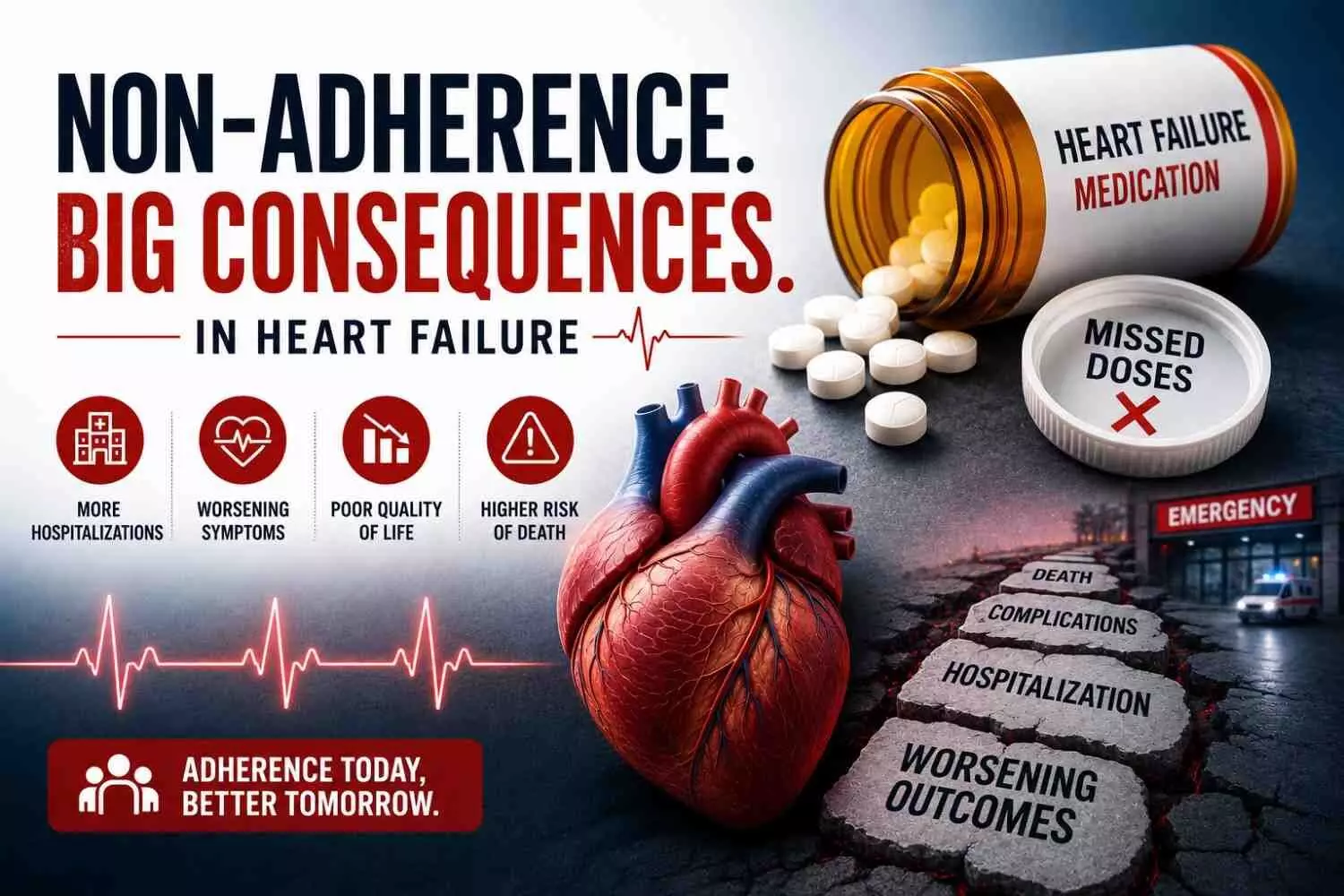


Medication non-adherence continues to be a major barrier to optimal Heart Failure (HF) management, with more than half of patients failing to take prescribed therapies consistently, according to a recently published systematic review.
Researchers at Kashan University of Medical Sciences in Iran conducted a review of evidence from 20 studies involving heart failure patients from several countries and discovered that medication non-adherence is caused by a mix of individual, clinical, and social factors. The findings emphasize the urgent need for focused interventions to enhance medication adherence and prevent avoidable hospitalizations.
A Growing Global Challenge
Heart failure (HF) remains a major cause of morbidity, hospitalization, and mortality worldwide. The condition is characterized by high rates of rehospitalization, with more than 25% of patients readmitted within 30 days of discharge and nearly 50% within six months. Over the past decade, HF-related hospitalizations have increased by 26%. Medication non-adherence is a well-established determinant of adverse clinical outcomes, contributing to recurrent hospitalizations, disease progression, and increased mortality.
To evaluate the factors influencing adherence, researchers systematically screened 856 studies published between 2015 and 2024, ultimately including 20 high-quality studies involving 72 to 26,439 participants. Across these studies, medication non-adherence was greater than 50%, underscoring its substantial clinical burden.
Patients at Highest Risk of Non-Adherence
The review found that individual factors were implicated in 75% of the included studies. Poor adherence has been repeatedly associated with older age, especially over 65, low educational attainment, low income, poor health literacy, being single, living in a rural area, obesity, and having several chronic conditions.
Gender-related disparities were also identified. While some showed that smokers and men were more likely to miss prescriptions, others found that women were more likely to do so, indicating that treatment behaviour may be influenced by cultural and regional factors.
Consequences of Poor Adherence in Heart Failure
Speaking to Medical Dialogues, Dr. Ashfaque Ahmed, M.D. (General Medicine), D.M. (Cardiology), said- "Heart failure is an unstable chronic condition where treatment continuity is critical. Missing medications can rapidly lead to fluid retention, worsening breathlessness, edema, and recurrent decompensation, particularly in high-risk patients. In Indian practice, we frequently see preventable hospital admissions linked to interrupted GDMT. Every missed dose may not trigger an immediate crisis, but repeated lapses significantly increase the risk of emergency visits, rehospitalization, and disease progression."
Polypharmacy and Drug Side Effects Linked to Non-Adherence
Patients receiving multiple medications were significantly more likely to miss doses or discontinue treatment. Medication-related adverse effects also contributed to poor adherence, with 8.1% of patients citing side effects—such as diuretic-induced increased urination and beta-blocker-associated adverse effects—as reasons for non-adherence.
Forgetfulness emerged as one of the most common barriers to adherence, with 34.4% of patients reporting difficulty remembering to take their medications. One study included in the analysis found that 53.9% of patients identified forgetfulness as the primary reason for medication non-adherence, while 26.0% reported neglecting to take their prescribed medicines. Medication non-adherence was also associated with look-alike medications, recurrent heart failure-related hospitalizations, reduced left ventricular ejection fraction, greater disease severity, and longer disease duration.
Financial and Family Support Matter
Social support emerged as a major determinant of medication adherence, often outweighing patient- and disease-related factors. Poor adherence was consistently associated with high out-of-pocket expenditure on medications and diagnostic tests, limited caregiver availability, inadequate family support, and lack of insurance or government assistance.
The review further highlighted that financial hardship and insufficient social support substantially reduced patients' ability to sustain adherence to complex, long-term heart failure pharmacotherapy.
Key Steps to Improve Patient Outcomes
Given the multifactorial nature of medication non-adherence, the authors recommend coordinated efforts from governments, healthcare professionals, and caregivers. Expanding insurance coverage, improving health literacy, providing free counselling services, and strengthening family-centred care could help address barriers to adherence and improve outcomes for heart failure patients.
Improving Affordability & Access to HF Pills like Sacubitril Valsartan at INR 8/- per Tablet
The cost of treatment remains a major barrier to medication adherence in Heart Failure. Fortunately, access to evidence-based therapies is improving, with Sacubitril Valsartan being available for just Rs. 8 per tablet, making one of the most effective HF drugs much cost-effective. Lower treatment costs can alleviate financial hardship on patients and families, promote long-term adherence, and prevent disruptions in therapy. Healthcare systems can assist more patients to benefit from timely, continuous treatment and achieve improved HF outcomes by increasing the accessibility of guideline-recommended medicines.
Real-World Impact of Cost-Effective GDMT
Speaking to Medical Dialogues, Dr. Chandan Saurav Mahapatra, MD,DM,FSCAI Consultant Interventional Cardiologist, said- "Affordability is one of the biggest determinants of long-term adherence in India because heart failure treatment is lifelong. Whenever needed, considering quality, cost-effective GDMT options often improves persistence with therapy. We see so many cases; when HF patient is not doing well, we ask about medication adherence. They are not taking their meds regularly. When we deep dive, they say these are expensive pills. They request for pills they can afford. The monthly cost of treatment really burdens heart failure patients. This is the ground reality in India, and it is part of our clinical responsibility to address them as much as possible. The moment we switch them to more affordable medication options, adherence goes up, and they get clinically better in subsequent follow-ups. Sustainable treatment is not just about prescribing the right medicines, it is about ensuring patients can continue taking them month after month."
The researchers concluded that identifying and addressing factors associated with medication non-adherence may improve self-care, treatment adherence, and quality of life in patients with heart failure.
- 1. Medication non-adherence in patients with heart failure: A systematic review.J Educ Health Promot.