Micro-Axial Flow Pump Matches VA-ECMO for High-Risk PCI: Study
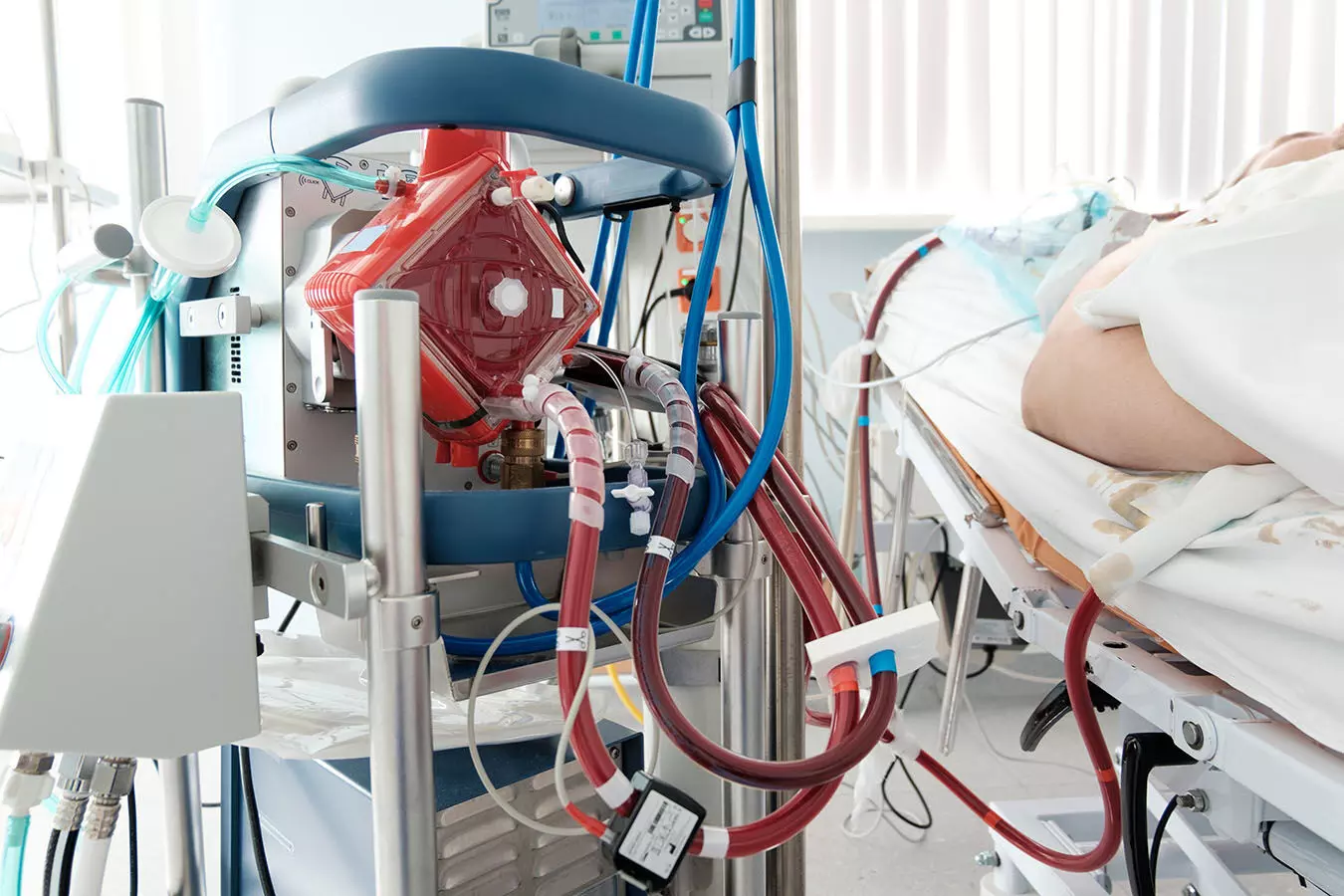


A randomized trial published in the European Heart Journal found that prophylactic micro-axial flow pump support was noninferior to veno-arterial extracorporeal membrane oxygenation (VA-ECMO) in patients with severely reduced left ventricular ejection fraction undergoing high-risk percutaneous coronary intervention (PCI). These findings suggest that the micro-axial flow pump is an effective alternative for providing hemodynamic support during complex high-risk PCI procedures. The study was conducted by Gang Z. and colleagues.
In order to measure the safety and efficacy of these different approaches to circulatory assistance, scientists undertook a multicenter randomized noninferiority open-label study on different specialized cardiac centers. For this purpose, a total number of patients with severe decrease in left ventricular ejection fraction (LVEF ≤ 35%) suffering from complicated three-vessel coronary artery disease, unprotected left main coronary artery lesion, or last patent conduit undergoing elective high-risk PCI were selected.
Randomization was performed between the use of SynFlow 3.0 micro-axial flow pump and conventional VA-ECMO for hemodynamic assistance before the intervention in a one-to-one ratio. The primary endpoint of the study included cumulative rate of major adverse events, including all-cause mortality, myocardial infarction, stroke or transient ischemic attack, repeat revascularization, major bleeding, acute kidney injury, cardiopulmonary resuscitation or cardioversion, emergency cardiac surgery, limb ischemia, and device-related complication.
Key findings:
- Thirty-day major adverse events were the primary endpoint, with a rate of 8 out of 109 patients (7.34%) in the SynFlow 3.0 group vs. 13 out of 113 patients (11.5%) in the VA-ECMO group (the absolute difference is adjusted for centre effect, −4.6%; 95% confidence interval of −12.6% to 3.5%; P for non-inferiority < .001).
- The SynFlow 3.0 patients had less post-procedural hospital stay (4.1 days vs. 5.2 days on average, P = .047) and fewer device-related adverse events in terms of occurrence (3.7% vs 11.5%; P = .041).
To conclude, the preventive use of the micro-axial flow pump during PCI procedures considered at high risk was not inferior to that of the VA-ECMO in the number of major adverse events during 30 days after the intervention. The micro-axial flow pump usage resulted in shorter hospital stay after the procedure.
Reference:
Gang Zhao, Shanshan Zhou, Zheyan Fang, Jianying Ma, Feng Tian, Dan Song, Chengyi Xu, Zuyi Yuan, Ning Guo, Lin Zhao, Tao Zhang, Jingping Wang, Jingyi Liu, Yining Yang, Xiaolin Yu, Yan Li, Dongwei Zhang, Chuanyu Gao, Famin Ye, Cheng Zhang, Jianmin Yang, Jiancheng Xiu, Qiancheng Wang, Bo Luan, Jianhong Tao, Ming Bai, Renqiang Yang, Yansong Guo, Yan Wang, Min Dai, Jianan Wang, Juying Qian, Yundai Chen, Junbo Ge, Micro-axial flow pump vs veno-arterial extracorporeal membrane oxygenation for high-risk percutaneous coronary interventions: a randomized trial, European Heart Journal, 2026;, ehag520, https://doi.org/10.1093/eurheartj/ehag520