
Medical Dialogues
  • Dermatology
Login Register
This site is intended for healthcare professionals only
Login Register
  • MD Brand Connect
  • Webinars
  • Vaccine Hub
  • MDTV
    • Breaking News
    • Medical News Today
    • Health News Today
    • Latest
    • Journal Club
    • Medico Legal Update
    • Latest Webinars
    • MD Shorts
    • Health Dialogues
  • Fact Check
  • Health Dialogues
Medical Dialogues
  • Medical News & Guidelines
      • Anesthesiology
      • Cardiology and CTVS
      • Critical Care
      • Dentistry
      • Dermatology
      • Diabetes and Endocrinology
      • ENT
      • Gastroenterology
      • Medicine
      • Nephrology
      • Neurology
      • Obstretics-Gynaecology
      • Oncology
      • Ophthalmology
      • Orthopaedics
      • Pediatrics-Neonatology
      • Psychiatry
      • Pulmonology
      • Radiology
      • Surgery
      • Urology
      • Laboratory Medicine
      • Diet
      • Nursing
      • Paramedical
      • Physiotherapy
  • Health news
      • Doctor News
      • Government Policies
      • Hospital & Diagnostics
      • International Health News
      • Medical Organization News
      • Medico Legal News
      • NBE News
      • NMC News
  • Fact Check
      • Bone Health Fact Check
      • Brain Health Fact Check
      • Cancer Related Fact Check
      • Child Care Fact Check
      • Dental and oral health fact check
      • Diabetes and metabolic health fact check
      • Diet and Nutrition Fact Check
      • Eye and ENT Care Fact Check
      • Fitness fact check
      • Gut health fact check
      • Heart health fact check
      • Kidney health fact check
      • Medical education fact check
      • Men's health fact check
      • Respiratory fact check
      • Skin and hair care fact check
      • Vaccine and Immunization fact check
      • Women's health fact check
  • AYUSH
    • Ayurveda
    • Homeopathy
    • Siddha
    • Unani
    • Yoga
  • State News
      • Andaman and Nicobar Islands
      • Andhra Pradesh
      • Arunachal Pradesh
      • Assam
      • Bihar
      • Chandigarh
      • Chattisgarh
      • Dadra and Nagar Haveli
      • Daman and Diu
      • Delhi
      • Goa
      • Gujarat
      • Haryana
      • Himachal Pradesh
      • Jammu & Kashmir
      • Jharkhand
      • Karnataka
      • Kerala
      • Ladakh
      • Lakshadweep
      • Madhya Pradesh
      • Maharashtra
      • Manipur
      • Meghalaya
      • Mizoram
      • Nagaland
      • Odisha
      • Puducherry
      • Punjab
      • Rajasthan
      • Sikkim
      • Tamil Nadu
      • Telangana
      • Tripura
      • Uttar Pradesh
      • Uttrakhand
      • West Bengal
  • Medical Education
      • Ayush Education News
      • Dentistry Education News
      • Medical Admission News
      • Medical Colleges News
      • Medical Courses News
      • Medical Universities News
      • Nursing education News
      • Paramedical Education News
      • Study Abroad
  • Industry
      • Health Investment News
      • Health Startup News
      • Medical Devices News
      • Pharma News
      • Pharmacy Education News
      • AI and healthcare
      • Industry Perspective
  • MDTV
      • Health Dialogues MDTV
      • Health News today MDTV
      • Latest Videos MDTV
      • Latest Webinars MDTV
      • MD shorts MDTV
      • Medical News Today MDTV
      • Medico Legal Update MDTV
      • Top Videos MDTV
      • Health Perspectives MDTV
      • Journal Club MDTV
      • Medical Dialogues Show
This site is intended for healthcare professionals only
LoginRegister
Medical Dialogues
LoginRegister
  • Home
  • Medical news & Guidelines
    • Anesthesiology
    • Cardiology and CTVS
    • Critical Care
    • Dentistry
    • Dermatology
    • Diabetes and Endocrinology
    • ENT
    • Gastroenterology
    • Medicine
    • Nephrology
    • Neurology
    • Obstretics-Gynaecology
    • Oncology
    • Ophthalmology
    • Orthopaedics
    • Pediatrics-Neonatology
    • Psychiatry
    • Pulmonology
    • Radiology
    • Surgery
    • Urology
    • Laboratory Medicine
    • Diet
    • Nursing
    • Paramedical
    • Physiotherapy
  • Health news
    • Doctor News
    • Government Policies
    • Hospital & Diagnostics
    • International Health News
    • Medical Organization News
    • Medico Legal News
    • NBE News
    • NMC News
  • Fact Check
    • Bone Health Fact Check
    • Brain Health Fact Check
    • Cancer Related Fact Check
    • Child Care Fact Check
    • Dental and oral health fact check
    • Diabetes and metabolic health fact check
    • Diet and Nutrition Fact Check
    • Eye and ENT Care Fact Check
    • Fitness fact check
    • Gut health fact check
    • Heart health fact check
    • Kidney health fact check
    • Medical education fact check
    • Men's health fact check
    • Respiratory fact check
    • Skin and hair care fact check
    • Vaccine and Immunization fact check
    • Women's health fact check
  • AYUSH
    • Ayurveda
      • Ayurveda Giuidelines
      • Ayurveda News
    • Homeopathy
      • Homeopathy Guidelines
      • Homeopathy News
    • Siddha
      • Siddha Guidelines
      • Siddha News
    • Unani
      • Unani Guidelines
      • Unani News
    • Yoga
      • Yoga Guidelines
      • Yoga News
  • State News
    • Andaman and Nicobar Islands
    • Andhra Pradesh
    • Arunachal Pradesh
    • Assam
    • Bihar
    • Chandigarh
    • Chattisgarh
    • Dadra and Nagar Haveli
    • Daman and Diu
    • Delhi
    • Goa
    • Gujarat
    • Haryana
    • Himachal Pradesh
    • Jammu & Kashmir
    • Jharkhand
    • Karnataka
    • Kerala
    • Ladakh
    • Lakshadweep
    • Madhya Pradesh
    • Maharashtra
    • Manipur
    • Meghalaya
    • Mizoram
    • Nagaland
    • Odisha
    • Puducherry
    • Punjab
    • Rajasthan
    • Sikkim
    • Tamil Nadu
    • Telangana
    • Tripura
    • Uttar Pradesh
    • Uttrakhand
    • West Bengal
  • Medical Education
    • Ayush Education News
    • Dentistry Education News
    • Medical Admission News
    • Medical Colleges News
    • Medical Courses News
    • Medical Universities News
    • Nursing education News
    • Paramedical Education News
    • Study Abroad
  • Industry
    • Health Investment News
    • Health Startup News
    • Medical Devices News
    • Pharma News
      • CDSCO (Central Drugs Standard Control Organisation) News
    • Pharmacy Education News
    • AI and healthcare
    • Industry Perspective
  • Home
  • Cardiology-CTVS
  • Cardiology & CTVS News
  • New PREVENT Equation...

New PREVENT Equation Lowers Risk Estimates, Raising Questions on Treatment Thresholds: AJPC Review, December 2025
Written By : Prem Aggarwal Published On 2025-12-06T11:00:27+05:30  |  Updated On 6 Dec 2025 11:00 AM IST
New PREVENT Equation Lowers Risk Estimates, Raising Questions on Treatment Thresholds: AJPC Review, December 2025
  • facebook
  • twitter
  • linkedin
  • whatsapp
  • Telegram
  • Email

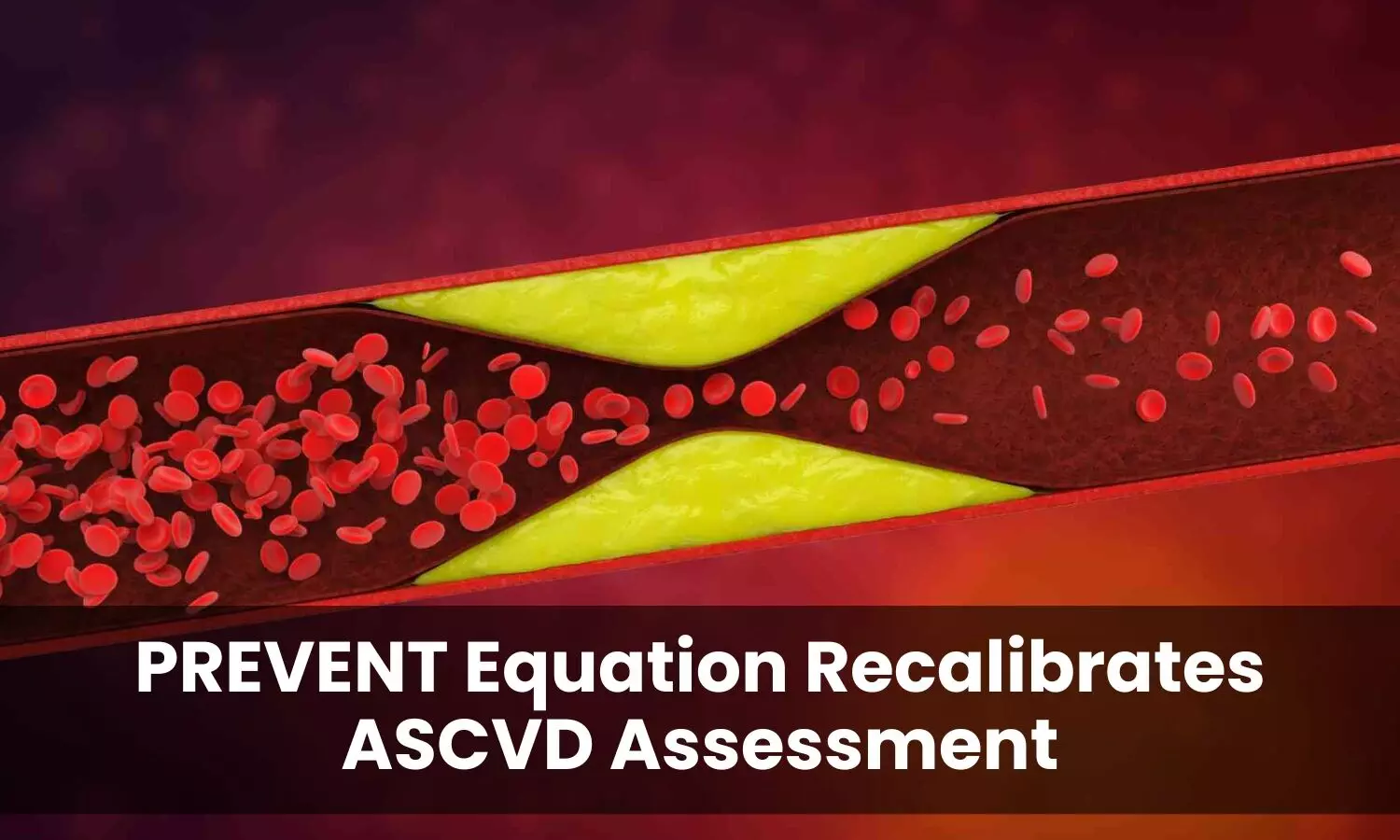
A recent review concluded The PREVENT equations provide updated risk models for assessing cardiovascular disease risk. Studies comparing the Pooled Cohort Equation (PCE) and PREVENT consistently show lower atherosclerotic cardiovascular disease (ASCVD) 10-year risk estimates using the PREVENT equation, largely due to improved calibration of absolute risk levels. This shift has implications for the prescription of statin and anti-hypertensive medications, potentially leading to under-treatment and an increase in Major Adverse Cardiovascular Events (MACE), unless the risk thresholds for pharmacotherapy are lowered.

The authors advocated the selective use of non-invasive imaging, specifically Coronary Artery Calcium (CAC) scores, in conjunction with risk prediction equations to help guide the primary prevention of ASCVD. Since the PREVENT equation tends to estimate a risk that is 30 to 50% lower than that of the pooled cohort’s equation, further guidance is needed to determine a suitable threshold for pharmacotherapy of hypertension and hyperlipidemia.

This succinct review is published in December 2025 in the American Journal of Preventive Cardiology.

CV Risk Assessment Calculators – How it Went from PCE to PREVENT?

Cardiovascular disease (CVD), an umbrella term including coronary artery disease (CAD), heart failure (HF), and stroke, often begins early and is driven largely by modifiable risk factors such as dyslipidemia and hypertension. Identifying high-risk individuals early is essential for timely pharmacotherapy to prevent major adverse cardiovascular events (MACE). The current U.S. standard, the 2019 ACC/AHA 10-year ASCVD risk calculator (Pooled Cohort Equation, PCE), has notable limitations: it does not reflect recent shifts in risk factors (e.g., reduced smoking but rising obesity and chronic kidney disease), overestimates ASCVD risk by about 41% overall, and lacks accuracy across diverse populations—underpredicting risk in South Asians and those with chronic inflammatory diseases, while overestimating it in East Asian and Hispanic groups. To address these gaps, the American Heart Association introduced the PREVENT risk equation in 2023.

PREVENT Equation – Robust Model Advancements

The PREVENT model marks a major advance in cardiovascular risk assessment. Developed and validated in >6 million adults aged 30–79 years—far larger and more diverse than the 48,733 participants used for the PCE—it is sex-specific and race-free, improving equity by removing race as a risk variable. PREVENT incorporates key factors such as HDL-C, non–HDL-C, systolic blood pressure, smoking status, BMI, use of lipid-lowering or antihypertensive medications, and eGFR, and importantly includes heart failure as a primary outcome. The model can also integrate Cardiovascular-Kidney-Metabolic (CKM) modifiers, including HbA1c, urine albumin–creatinine ratio, and the Social Deprivation Index (SDI), which reflects neighborhood-level socioeconomic risk.

Impact on Risk Stratification and Eligibility with PREVENT Equation

The PREVENT equation demonstrates superior calibration compared to its predecessor; the PCE has been found to overestimate risk by up to 50%. However, the use of PREVENT presents a clinical challenge regarding treatment eligibility. Studies comparing the two equations have consistently shown that the PREVENT model reclassifies a substantial portion of the population to a lower ASCVD risk category.

One study utilizing nationally representative data found that the PREVENT equation would reclassify 53% of adults into lower risk categories. If the current statin eligibility threshold of 7.5% 10-year risk were maintained unchanged, this reduction in calculated risk would translate to 14 million fewer people eligible for statins. Over a 10-year period, this profound decrease in treatment numbers could potentially result in an estimated 107,000 additional episodes of myocardial infarction or stroke. In view of this, further guidance is required to help determine a suitable threshold for pharmacotherapy.

Clinical Insights and Anticipated Future Horizon

The PREVENT model offers improved calibration and broader applicability, but its consistently lower 10-year ASCVD estimates highlight the need for clinical recalibration. Without updated treatment thresholds, relying on PREVENT may lead to undertreatment and increased cardiovascular events. Early steps toward adjustment are already reflected in the 2025 AHA/ACC Blood Pressure Guideline, which lowers the recommended 10-year CVD risk threshold for initiating therapy from 10% to 7.5% for select groups.

For clinicians, the evidence strongly supports pairing PREVENT with coronary artery calcium (CAC) scoring. In adults with borderline (5%–7.5%) or intermediate (7.5%–20%) risk, CAC remains the most effective tool to refine risk—particularly to “up-risk” patients who may benefit from starting or intensifying statin therapy. This phenotype-based approach is essential for personalized primary prevention.

Reference: Selvam PV, Sharma R, Ganz P, Blumenthal RS, Gulati M. Cardiovascular disease risk estimates using the new PREVENT Equation: The good, bad, and the ugly. Am J Prev Cardiol. 2025 Sep 11;24:101288. doi: 10.1016/j.ajpc.2025.101288. PMID: 41018255; PMCID: PMC12464685.

For regular cardiology updates from recent journals, kindly follow our WhatsApp group

prevent equationcardiovascular careatherosclerotic cardiovascular diseasemajor adverse cardiovascular eventscardiovascular diseasecoronary artery calcium scorecoronary artery diseaseheart failure
Prem Aggarwal
Prem Aggarwal

Dr Prem Aggarwal, (MD Medicine, DNB Medicine, DNB Cardiology) is a Cardiologist by profession and also the Co-founder and Chairman of Medical Dialogues. He focuses on news and perspectives about cardiology, and medicine related developments at Medical Dialogues. He can be reached out at drprem@medicaldialogues.in

Show Full Article
Next Story

Editorial

The 1st Tooth Crosstalk | Episode 1 | The First Tooth - Where Oral Health Begins

The 1st Tooth Crosstalk | Episode 1 | The First Tooth - Where Oral Health Begins

Participation of the incarcerated in Clinical Trials in India: Need for a road map -Albina Arjuman

Participation of the incarcerated in Clinical Trials in India: Need for a road map -Albina Arjuman

Managing GERD in Children with Asthma with H2 receptor antagonists (H2RAs): Indian Paediatricians Perspectives

Managing GERD in Children with Asthma with H2 receptor antagonists (H2RAs): Indian Paediatricians'...

Tirzepatide for Obesity: Highlights from the SURMOUNT-1 Trial

Tirzepatide for Obesity: Highlights from the SURMOUNT-1 Trial

Undenatured Collagen in Long-Term OA Joint Health: Beyond Symptom Control

Undenatured Collagen in Long-Term OA Joint Health: Beyond Symptom Control

View All

Journal Club Today

The 1st Tooth Crosstalk | Episode 1 | The First Tooth - Where Oral Health Begins

The 1st Tooth Crosstalk | Episode 1 | The First Tooth - Where Oral Health Begins

View All

Health News Today

Health Bulletin 05/December/2025

Health Bulletin 05/December/2025

View All
© 2022 All Rights Reserved.
Powered By: Hocalwire
X
We use cookies for analytics, advertising and to improve our site. You agree to our use of cookies by continuing to use our site. To know more, see our Cookie Policy and Cookie Settings.Ok