
Pre-LAAO Pulsed-Field Ablation May Reduce Peridevice Leaks in Atrial Fibrillation: Study
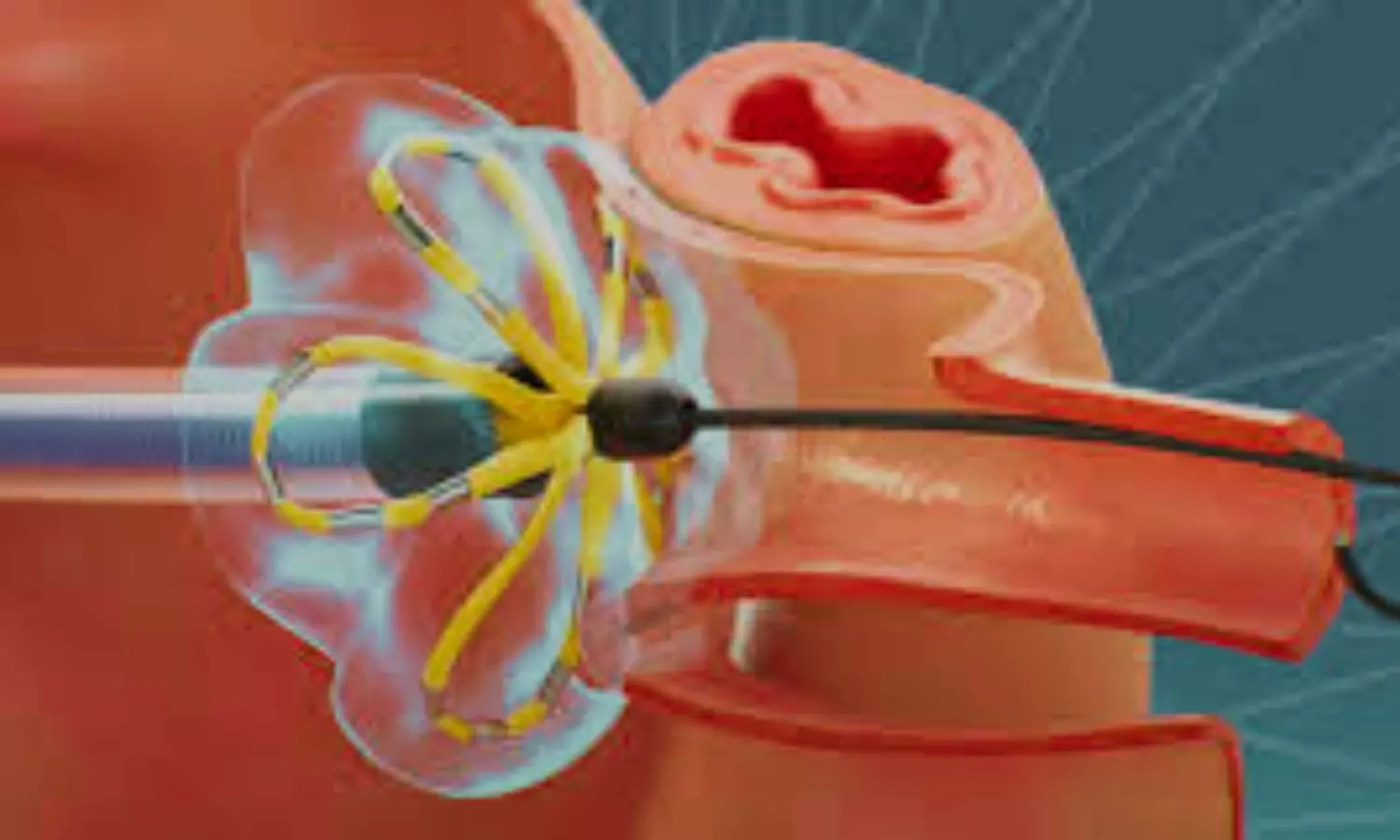


USA: Findings from the nonrandomized STUN-AF study suggest that, among patients undergoing concomitant pulsed-field ablation (PFA) and left atrial appendage occlusion (LAAO) for atrial fibrillation or atrial flutter, performing ablation of the left atrial appendage before LAAO may help reduce the risk of peridevice leaks. These results indicate that the sequence of procedures may influence procedural outcomes, although further randomized studies are needed to confirm the benefits of this approach.
Peridevice leaks are a persistent challenge after percutaneous left atrial appendage (LAA) closure and are associated with an increased risk of ischemic stroke and other thromboembolic events. Despite advances in device design, sizing, and implantation techniques, leak rates remain a concern.
The observational STUN-AF study, presented at New York Valves 2026, included 327 patients who underwent combined pulsed-field ablation (PFA) and LAA closure across three U.S. centers. The investigators compared patients who underwent standard PFA followed by LAA closure with those who also received targeted LAA ablation before device implantation. The study population had a mean age of 76 years, 58% were men, and an average CHA₂DS₂-VASc score of 4.3. The primary indications for LAA closure were prior bleeding and recurrent falls.
The study revealed the following findings:
- Patients who underwent left atrial appendage ablation achieved higher rates of complete device sealing than those who did not receive LAA ablation.
- At 4 months, 71% of patients in the LAA ablation group had no peridevice leaks, compared with 36% in the non-ablation group.
- At 12 months, 96% of patients who underwent LAA ablation achieved complete closure, compared with 58% of those without LAA ablation.
- LAA ablation was associated with lower left atrial appendage emptying velocities, suggesting improved device sealing by reducing residual appendage contractility.
- The findings suggest that persistent mechanical contraction of the left atrial appendage may contribute to peridevice leaks by preventing optimal device sealing.
- The procedure demonstrated a favorable safety profile, with transient ischemic attack (0.5%) and bleeding (1.4%) being the only notable periprocedural complications.
- During 3 months of follow-up, rates of death, heart failure hospitalization, stroke, myocardial infarction or coronary revascularization, and major bleeding remained low.
The investigators suggested that incorporating LAA ablation into combined PFA and LAA closure procedures may improve procedural success and proposed that future LAA occlusion devices could be designed to deliver ablative energy directly to the appendage.
However, they noted that the observational, nonrandomized design, differences in follow-up imaging, incomplete 12-month imaging, and limited ability to assess clinical outcomes were important limitations. They emphasized that randomized clinical trials are needed to confirm whether reducing peridevice leaks with LAA ablation improves long-term patient outcomes.
Reference:
Reddy VY, et al "Pulsed field ablation of the LAA prior to LAA closure: a novel approach to reduce peri-device leak" NYV 2026.

Next Story