
Primary Aldosteronism Found in Young Patients With Premature CAD, Indian Study Highlights
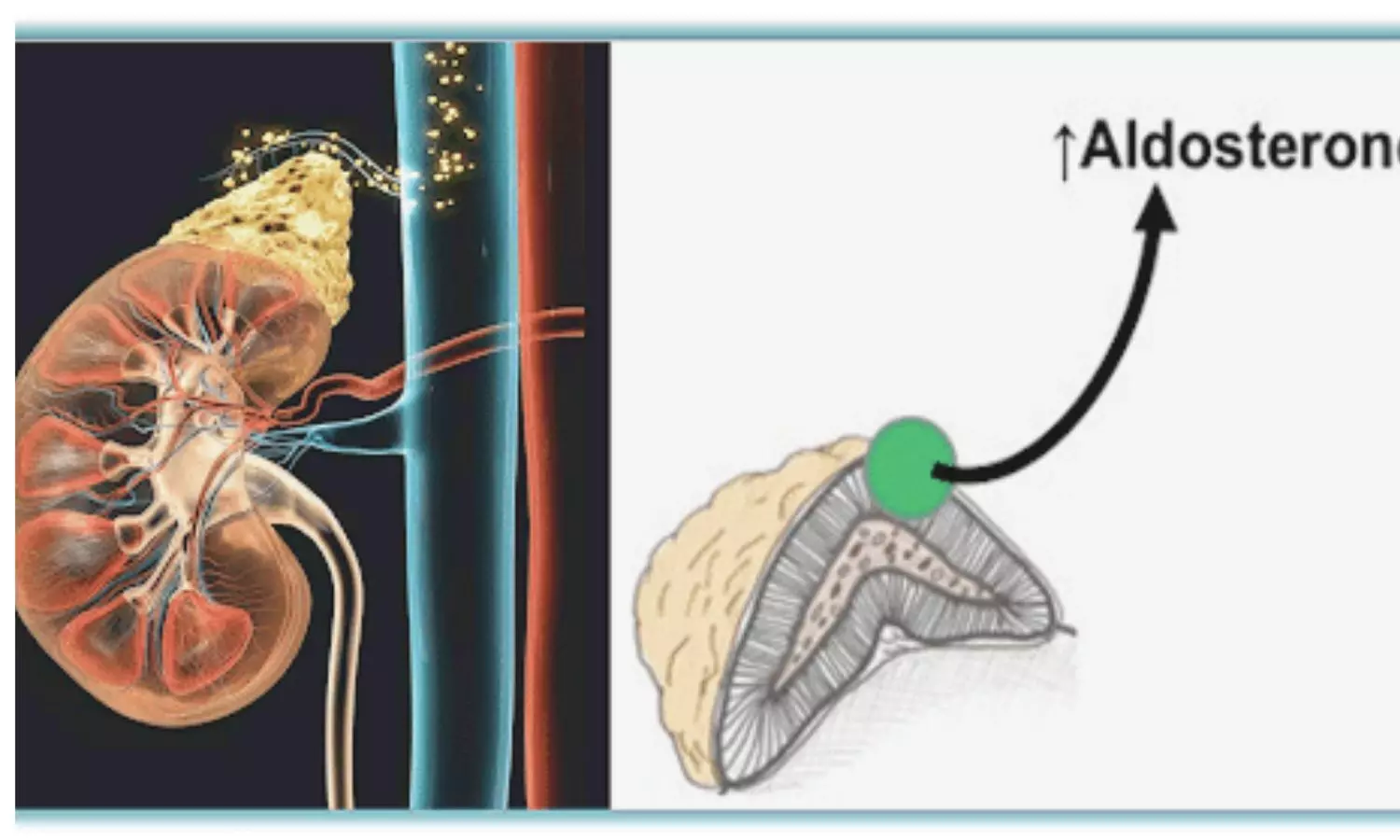


A recent prospective study published in the Indian Heart Journal in March 2026 discovered primary aldosteronism in 3.1% of young patients with premature coronary artery disease. Despite normal potassium levels, affected individuals presented with severe grade 2 hypertension (161 ± 15.6 mmHg) and universal left ventricular hypertrophy.
While primary aldosteronism (PA) is a leading cause of secondary hypertension driving excess cardiovascular risk, prior research focused primarily on resistant hypertension, leaving its impact on premature coronary artery disease (CAD)—especially in South Asian populations with high early cardiovascular burdens—underexplored due to frequent normokalemic presentations. Addressing this gap, Dr. Manish Thakur from Atal Institute of Medical Super Specialities, Shimla, along with Dr. Rajesh Khadgawat and colleagues from All India Institute of Medical Sciences, New Delhi, evaluated PA prevalence and clinical features in patients with premature CAD (≤45 years).
Therefore, conducted at a North Indian tertiary center (September 2020–March 2022), the prospective study evaluated 64 adults with premature coronary artery disease (CAD) against 60 controls with older-onset CAD (>45 years). Screening with direct renin concentration (<12 µIU/mL) and plasma aldosterone concentration (>10 ng/dL) was confirmed by a recumbent saline infusion test after excluding renal, renovascular, and secondary endocrine causes.
Key Clinical Findings of the Study Include:
- Aldosterone Excess Prevalence: Analysis identified a 3.1% PA prevalence (2/64) among premature CAD cases, whereas no cases occurred among older controls.
- Hypertensive Severity Profile: Investigation documented elevated systolic (161 ± 15.6 mmHg vs. 132.6 ± 22.4 mmHg) and diastolic (94.0 ± 5.7 mmHg vs. 82.1 ± 12.7 mmHg) blood pressures alongside earlier hypertension onset (32.5 ± 7.8 vs. 39.2 ± 5.0 years) in PA-positive versus PA-negative patients.
- Normokalemic Laboratory Profile: Research revealed lower serum potassium levels in PA-positive subjects compared to PA-negative controls (4.0 ± 0.0 mmol/L vs. 4.41 ± 0.64 mmol/L, p < 0.001), though levels remained normokalemic.
- Target Organ Damage: Findings demonstrated echocardiographic left ventricular hypertrophy (LVH) in 100% of PA-positive patients versus 80.6% of PA-negative cases (p = 0.04), alongside longer hypertension duration (102 ± 25.5 vs. 42.9 ± 48.3 months).
The results suggest that primary aldosteronism represents a distinct, clinically meaningful contributor to premature coronary artery disease, accounting for 3.1% of cases characterized by severe hypertension and universal left ventricular hypertrophy. This highlights the necessity of recognizing endocrine drivers in young cardiovascular events even when serum potassium remains normal.
Thus, the study concludes that clinicians evaluating young patients with premature coronary artery disease may consider routine screening for primary aldosteronism, particularly when accompanied by early-onset or severe hypertension, to enable targeted mineralocorticoid receptor antagonist therapy or surgical intervention.
Although limited by a single-center design, small sample size, and single screening measurements, larger multicenter prospective studies incorporating adrenal vein sampling are encouraged to confirm these findings and establish broader diagnostic pathways.
Reference
Thakur M, Bhatt M, Goyal A, Singh S, Roy A, Alam S, Khadgawat R. Primary aldosteronism in premature coronary artery disease: A cross-sectional study from a tertiary center in India. Indian Heart Journal. 2026;78(2):187–191.
