Suspended Lead Suits Reduce Radiation Exposure During LAAO: JAMA
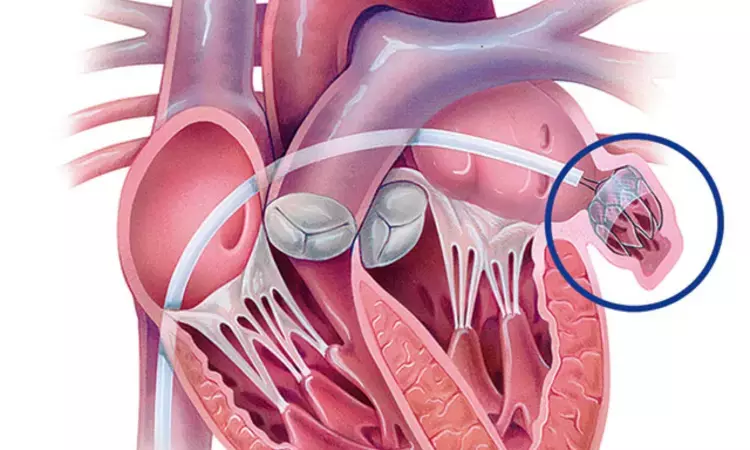


Researchers have found in a new study that during percutaneous left atrial appendage occlusion (LAAO) procedures, suspended lead suits significantly reduced head radiation exposure for interventional echocardiographers compared with conventional lead aprons. The median radiation dose fell to zero, with 60% of procedures showing no detectable exposure, suggesting suspended suits provide superior occupational radiation protection and may have broader use in interventional cardiology. The study was published in JAMA Network Open by David A. and colleagues.
Percutaneous left atrial appendage occlusion (LAAO) is being used increasingly for the management of patients suffering from atrial fibrillation who cannot be on anticoagulant therapy for a long period. These procedures utilize imaging guidance in real-time, which requires interventional echocardiographers (IEs) to be close to the patient and the source of radiation during fluoroscopy-guided procedures. This has led to a potential risk for occupational radiation exposure for interventional echocardiographers.
This study was carried out as a blinded cross-sectional study to assess the levels of exposure to radiation among interventional echocardiographers during the performance of LAAO. This study prospectively collected data on levels of exposure to radiation among adult patients undergoing LAAO procedures between February 21st and August 22nd, 2023.
During the procedure, the interventional echocardiographer used a head-level dosimeter to measure the levels of exposure to radiation. This device measured the levels of exposure to radiation on a case-by-case basis. This helped to determine the levels of exposure to radiation experienced by the physician.
Key findings:
• In this cross-sectional study, 125 patients were included who underwent LAA occlusion procedures with a mean age of 78 ± 8 years, and 77 patients (61.6%) were males.
• The radiation exposure for interventional echocardiographers was assessed using head-level real-time dosimeters.
• In 95 patients who underwent procedures with suspended lead suits, the median radiation dose was 0.0 μSv (IQR 0.0–0.3 μSv), which was significantly lower than the median radiation dose of 10.6 μSv (IQR 5.8–24.1 μSv) in 30 patients who underwent procedures with traditional lead aprons (P < 0.001).
• In addition, 60% of procedures had undetectable levels of radiation exposure with suspended lead suits (57/95) compared with 0% with traditional lead aprons (0/30; P < 0.001).
• Furthermore, in 0% of patients who underwent procedures with suspended lead suits, the radiation doses were ≥20 μSv, whereas in 30% of patients who underwent procedures with traditional lead aprons, the radiation doses were ≥20 μSv (P < 0.001).
• When adjusting for radiation dose area product, the radiation exposure for physicians was 0.0 μSv/Gy×cm² with suspended lead suits compared with 0.6 μSv/Gy×cm² with traditional lead aprons (P < 0.001).
The use of suspended lead suits was associated with a reduction in head-level radiation exposure for interventional echocardiographers during left atrial appendage occlusion procedures compared to the use of a traditional lead apron. The results indicate that suspended lead shielding can greatly contribute to radiation safety for physicians who perform structural heart interventions.
Reference:
McNamara DA, Decker JM, McNamara MW, et al. Suspended Lead Suits and Radiation Exposure in Interventional Echocardiographers. JAMA Netw Open. 2026;9(3):e2558134. doi:10.1001/jamanetworkopen.2025.58134