
Ultrathin Biodegradable Polymer Stents Prove Effective Alternative in Routine PCI: IHJ 2025 Study Confirms
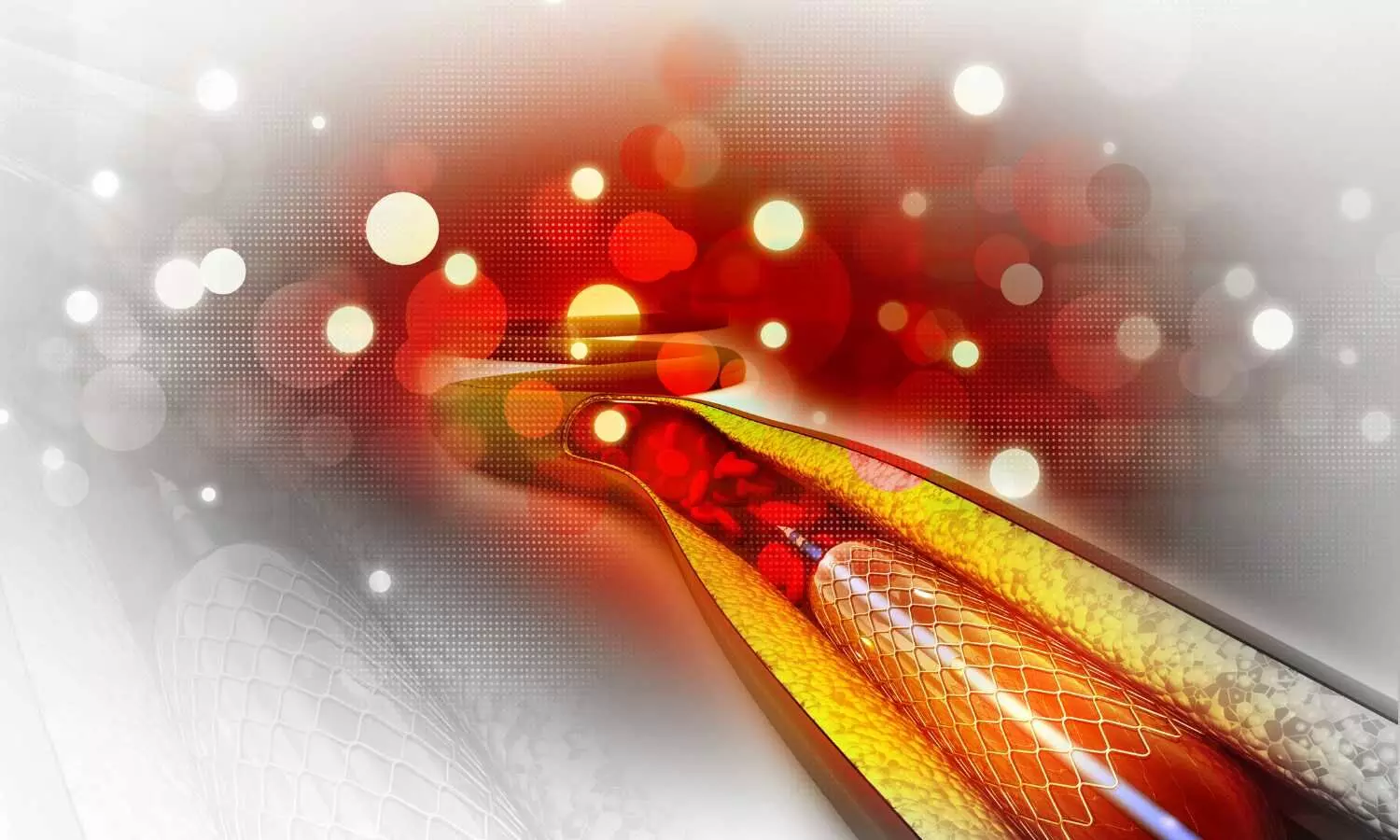


A recent study found that ultrathin-strut Biodegradable Polymer Everolimus-Eluting Stents (BDP-EES) demonstrated safety and efficacy comparable to Durable Polymer Everolimus-Eluting Stents (DP-EES) over 24 months following Percutaneous Coronary Intervention (PCI). Clinical outcomes revealed nearly identical Major Adverse Cardiac Event (MACE) rates of 3.8% for the BDP-EES group compared to 3.7% for the DP-EES group.
These findings were published in October 2025 in the Indian Heart Journal.
The Evolution of Drug-Eluting Stent Technology:
Drug-eluting stents (DES) have significantly lowered restenosis by utilizing polymer-based drug release, yet permanent polymers may delay arterial healing and increase risks of late complications. BDP-EES platforms were designed to mitigate these risks by degrading after the drug is eluted, potentially enhancing vascular recovery. Additionally, strut thickness is a critical performance factor; thinner struts, such as those in the ultrathin BDP-EES (65 μm), are intended to reduce vessel injury and improve deliverability compared to thicker platforms like the DP-EES (81 μm).
Study Overview
The retrospective, multicenter study was conducted across six Indian facilities, evaluating patients treated for Coronary Artery Disease (CAD). The analysis compared the Eternia stent (BDP-EES) against the Xience stent (DP-EES) over a 24-month clinical follow-up. Patients included those presenting with stable angina or acute coronary syndrome (ACS), which encompasses ST-segment elevation myocardial infarction (STEMI), non-ST-segment elevation myocardial infarction, and unstable angina. The study measured primary outcomes through a MACE composite, which includes cardiac death, myocardial infarction (MI), and target lesion revascularization (TLR).
The key findings from the study include:
• The MACE rates at 24 months were nearly identical between the BDP-EES (3.8%) and DP-EES (3.7%) groups, showing no statistically significant difference (p = 0.939).
• Despite the comparable outcomes, patients receiving the BDP-EES were generally older and had a higher prevalence of complex chronic total occlusions (18.2% vs. 6.6%).
• Safety profiles remained excellent, with no definite or probable Stent Thrombosis (ST) reported in either group, and possible thrombosis rates were minimal at 0.3% and 0.4%, respectively.
Clinical Relevance and Long-term Performance
For practicing cardiologists, this study confirms that the ultrathin-strut BDP-EES is a safe and effective alternative to established DP-EES platforms in routine clinical practice. The results highlight that even in a cohort with more complex lesions and older age, the biodegradable polymer technology maintained high safety standards and efficacy. While the performance was equivalent at 24 months, the theoretical benefit of polymer degradation may offer further long-term protection against late vascular events. Clinicians should note that the low rates of target vessel revascularization and stent thrombosis across both devices reinforce the reliability of modern stent designs. Overall, the choice of an ultrathin BDP-EES provides comparable clinical outcomes to the gold-standard DP-EES, supporting its use in diverse patient populations.
Reference
Kaul U, Garg PK, Chopra R, Gupta R, Mathur V. Ultra-low thickness bio-degradable polymer vs durable polymer everolimus eluting stents – A 24 months clinical follow-up study. Indian Heart Journal. 2025;77(6):467-470
