
Wristband Wearable Shows High Accuracy in Detecting Cardiac Arrest, Suggests Study
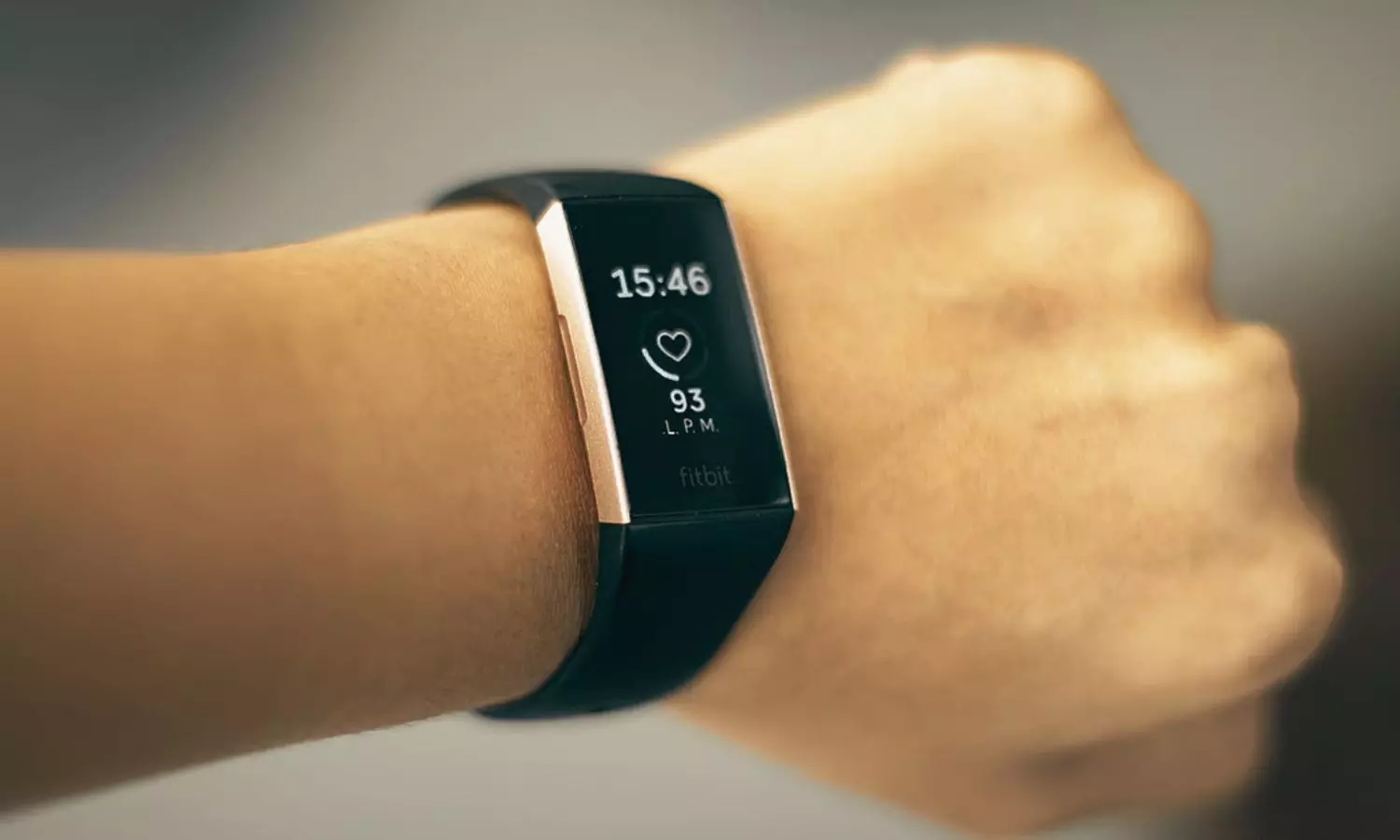


Netherlands: A study published in The Lancet Regional Health-Europe has found that a wristband wearable can detect cardiac arrest with high sensitivity. The technology has the potential to enable rapid recognition of cardiac arrest, allowing earlier emergency response and improving the chances of timely cardiopulmonary resuscitation (CPR) and survival.
Delayed recognition remains a major challenge in unwitnessed out-of-hospital cardiac arrest, where every minute without treatment reduces the likelihood of survival. Wearable technologies capable of automatically detecting cardiac arrest and triggering emergency alerts could help address this problem. To evaluate such an approach under real-world conditions, Roos Edgar from the Department of Cardiology, Radboud University Medical Center, the Netherlands, and colleagues assessed a wrist-worn photoplethysmography (PPG)-based detection algorithm in patients experiencing true cardiac arrest following withdrawal of life-sustaining treatment. The findings were published in The Lancet Regional Health – Europe.
This prospective, single-center study enrolled 44 adult intensive care unit patients undergoing planned withdrawal of life-sustaining treatment. Participants wore the CardioWatch wristband until death, while continuous electrocardiography (ECG) and invasive arterial blood pressure monitoring served as the reference standards. The researchers refined a previously developed rule-based algorithm using two training cohorts before evaluating its performance in an independent test cohort. The primary outcomes were the sensitivity of cardiac arrest detection and the number of false-positive alerts.
Key findings from the study include:
- The study included 44 patients with a median age of 65 years, of whom 75% were men.
- All participants experienced non-shockable cardiac arrest, the most common form of out-of-hospital cardiac arrest.
- The detection algorithm achieved 100% sensitivity in the first training cohort and 90% sensitivity in the second training cohort.
- In the independent test cohort, the wristband detected all 23 cardiac arrest events, corresponding to 100% sensitivity.
- Only one false-positive alert occurred during testing, indicating a low false alarm rate.
- Cardiac arrest was detected when the median arterial pressure had fallen to 30 mmHg and the median pulse pressure to 13 mmHg, demonstrating the device's ability to recognize circulatory collapse at an early stage.
The findings extend earlier research based on simulated or induced cardiac arrest by providing the first prospective validation of a wrist-based photoplethysmography (PPG) algorithm in true, non-induced, non-shockable cardiac arrest.
The researchers noted that the small sample size, retrospective algorithm refinement, and controlled ICU setting may limit generalizability. They also acknowledged that the device was tested only in sedated patients, while missing blood pressure data and the potential impact of arterial stenosis could have influenced the results.
Overall, the findings show that wrist-derived photoplethysmography can detect true cardiac arrest with high sensitivity and few false alarms. The researchers called for larger real-world studies to validate the technology across diverse populations before widespread clinical use.
Reference:
Edgar, R., Jansen, C. E., Pol, L. R., Ebrahimkheil, K., Van Kaam, R. C., Ronner, E., Brouwer, M. A., Beukema, R. J., Cetinyurek-Yavuz, A., Stas, P. C., Boersma, E., Hoedemaekers, C. W., Van Royen, N., & Bonnes, J. L. (2026). Automated cardiac arrest detection using wrist-derived photoplethysmography during withdrawal of life-sustaining treatment: A prospective clinical validation study. The Lancet Regional Health - Europe, 67, 101791. https://doi.org/10.1016/j.lanepe.2026.101791

Next Story