
4 Perent Tetrasodium EDTA Locking Solution Reduces Central Venous Catheter Complications in ICU Patients: Study
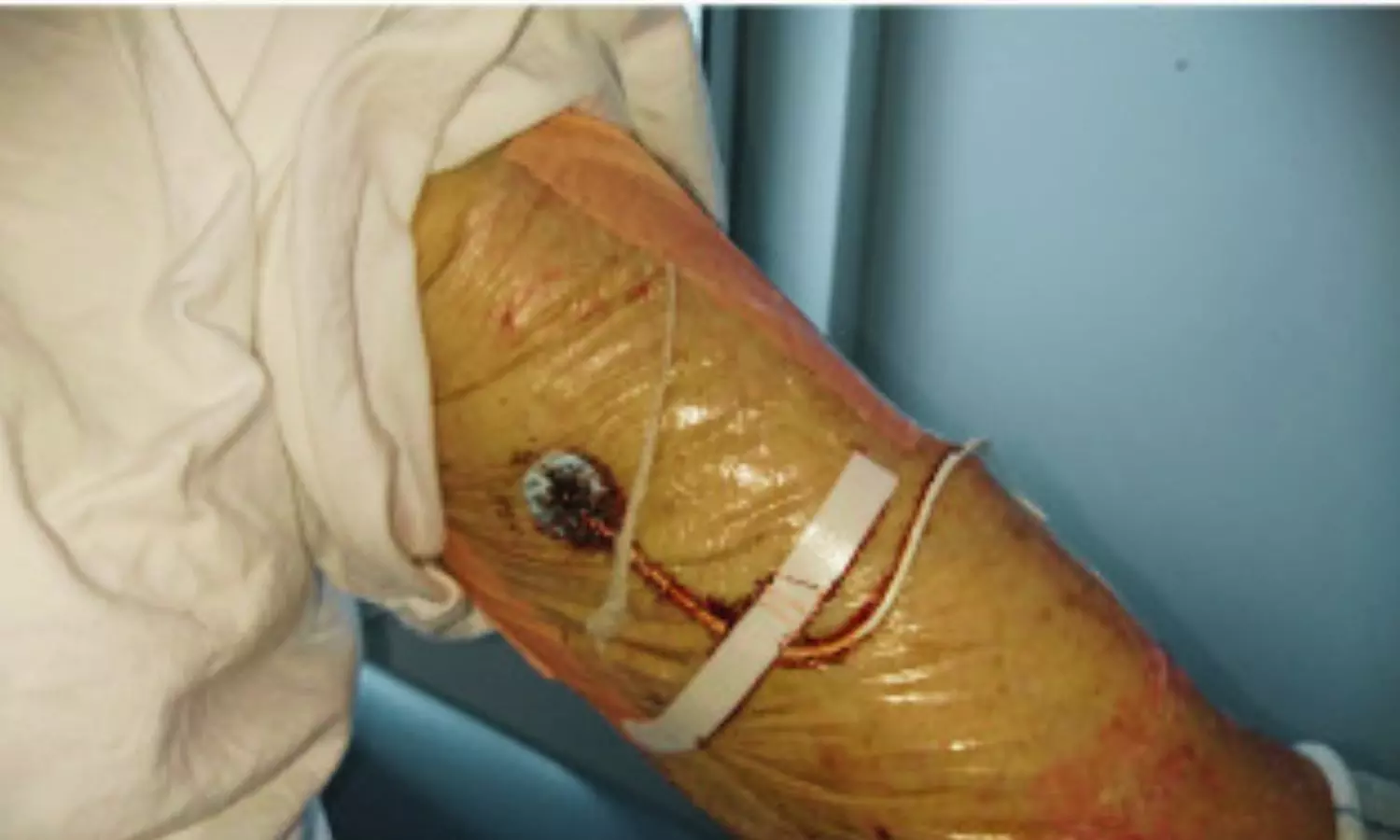


Canada: Researchers have discovered in a new study that among adult intensive care unit (ICU) patients, the use of 4% tetrasodium EDTA (t-EDTA) as a central venous access device (CVAD) locking solution significantly reduced catheter-related complications compared with standard locking solutions.
The reduction was observed in a composite outcome that included CVAD-associated bloodstream infections, catheter occlusions requiring alteplase treatment, and catheter removal due to occlusion.
These findings, reported in a randomized clinical trial published in JAMA by Marlena Ornowska, Department of Biomedical Physiology and Kinesiology, Simon Fraser University, Burnaby, British Columbia, Canada, and colleagues, suggest that 4% tetrasodium EDTA may be an effective strategy for maintaining catheter patency and reducing catheter-related complications, including infection, in critically ill patients.
Central venous access devices (CVADs) are essential in critical care but are associated with complications such as bloodstream infections, catheter occlusions, and thrombosis. Tetrasodium EDTA has emerged as a potential preventive strategy due to its anticoagulant, antimicrobial, and antibiofilm properties.
To assess its effectiveness, researchers conducted a pragmatic, triple-blind, multicenter, cluster-randomized crossover trial across six Canadian hospitals. The study included 1,468 adult ICU patients with a CVAD and at least one inactive catheter lumen; 696 received 4% t-EDTA locking solution, while 772 received standard locking solutions (saline or 4% citrate for hemodialysis lines).
The primary outcome was a composite of CVAD-associated bloodstream infection, catheter occlusion requiring alteplase treatment, and catheter removal due to occlusion. Individual components of the composite outcome were also evaluated separately.
Key Findings:
- The incidence of the composite outcome was significantly lower with 4% t-EDTA than with standard locking solutions, at 13.1 versus 19.9 events per 1,000 catheter-days.
- After adjustment for potential confounders, patients receiving t-EDTA had a significantly lower rate of catheter-related complications compared with the control group.
- The greatest benefit was observed in reducing catheter occlusions that required alteplase treatment.
- Patients treated with t-EDTA experienced fewer catheter occlusion events than those receiving standard locking solutions.
- Although the overall composite outcome favored t-EDTA, differences in the other individual outcome components were not statistically significant.
The study included 1,468 patients with a mean age of 60 years, of whom nearly 38% were women. Its large sample size, multicenter setting, and triple-blind design enhance the robustness of the findings.
The researchers concluded that 4% tetrasodium EDTA locking solution reduces overall CVAD-related complications in critically ill adults compared with standard locking solutions. The approach may help maintain catheter patency, reduce the need for thrombolytic therapy, and lower infection-related complications, warranting further evaluation in broader patient populations.
Reference:
Ornowska M, Wittmann J, Blitz S, et al. 4% Tetrasodium EDTA to Prevent Central Venous Access Device–Associated Complications: A Randomized Clinical Trial. JAMA. 2026;335(24):2126–2134. doi:10.1001/jama.2026.6025

Next Story