3% Hydrogen Peroxide Dentifrice Not Recommended for Teeth Whitening, suggests study
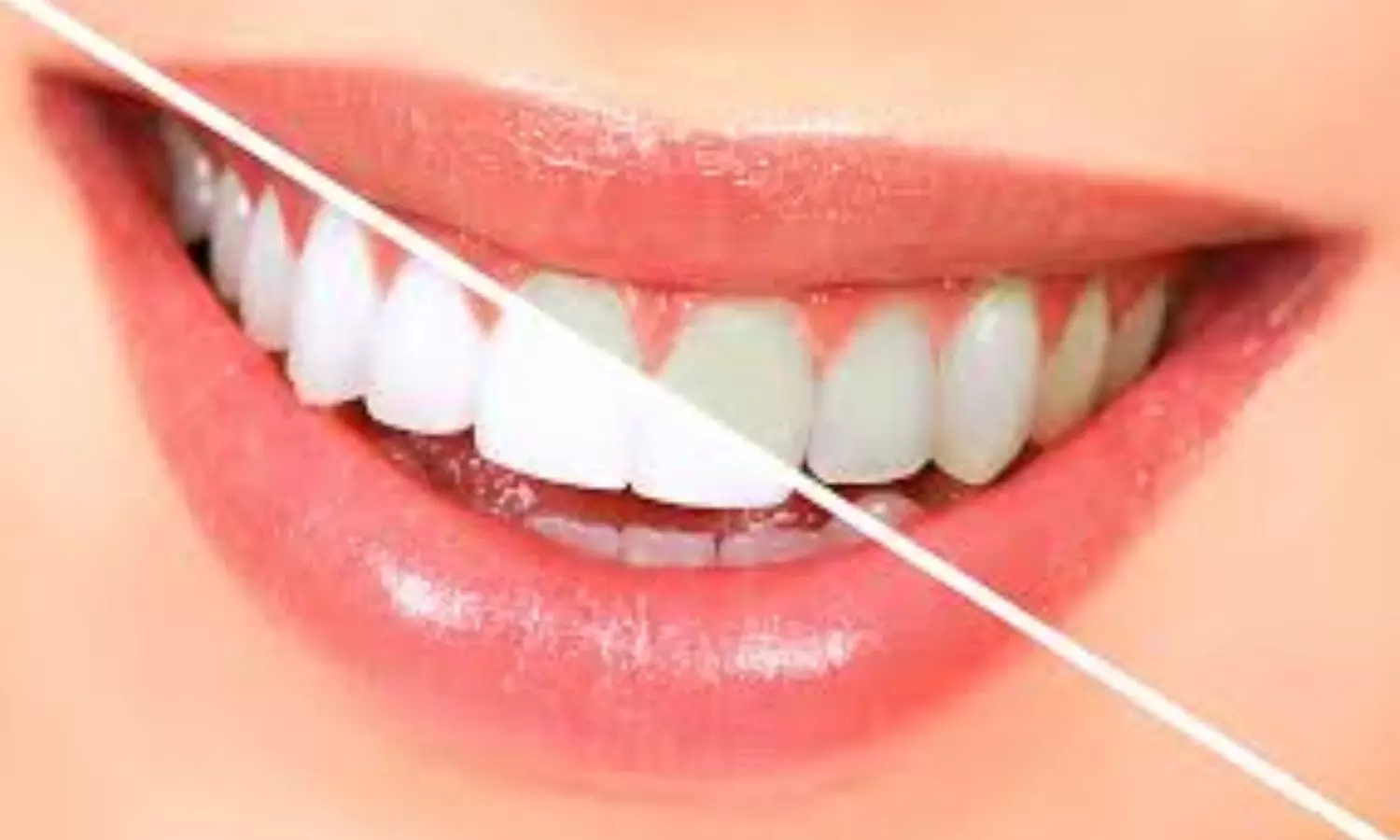


A new study published in the Journal of Dentistry showed that dentifrice containing 3% hydrogen peroxide (HP) should not be used as a bleaching therapy since it may have negative side effects without effectively whitening teeth.
Abrasives, optical modifiers, enzymes, or low-concentration peroxide are some of the ways that whitening dentifrices work. Dentifrices containing hydrogen peroxide have a higher potential for whitening, but their short contact duration may restrict effectiveness. Although a recently released 3% HP dentifrice showed encouraging *in vitro* results, there is still no clinical data on its effectiveness and safety. This randomized clinical experiment assessed the bleaching effectiveness, sensitivity, and gingival irritation related to the use of 3% HP dentifrice in comparison to traditional at-home bleaching due to potential side effects such as tooth sensitivity and gingival irritation.
90 participants were divided into two treatment groups (n = 45) at random: the experimental group used a 3% hydrogen peroxide (HP3) dentifrice to brush their teeth for three minutes, three times a day, for 4 weeks; the control group bleached their teeth at home using 10% carbamide peroxide (CP10) for three hours every day for two weeks. Subjective and objective methods were used to measure the change in tooth color at baseline, two and four weeks after therapy, and one month following treatment. A Visual Analog Scale (VAS) was used to assess the absolute risk and severity of tooth sensitivity (TS) and gingival irritation (GI).
For every color parameter assessed one month after treatment, the HP3 generated a color change that was substantially less than CP10 (p < 0.001). Neither HP3 nor CP10 showed any significant intragroup changes between the 2 and 4-week assessments (p > 0.05). TS and GI were linked to both treatments; however, when compared to CP10, the HP3 protocol demonstrated a decreased absolute risk (p < 0.006) and lower intensity (p = 0.01) of TS.
Overall, a 3% hydrogen peroxide dentifrice provided noticeably less tooth-whitening effectiveness than traditional 10% carbamide peroxide at-home bleaching, within the confines of this randomized clinical research. But gingival irritation and tooth sensitivity were linked to both treatments; the 3% hydrogen peroxide dentifrice considerably reduced the risk and severity of tooth sensitivity, but there was no discernible difference between the treatments in terms of gingival irritation.
Source:
Santos, M. E., Carvalho de Azevedo, D. A. I., Silva do Nascimento, V. G., de Pontes Santiago Xavier, B., & Meireles, S. S. (2026). Can a 3% hydrogen peroxide dentifrice promote tooth whitening? A randomized clinical trial. Journal of Dentistry, 106998,. https://doi.org/10.1016/j.jdent.2026.106998