
- Home
- Medical news & Guidelines
- Anesthesiology
- Cardiology and CTVS
- Critical Care
- Dentistry
- Dermatology
- Diabetes and Endocrinology
- ENT
- Gastroenterology
- Medicine
- Nephrology
- Neurology
- Obstretics-Gynaecology
- Oncology
- Ophthalmology
- Orthopaedics
- Pediatrics-Neonatology
- Psychiatry
- Pulmonology
- Radiology
- Surgery
- Urology
- Laboratory Medicine
- Diet
- Nursing
- Paramedical
- Physiotherapy
- Health news
- Fact Check
- Bone Health Fact Check
- Brain Health Fact Check
- Cancer Related Fact Check
- Child Care Fact Check
- Dental and oral health fact check
- Diabetes and metabolic health fact check
- Diet and Nutrition Fact Check
- Eye and ENT Care Fact Check
- Fitness fact check
- Gut health fact check
- Heart health fact check
- Kidney health fact check
- Medical education fact check
- Men's health fact check
- Respiratory fact check
- Skin and hair care fact check
- Vaccine and Immunization fact check
- Women's health fact check
- AYUSH
- State News
- Andaman and Nicobar Islands
- Andhra Pradesh
- Arunachal Pradesh
- Assam
- Bihar
- Chandigarh
- Chattisgarh
- Dadra and Nagar Haveli
- Daman and Diu
- Delhi
- Goa
- Gujarat
- Haryana
- Himachal Pradesh
- Jammu & Kashmir
- Jharkhand
- Karnataka
- Kerala
- Ladakh
- Lakshadweep
- Madhya Pradesh
- Maharashtra
- Manipur
- Meghalaya
- Mizoram
- Nagaland
- Odisha
- Puducherry
- Punjab
- Rajasthan
- Sikkim
- Tamil Nadu
- Telangana
- Tripura
- Uttar Pradesh
- Uttrakhand
- West Bengal
- Medical Education
- Industry
Adjacent Teeth Generally Maintain Pulp Health After Dental Implant Placement, suggests study
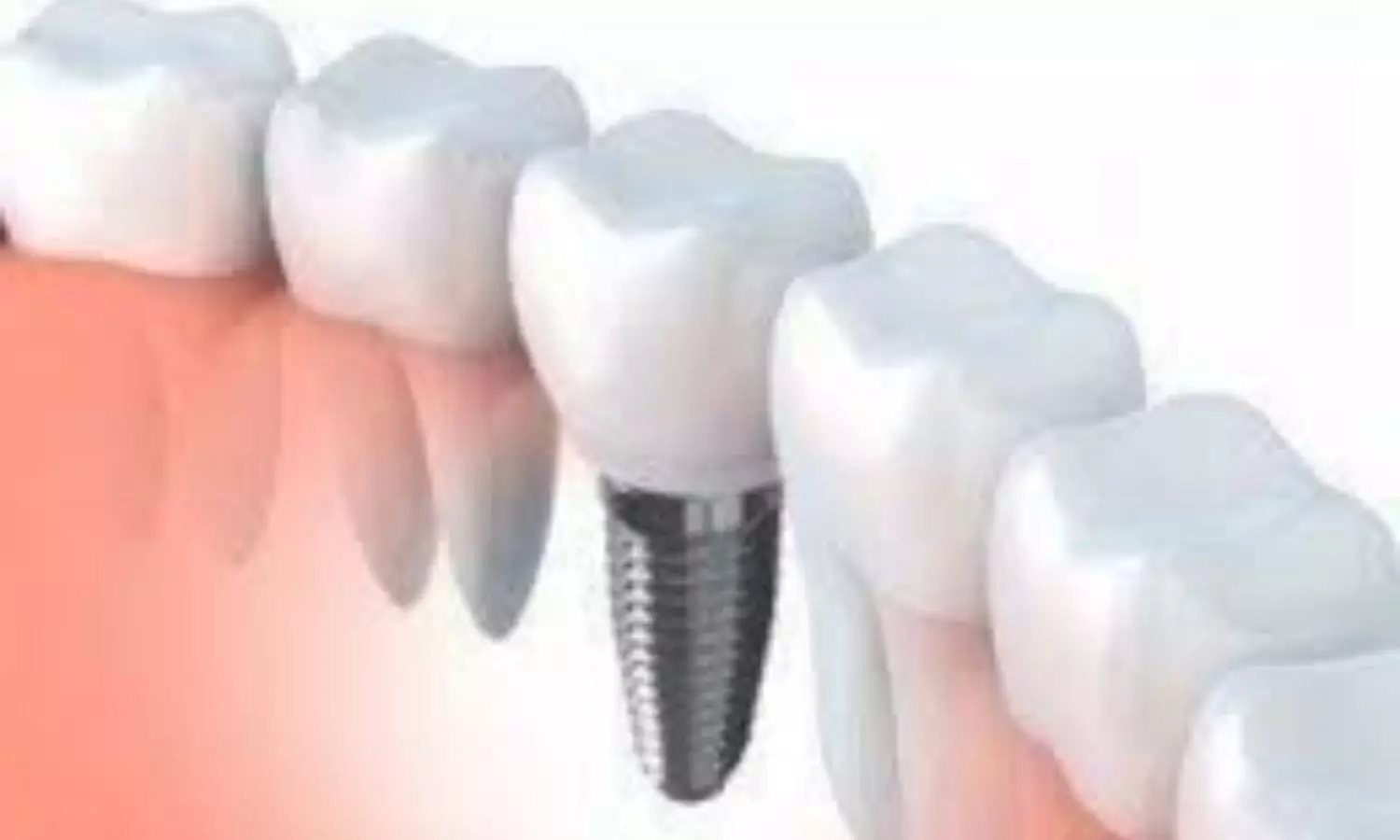
The biological behavior of natural teeth adjacent to implant sites during surgery and healing remains incompletely understood. This longitudinal cohort study aimed to evaluate changes in pulpal sensibility and periapical status of natural teeth adjacent to an edentulous site planned for implant placement before surgery, during healing, and up to prosthetic rehabilitation.
Seventy-four teeth adjacent to implant sites in 31 patients were monitored. Clinical evaluations were performed preoperatively and postoperatively at week 1, month 1, and month 3, assessing palpation, percussion, cold testing, electric pulp testing (EPT), and Numerical Pain Rating Scores (NPRS). Radiographic images obtained preoperatively and at 3 months were analyzed for periapical changes. Data were analyzed using Cochran-Mantel-Haenszel, Friedman, and Wilcoxon signed-rank tests. Additionally, linear and logistic mixed-effects models were used to account for intra-patient clustering by treating patient as a random effect (α = 0.05).
Percussion sensitivity was significantly higher at week 1 than preoperatively (P=.011), and at month 1 (12.2%) compared to month 3 (0%) (P=.046). No significant difference was found in EPT values between preoperative and week 1 (P>.05), but week 1 values were significantly higher than month 1 (P=.031). Preoperative NPRS scores were significantly lower than week 1, month 1, and month 3 (P<.05). One tooth (1.4%) required root canal treatment due to irreversible pulpitis at week 1. Sensitivity analyses using mixed-effects models confirmed the findings, with significant effects for NPRS (β=0.80, P<.001) and percussion sensitivity (OR = 5.23, P<.001) at the 1-week interval.
Most adjacent teeth maintained pulpal health within 3 months after implant placement. While one case required endodontic treatment, the remaining postoperative changes were transient and consistent with postoperative healing rather than persistent pathological conditions.
Reference:
Kussever, H., Yilmaz, S., Topcu, B.E. et al. Longitudinal monitoring of pulpal and periapical health of adjacent natural teeth during the implant healing period: a prospective cohort study. BMC Oral Health (2026). https://doi.org/10.1186/s12903-026-09211-8

Dr. Shravani Dali has completed her BDS from Pravara institute of medical sciences, loni. Following which she extensively worked in the healthcare sector for 2+ years. She has been actively involved in writing blogs in field of health and wellness. Currently she is pursuing her Masters of public health-health administration from Tata institute of social sciences. She can be contacted at editorial@medicaldialogues.in.
Dr Kamal Kant Kohli-MBBS, DTCD- a chest specialist with more than 30 years of practice and a flair for writing clinical articles, Dr Kamal Kant Kohli joined Medical Dialogues as a Chief Editor of Medical News. Besides writing articles, as an editor, he proofreads and verifies all the medical content published on Medical Dialogues including those coming from journals, studies,medical conferences,guidelines etc. Email: drkohli@medicaldialogues.in. Contact no. 011-43720751

