
Hydrogen Peroxide-Containing Whitening Mouthrinses May Prevent Coffee-Induced Discoloration of Composite Restorations: Study
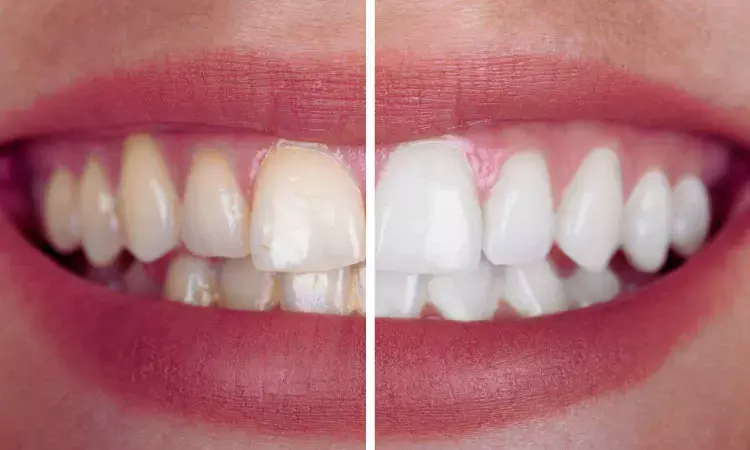


Researchers have found in a new study that hydrogen peroxide-containing whitening mouthrinses helped prevent coffee-induced discoloration of composite restorations. However, they did not cause clinically noticeable whitening, instead contributing to the maintenance of optical stability of the restorations over time.
Dental composite restorations are widely used for their esthetic appeal, yet they remain susceptible to discoloration from commonly consumed beverages such as coffee. Whitening mouthrinses are increasingly marketed as a convenient option to preserve tooth color, but evidence regarding their preventive role in maintaining composite restorations is limited. To address this, Gülşah Aşik from the Faculty of Dentistry, Çanakkale Onsekiz Mart University, Türkiye, and colleagues conducted an in-vitro study to examine whether daily-use whitening mouthrinses can protect different resin composites from coffee-related staining while preserving their optical properties.
In the study, published in Odontology, the researchers evaluated three commonly used resin composites: Filtek One Bulk Fill, Charisma Diamond One, and Estellite Sigma Quick. Standardized specimens of each material were immersed daily in coffee to simulate routine staining challenges. Following coffee exposure, the samples were treated with one of three whitening mouthrinses—Listerine Advanced White, Colgate Optic White, or R.O.C.S. Whitening Mouthrinse—for a period of three months. Distilled water was used as a control. Changes in color, translucency, and whiteness were assessed using a spectrophotometer under standardized conditions.
The researchers reported the following findings:
- All whitening mouthrinses significantly reduced coffee-induced discoloration when compared with the control group.
- Hydrogen peroxide–containing mouthrinses, namely Listerine Advanced White and Colgate Optic White, showed the strongest preventive effect, with color changes remaining close to clinically acceptable limits.
- The non–peroxide-based R.O.C.S. whitening mouthrinse demonstrated a comparatively limited ability to prevent staining.
- The findings indicate that hydrogen peroxide plays a central role in limiting pigment accumulation on composite resin surfaces.
- Whitening mouthrinses did not cause significant changes in the translucency of the composite materials.
- Coffee exposure alone resulted in a measurable reduction in translucency, but the use of whitening mouthrinses did not exacerbate this effect.
- Changes in whiteness were mild across all groups and remained below the level of clinical perceptibility.
- The results suggest that whitening mouthrinses help maintain the original appearance of restorations rather than producing visible whitening.
- Among the materials tested, the nanohybrid composite Estellite Sigma Quick showed the most stable optical performance over time.
- Material composition was found to influence long-term esthetic stability, affecting color, translucency, and whiteness outcomes.
Overall, the study suggests that hydrogen peroxide–based whitening mouthrinses can be a useful adjunct in daily oral care to limit beverage-related staining of composite restorations. While they may not deliver visible whitening, their role in maintaining esthetic stability without compromising translucency could be clinically valuable for patients with resin-based restorations.
Reference:
Aşik, G., Ari, F., Özçinar, A. et al. Preventive effects of whitening mouthrinses against coffee-induced discoloration in different types of resin composites: a daily-use in-vitro study. Odontology (2026). https://doi.org/10.1007/s10266-026-01329-z

Next Story