Imaging-Detected Pulp Calcification Associated with Diabetes and Atherosclerotic Disease: Study
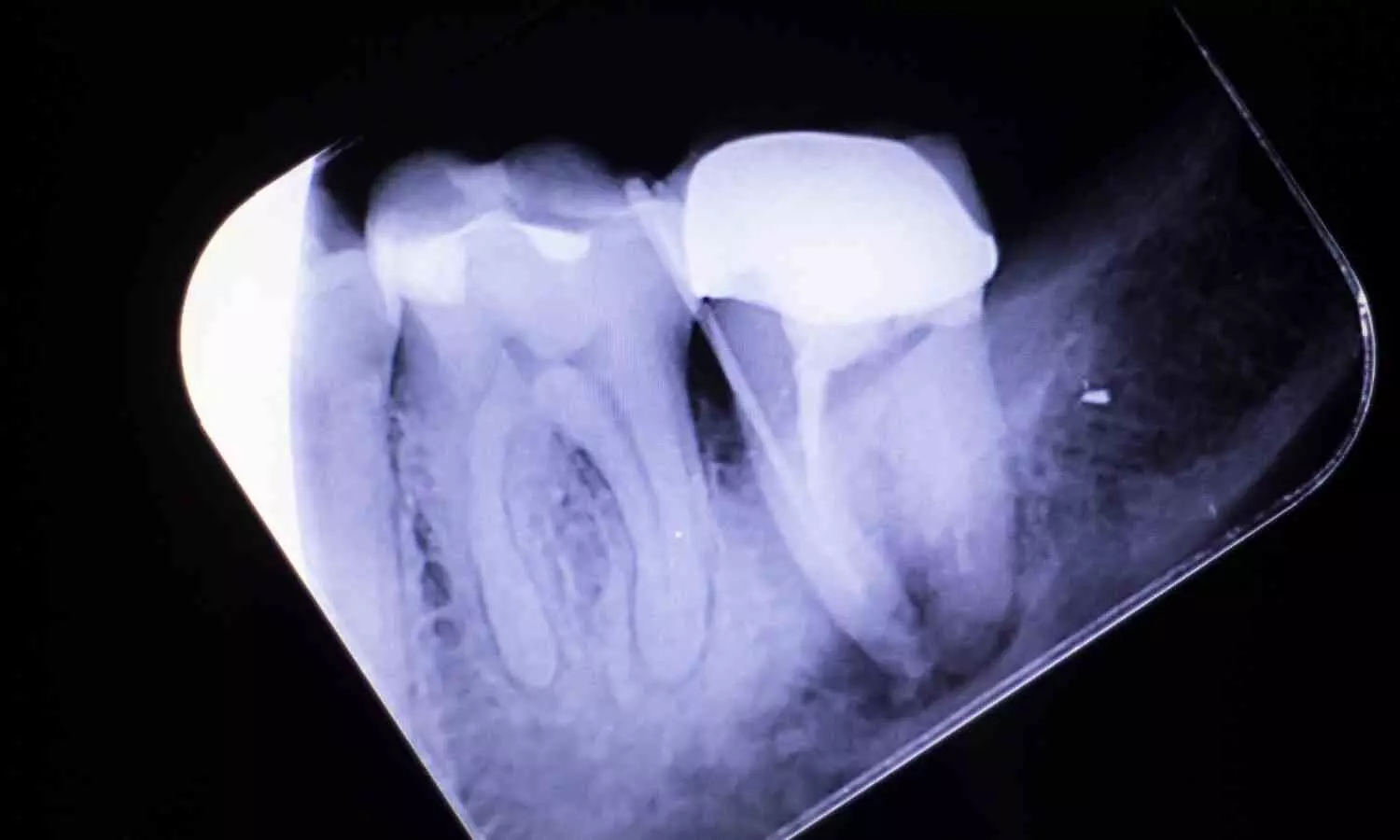


Current evidence indicates a statistically significant association between imaging-detected Pulp Calcification and systemic metabolic and vascular conditions, particularly diabetes mellitus and atherosclerosis-related outcomes. However, the available evidence is largely observational and does not establish causality, temporal relationships, predictive value, or diagnostic utility. Pulp Calcification may reflect broader systemic dysregulation, but its biological significance remains uncertain; therefore, findings should be interpreted cautiously and in the appropriate clinical context.
Pulp calcification (PC) is a common imaging finding traditionally attributed to local factors or ageing. However, increasing evidence suggests that it may be associated with broader systemic biological disturbances. Clarifying this association may help determine whether dental pulp findings contribute to the interpretation of systemic health.
A study was done to evaluate whether imaging-detected PC is associated with systemic conditions by synthesising evidence across diverse disorders and identifying recurring biological and methodological patterns. Comprehensive searches were conducted in EMBASE, ProQuest, PubMed, SciELO, Scopus, Web of Science, and the Virtual Health Library up to November 2025. Observational studies assessing associations between imaging-detected PC and systemic conditions were included. Study quality and risk of bias were assessed using the Newcastle–Ottawa Scales and Joanna Briggs Institute tools. A mixed-methods synthesis combined thematic analysis with random-effects meta-analysis. Associations were expressed as odds ratios (ORs) with 95% confidence intervals (CIs), and certainty of evidence was evaluated using GRADE.
Thirty-three studies were included, comprising 19 057 patients. The primary meta-analysis (n = 22) showed a statistically significant association between systemic conditions and PC (OR = 2.69; 95% CI: 2.04–3.54), although substantial heterogeneity was observed. Subgroup analyses identified a consistent association for diabetes mellitus, with no statistical heterogeneity (OR = 2.30; I2 = 0.0%), while the atherosclerosis-focused analysis showed the highest magnitude of association (OR = 4.70; I2 = 0.0%). Broader cardiovascular disease conditions did not reach statistical significance (p = 0.155). Renal and genetic specialised conditions showed only exploratory evidence, based on two studies and rated as very low certainty. Thematic analysis suggested that PC may be associated with metabolic and vascular triggers, modulated by molar predilection and constrained by imaging resolution. The certainty of evidence ranged from low to very low across outcomes.
Current evidence supports a statistically significant association between imaging-detected PC and systemic metabolic and vascular conditions, particularly diabetes mellitus and atherosclerosis-related outcomes. However, the evidence is predominantly observational and does not establish causality, temporality, prediction, or diagnostic utility. PC may represent an imaging finding associated with systemic dysregulation, but its biological significance remains uncertain and its interpretation should remain cautious and context-dependent.
Reference:
da Silva-Filho, J. E., P. M. C. Torres, and E. D. Gurgel-Filho. 2026. “ Associations Between Imaging-Detected Pulp Calcification and Systemic Diseases: A Systematic Review, Thematic Analysis, and Meta-Analysis.” International Endodontic Journal 1–20. https://doi.org/10.1111/iej.70230.