Modified Socket Shield Technique May Reduce Post-Extraction Bone Loss, suggests study
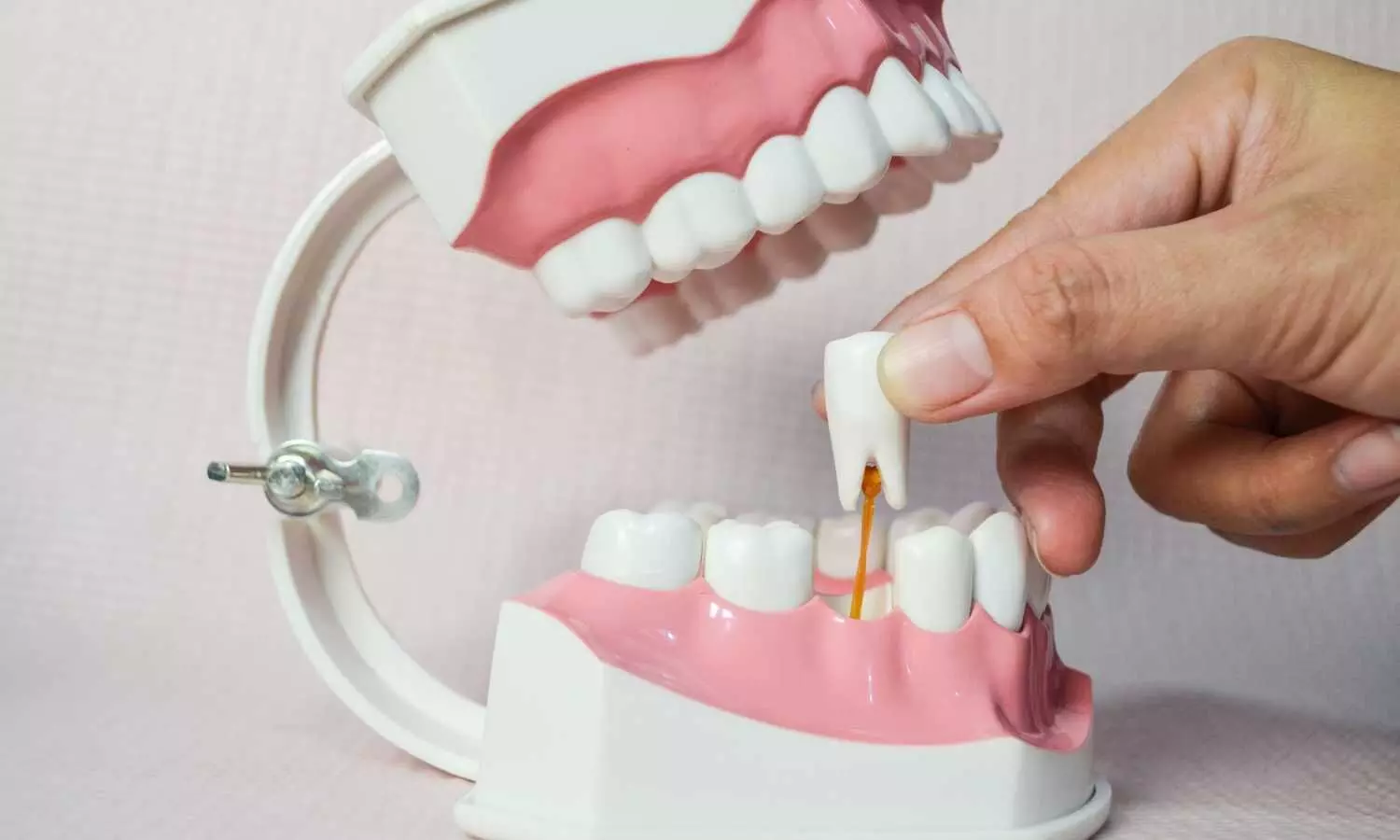


Researchers have found in a new study that the modified socket shield technique without immediate implant placement may help protect against post-extraction bone remodeling, especially in sites where buccal bone thickness is less than 1.5 mm. The study was published in the Medicina Oral, Patologia Oral y Cirugia Bucal journal by L-M Sáez-Alcaide and colleagues.
Tooth extraction is known to result in resorption of the alveolar ridge due to the absence of the tooth, which leads to the absence of the periodontal ligament and consequently affects the blood supply to the surrounding bone tissue. Therefore, considerable horizontal and vertical resorption may be experienced during the healing phase of tooth extraction. The socket shield technique was developed to ensure that part of the tooth root is preserved next to the buccal bone to ensure the integrity of the periodontal ligament and blood supply.
The study subjects consisted of patients who needed dental extraction at a site other than a molar tooth. Patients were randomly assigned to either a test or a control group. Patients in the test group were subjected to the modified socket shield technique, while those in the control group were subjected to unassisted socket healing.
In order to evaluate changes in alveolar bone structure, cone beam computed tomography (CBCT) scans were taken before the surgical procedure and 4 months subsequent to the surgical procedure. Superimposition of these scans enabled researchers to evaluate changes in both horizontal ridge width and vertical bone height. By doing so, researchers were able to evaluate the amount of bone remodeling that took place during this period.
Analysis of covariance (ANCOVA) was used for statistical analysis in this study, where several parameters were evaluated: buccal bone height reduction, buccal bone width reduction at different levels, and overall bone volume resorption.
Key findings:
The randomized clinical investigation assessed the post-extraction bone remodeling in patients who needed to undergo tooth extraction of non-molar teeth using CBCT imaging before surgery and 4 months after treatment.
Significant differences were found between treatment groups in buccal height reduction (p < 0.001) and buccal bone width reduction at 1 mm, 3 mm, and 5 mm (p < 0.001).
The modified socket shield technique presented lower dimensional changes in comparison to natural socket healing, showing 1.527 mm in buccal height, 0.982 mm in buccal bone width at 1 mm, 0.783 mm at 3 mm, and 0.545 mm at 5 mm in comparison to natural healing.
Additionally, volumetric assessment showed 26.2 mm³ of bone resorption in comparison to natural healing in the modified socket shield group.
No significant differences were found in vertical or horizontal bone resorption in the lingual side of the sockets.
Moreover, it was found that there is a critical thickness of buccal bone of 1.5 mm or less, in which the protective effect of the modified socket shield technique is particularly evident.
The modified socket shield method, when performed without immediate implant placement, may be a protective factor in post-extraction alveolar bone remodeling. This method has been shown to significantly reduce buccal bone height loss, preserve width at multiple levels, and reduce total volume loss in comparison to unassisted socket healing. These effects are most notable in areas where the buccal bone thickness is less than 1.5 mm, suggesting that this method may be most effective in anatomically compromised areas following tooth extraction.
Reference:
Sáez-Alcaide, L. M., Cobo-Vázquez, C., Cortés-Bretón-Brinkmann, J., Sánchez-Labrador, L., López-Pintor, R. M., López-Quiles, J., & García-Denche, J. T. (2026). Modified socket shield technique versus unassisted socket healing: A randomized controlled clinical trial using CBCT-based dimensional analysis. Medicina oral, patologia oral y cirugia bucal, 27936. Advance online publication. https://doi.org/10.4317/medoral.27936