MRI-Detected TMJ Effusion Correlates With Pain Severity and Jaw Dysfunction: Study
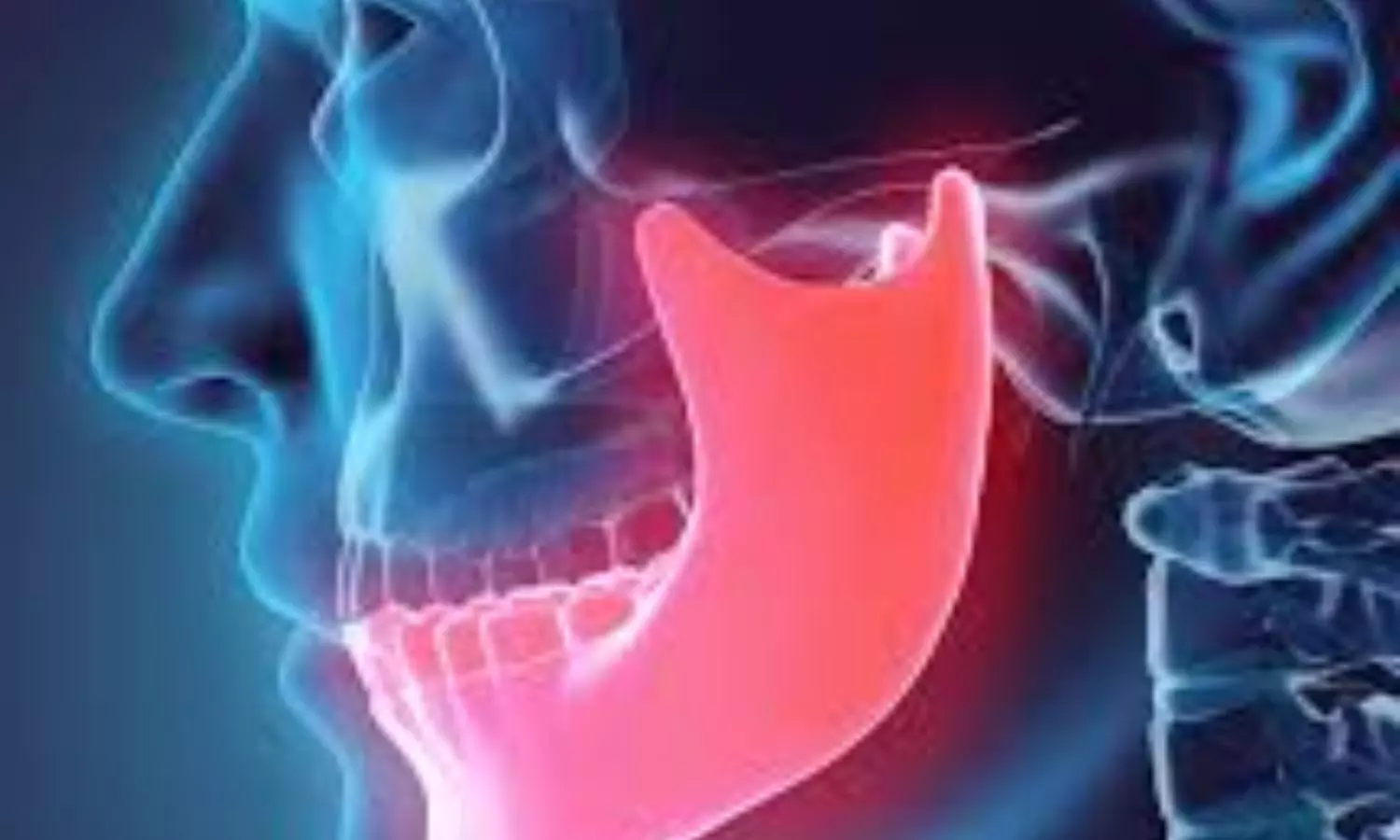


Researchers have found in a new study that severity of MRI-detected temporomandibular joint (TMJ) effusion is associated with greater pain intensity and functional impairment in patients with TMJ arthralgia. This supports TMJ effusion as a clinically meaningful imaging marker rather than merely an incidental radiological finding.
Temporomandibular joint (TMJ) effusion on magnetic resonance imaging (MRI) is considered a radiologic sign of intra-articular inflammation; however, its clinical relevance to pain and mandibular dysfunction remains inconsistent. The objective of this study is to determine whether severity-graded MRI-detected TMJ effusion is associated with pain intensity and dysfunction in patients with temporomandibular disorders (TMD).
This retrospective clinical imaging study included 221 patients with TMJ arthralgia diagnosed according to the Diagnostic Criteria for TMD (DC/TMD Axis I). TMJ effusion was assessed using 3.0-T MRI and classified as Grade 0 (non-effusion), Grade 1 (mild effusion), or Grade 2 (moderate-to-severe effusion). Pain and dysfunction were evaluated using the visual analog scale (VAS), dysfunction index (DI), palpation index (PI), craniomandibular index (CMI), symptom duration, and associated clinical symptoms. Group comparisons and multivariable logistic regression analyses were performed.
Compared with the non-effusion group, the effusion group showed significantly higher VAS (5.08 ± 2.16 vs. 3.45 ± 2.09, p < 0.001), DI (0.29 ± 0.24 vs. 0.21 ± 0.23, p = 0.014), and CMI (0.27 ± 0.26 vs. 0.18 ± 0.24, p = 0.025), as well as longer symptom duration (17.25 ± 32.34 vs. 6.34 ± 11.89 months, p < 0.001). Across effusion grades, VAS, DI, PI, and CMI increased significantly in a dose–response manner (all p < 0.01). In multivariable analyses, female sex (OR, 2.78; 95% CI, 1.55–4.97), higher VAS (OR, 2.03; 95% CI, 1.51–2.72), higher CMI (OR, 1.68; 95% CI, 1.26–2.25), TMJ noise (OR, 2.05; 95% CI, 1.17–3.59), locking (OR, 2.45; 95% CI, 1.39–4.30), and tinnitus (OR, 2.28; 95% CI, 1.30–4.02) were independently associated with effusion presence. Female sex (OR, 3.29; 95% CI, 1.47–7.38), higher VAS (OR, 2.11; 95% CI, 1.46–3.04), and higher CMI (OR, 1.71; 95% CI, 1.24–2.36) were independently associated with Grade 2 effusion.
Severity-graded MRI-detected TMJ effusion is associated with greater pain intensity and dysfunction in patients with TMJ arthralgia, supporting its interpretation as a clinically meaningful imaging marker rather than an incidental radiologic finding.
Reference:
Y.-H. Lee, S.-W. Jang, S. Jeon, Q.-S. Auh, and Y.-K. Noh, “ Severity-Graded MRI-Detected TMJ Effusion Is Associated With Pain and Dysfunction in Temporomandibular Disorder Patients,” Journal of Oral Rehabilitation (2026): 1–16, https://doi.org/10.1111/joor.70276.