
New Evidence-Based Guidance Updates Treatment of Gingival Recession with Cervical Lesions
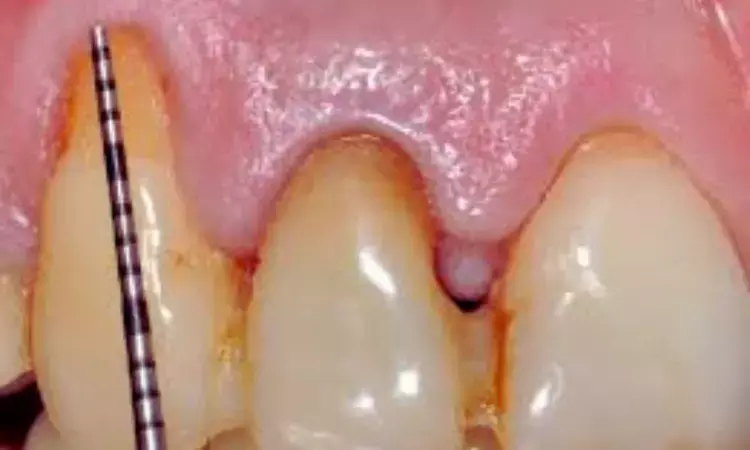


USA: Researchers have provided updated, evidence-based guidance to help clinicians manage a common and often challenging dental condition-gingival recession occurring alongside non-carious cervical lesions (NCCLs).
The review article, published in the Journal of Periodontology by Mauro Pedrine Santamaria from the College of Dentistry, University of Kentucky, and colleagues, outlines a refined decision-making framework for treating these combined defects using the latest available evidence.
Gingival recession, where the gum margin moves apically and exposes the root surface, is frequently seen in clinical practice. Importantly, nearly half of these cases are associated with NCCLs—tooth structure losses near the gum line that are not caused by decay. When both conditions coexist on the same tooth, they are referred to as combined defects (CDs). These situations are more complex than isolated gingival recession on an intact tooth and often require tailored treatment strategies.
The authors conducted a narrative review of current literature by searching major databases, including Medline/PubMed, Embase, BIREME, and Google Scholar. To ensure a structured approach, NCCLs were categorized using the Pini-Prato classification system, while gingival recession was classified based on the Cairo system and gingival phenotype. Using these parameters, the researchers proposed an updated decision tree designed to guide clinicians in selecting the most appropriate treatment approach.
The review highlights:
- Multiple treatment options are available for combined defects, integrating different periodontal surgical techniques, graft materials, and restorative protocols.
- In cases with mild cervical defects (A−, A+, and B−), evidence indicates that restoration of the non-carious cervical lesion is often not required. Management in these patients can focus exclusively on surgical root coverage.
- The selection of the root coverage technique in mild cases should be guided by the features of the gingival recession and the patient’s gingival thickness.
- When more advanced defects are present, particularly B+ or V-shaped non-carious cervical lesions, a combined treatment approach becomes necessary.
- In such advanced cases, restoring the cervical lesion with composite materials along with a root coverage procedure provides improved functional and aesthetic outcomes.
- Approximately 25% of combined defects fall into this more complex category, highlighting the importance of thorough clinical assessment and careful treatment planning.
- Gingival phenotype plays a key role in determining the most suitable treatment approach.
- In patients with thin gingival tissue, autogenous soft tissue grafts using the patient’s own tissue generally result in more predictable and stable outcomes.
- When the gingival tissue is already thick, satisfactory results may be achieved without the use of grafting.
- In moderate cases, both autogenous grafts and commercially available biomaterials may help improve long-term treatment success.
Overall, the updated recommendation integrates recent evidence, including advances in soft tissue grafting, to provide practical and clinically relevant guidance. By aligning treatment choices with defect severity and tissue characteristics, the proposed decision-making process aims to improve outcomes for patients while supporting clinicians in managing these frequently encountered combined periodontal and restorative challenges.
Reference:
Santamaria, M. P., Mathias-Santamaria, I. F., Tavelli, L., Barootchi, S., & Pini Prato, G. P. An updated evidence-based recommendation for the treatment of gingival recession associated with non-carious cervical lesions. Journal of Periodontology. https://doi.org/10.1002/jper.70049

Next Story