NSAID Use Associated With Reduced Periodontal Bone Loss in Postmenopausal Women, suggests study
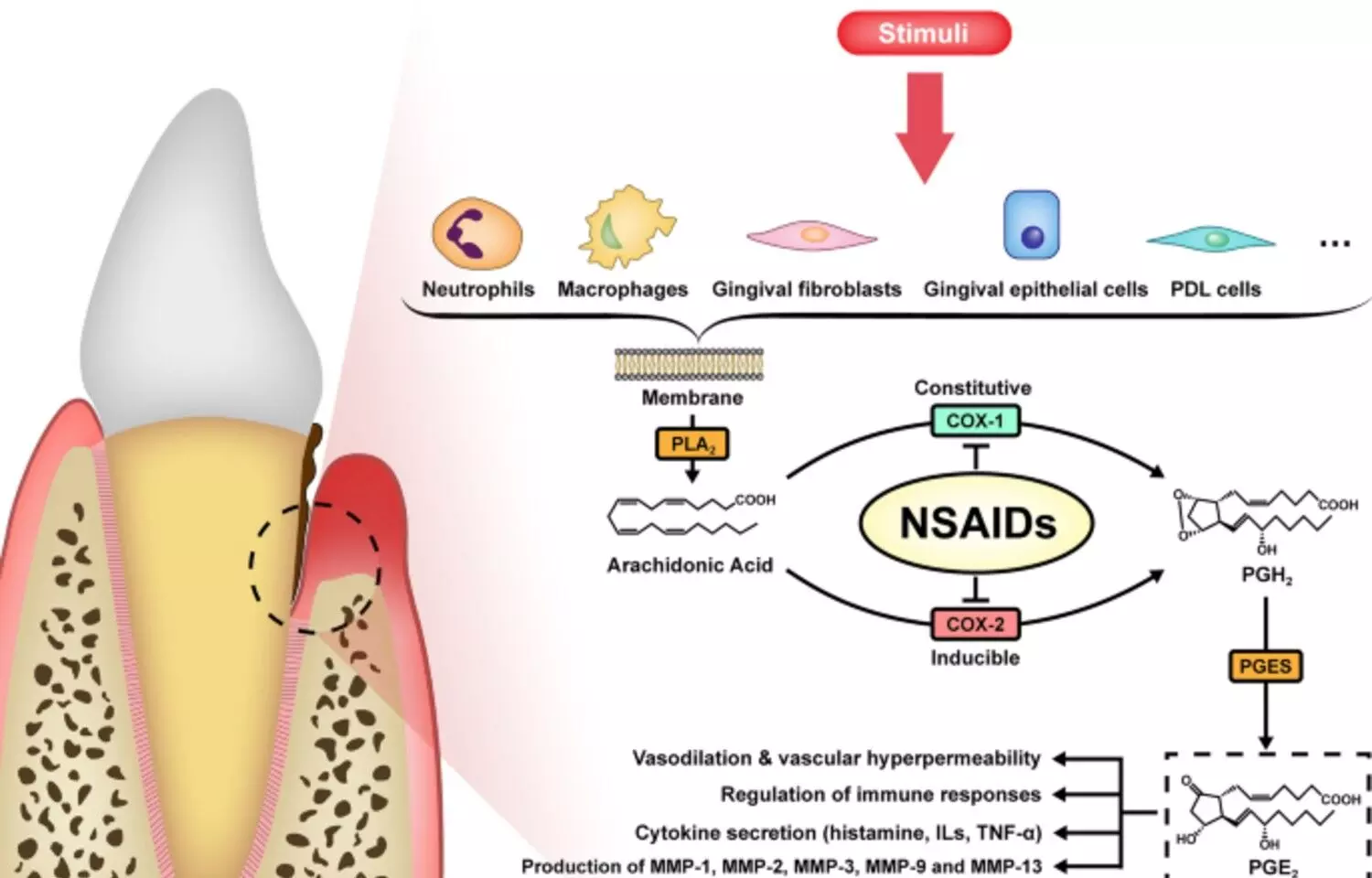


Researchers have found in a 5-year study of more than 1,300 postmenopausal women that baseline use of nonsteroidal anti-inflammatory drugs (NSAIDs), primarily aspirin, was associated with a 37% lower likelihood of periodontal disease progression as measured by alveolar crestal height (ACH) bone loss. This protective association persisted after adjusting for age, lifestyle factors, medical conditions, and dental care practices.
However, NSAID use was not linked to changes in other periodontal outcomes, including probing pocket depth (PPD), clinical attachment loss (CAL), gingival bleeding, or tooth loss. These findings suggest that NSAIDs may help slow periodontal bone loss, a key feature of disease progression, but their overall impact on oral health remains uncertain. Further research is needed to clarify the role of NSAIDs in periodontal disease prevention and management.
Periodontal disease is characterized in part by a host immune-inflammatory response that releases proteolytic enzymes, which damage periodontal tissue. Nonsteroidal anti-inflammatory drugs (NSAIDs) modulate host immune-inflammatory responses. We investigated cross-sectional and prospective relationships between NSAID use and indicators of periodontal disease, for which there is limited epidemiologic evidence.
Data were from the Buffalo OsteoPerio Study of 1342 postmenopausal women ages 53-81 years. Periodontal assessments included measurements of alveolar crestal height (ACH), probing pocket depth (PPD), clinical attachment level (CAL), and gingival bleeding, taken at baseline (1997-2001) and 5 years later. Prospective outcomes included measures of periodontal disease progression defined by ACH loss, incident tooth loss, and gingival bleeding. NSAID use was assessed via medication inventory at baseline. Demographic, lifestyle, dental hygiene, and medical history information were collected. Multivariable linear and logistic regression modeling was used to examine associations between NSAID use and periodontal health outcomes.
At baseline, 45.8% of participants used NSAIDs, half of whom exclusively used aspirin. No significant cross-sectional differences in periodontal measures were found between NSAID users and nonusers. Prospectively, NSAID users had 37% lower odds of periodontal disease progression defined by ACH loss (odds ratio [OR] 0.63, 95% confidence interval; [CI]: 0.45-0.88), after controlling for demographic variables, lifestyle factors, comorbidities, and dental hygiene behaviors. Prospective associations with PPD, CAL, gingival bleeding, and tooth loss were of variable magnitude and did not achieve statistical significance.
In a cohort of postmenopausal women with well-characterized clinical periodontal measurements, use of NSAIDs at baseline was associated with lower odds of periodontal disease progression defined by ACH loss over 5 years of follow-up. NSAID use was not associated with changes to PPD, CAL, gingival bleeding, or tooth loss.
Reference:
Miller CR, Varsani R, Wactawski-Wende J, et al. Associations of nonsteroidal anti-inflammatory drug use with periodontal disease in postmenopausal women: The OsteoPerio study. J Periodontol. 2026; 97: 820–833. https://doi.org/10.1002/jper.70043
Keywords:
anti‐inflammatory agents, nonsteroidal; inflammation; periodontal diseases; postmenopause; women's health, Miller CR, Varsani R, Wactawski-Wende J