Personalized Tooth Extraction Decisions May Help Reduce Osteoradionecrosis Risk in Head and Neck Cancer: Study
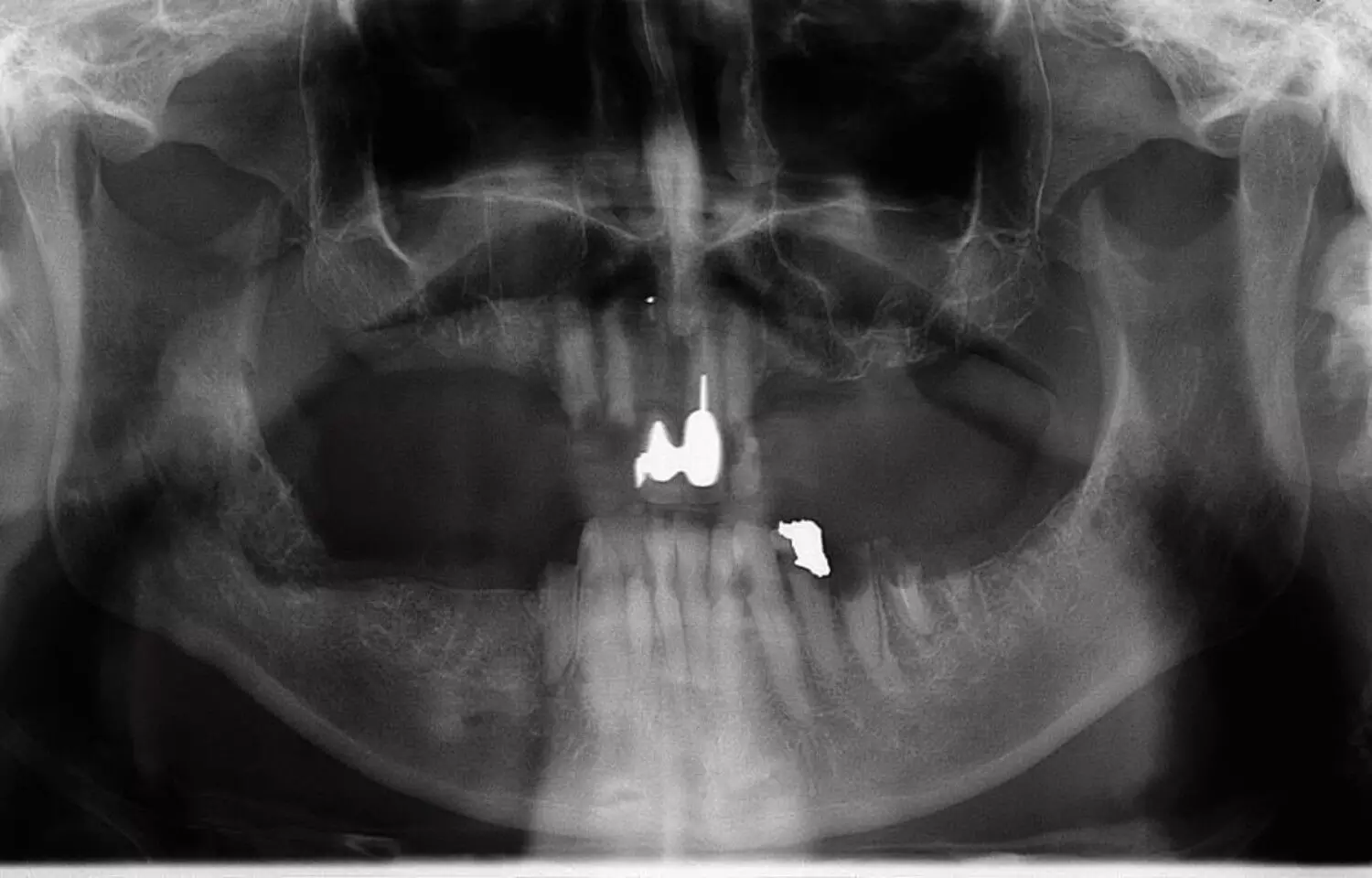


Researchers have found in a new study that routinely offering preradiotherapy tooth extraction to all eligible patients with head and neck cancer (HNC) would not significantly reduce the overall risk of osteoradionecrosis (ORN). However, substantial heterogeneity in treatment effects was observed, with some patients benefiting from extraction while others potentially experiencing harm.
Using an individualized prediction model, researchers identified impaired performance status and moderate-to-severe periodontitis as key factors associated with greater benefit from preradiotherapy tooth extraction. These findings support a personalized, tiered decision-making approach in which these clinical indicators serve as an initial screening tool, while more advanced predictive modeling is reserved for high-dose radiation patients. Such a strategy may help balance the benefits of infection control against the risks of impaired healing, optimizing ORN prevention on an individual basis.
The purpose of this study was to determine the average treatment effect (ATE) of tooth extraction before radiotherapy on the risk of osteoradionecrosis (ORN) in patients with head and neck cancer (HNC) and to estimate the conditional average treatment effect (CATE) to characterize heterogeneous treatment effects (HTE). In this retrospective cohort study of adults with HNC treated with curative radiotherapy from 2011 to 2018 with ongoing follow-up, the intervention was the extraction of at least 1 tooth before radiotherapy, and the outcome was ORN (ClinRad grade ≥1). Twenty sociodemographic and clinical covariates were recorded.
A causal survival forest targeting restricted mean survival time (RMST) was trained with 100 repetitions of 5-fold cross-validation. Calibration used out-of-fold augmented inverse probability weighting (AIPW) scores as pseudo-outcomes, and treatment prioritisation was assessed using the rank-weighted average treatment effect (RATE). A best linear projection regression identified covariates with direct associations to the predicted benefit. Among 2,466 patients, 810 underwent preradiotherapy extraction, and 183 developed ORN during the follow-up.
The ATE was not significant at −0.26 mo. However, the CATE distributions revealed substantial HTE, with patients in the lowest quartile (Q1) experiencing harm and those in the highest quartile (Q4) deriving benefit. Calibration against AIPW scores confirmed median RMST differences of −1.47 mo in Q1 and +0.94 mo in Q4. The RATE was positive at 1.10. Best linear projection identified Eastern Cooperative Oncology Group performance status 1 to 4 versus 0 and periodontal grade III–IV versus 0 as independent modifiers of benefit. Radiation dose had a nonlinear association with treatment effect. If preradiotherapy tooth extraction was applied across all eligible patients, it would not alter the overall risk of ORN. However, individualised treatment effects varied, with some patients benefiting and others harmed, underscoring the importance of targeted interventions.
Reference:
Moharrami M, Watson E, Singhal S, Huang SH, Yao C, Hosni A, Quinonez C, Glogauer M. Estimating the Individualized Effect of Tooth Extraction before Radiotherapy on Osteoradionecrosis Using Causal Machine Learning. J Dent Res. 2026 Mar 12:220345261424748. doi: 10.1177/00220345261424748. Epub ahead of print. PMID: 41816918.
Keywords:
Personalized, Tooth, Extraction, Decisions, Reduce, Osteoradionecrosis Risk, Head, Neck Cancer, Study, head and neck cancer; jaw diseases; oral surgical procedures; precision medicine; radiation dosage; treatment heterogeneity, Moharrami M, Watson E, Singhal S, Huang SH, Yao C, Hosni A, Quinonez C, Glogauer M.