Root Canal Anatomical Variations Highlight Need for Advanced Imaging in Endodontic Planning, suggests study
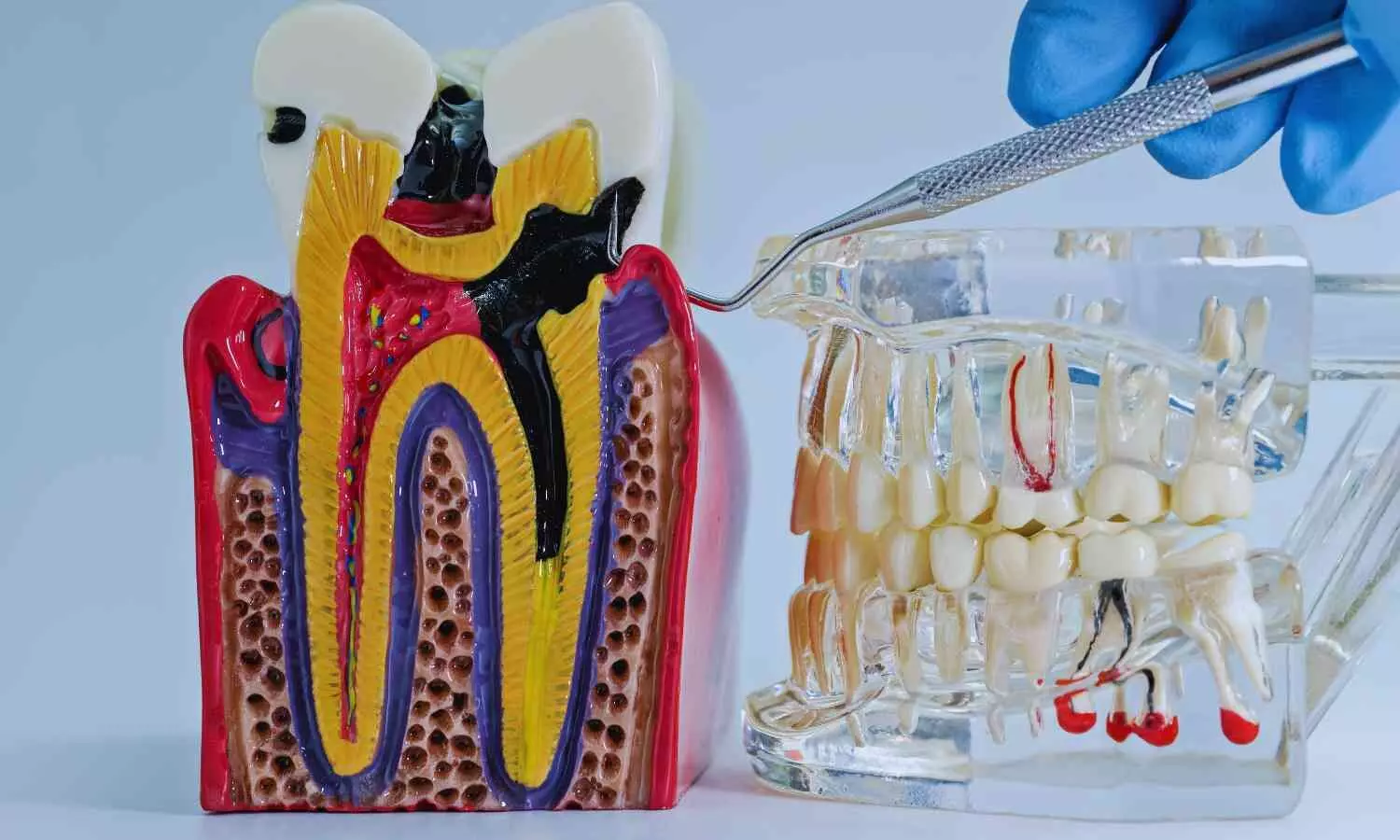


A recent study has found that the presence of radix entomolaris (RE) in mandibular first molars (MFMs) was associated with C-shaped root canal configurations (CSRC) in mandibular second molars (MSMs). Both anatomical variations were more frequently observed in females, were not influenced by age, and demonstrated a high degree of bilateral symmetry. The study was published in Clinical Oral Investigations journal by Hebah H. and colleagues.
The study setting analyzed a substantial number of samples that included 1,637 human subjects and included 682 males and 955 females, creating a total dataset of 3,274 mandibular second molars and 3,274 mandibular first molars. The internal structure of the second molars was classified following the recognized classification of Fan et al. It classified the C-shaped structures into C1 to C5 depending on the uninterrupted or interrupted ribbon-like nature of the spaces within the canals.
Simultaneously, the first molars were examined for radix entomolaris, defined by the American Association of Endodontists (AAE) as an uncommon additional distolingual root. The research group calculated the total frequency and bilateral symmetry of these abnormalities using McNemar’s test while using chi-square and Cramer’s V to investigate the impact of age and sex on their prevalence. Lastly, binary logistic regression was conducted to find out if the C-shaped structures can be used to predict radix entomolaris clinically.
Key findings:
- The statistical analysis of the large 3D images data base resulted in clear figures which proved that those root modifications were highly correlated, showed bilateral symmetry and occurred more often among females.
- The total prevalence of the C-shaped root canal configuration among the examined lower second molars was a very high one, being 46%, while the prevalence of the radix entomolaris among the examined lower first molars was 31.6%.
- If to analyze the sides of the jaws, the C-shaped configurations were observed more frequently on the left side, while the radix entomolaris was more frequent on the right side.
- Nevertheless, both the modifications showed an extremely high level of bilateral symmetry, as in 86.6% cases for the C-shaped configuration and in 90.7% cases for the radix entomolaris.
- There was found to be a significant relationship between the two structural abnormalities based on the chi-square test conducted for these variables, with the obtained chi-square value being 4.884 and the significant (p = 0.027).
- The most important result of the analysis is the establishment through binary logistic regression analysis that the presence of the C-shaped formation in the second molar increases the probability of the radix entomolaris in the first molar by 1.27, having the obtained odds ratio value of 1.265 and a 95% confidence interval of 1.027 to 1.559.
- When conducting the analysis based on the patient characteristics, no significant association was found based on the age categories, as the chi-square value was 2.654 and (p = 0.265).
- On the other hand, there was found to be a very significant association between the gender and both structural abnormalities, with the chi-square value of 20.431 and (p < 0.001).
The findings suggest that the presence of a C-shaped root canal configuration may indicate a greater likelihood of complex root canal anatomy in mandibular molars. Thorough clinical and radiographic evaluation, particularly with cone-beam computed tomography (CBCT), can improve the detection of these anatomical variations and facilitate more accurate endodontic treatment planning.
Reference:
Al-awdi, H.H., Al-shujaa, E.A., Madfa, A.A. et al. Relationship between C-shaped root canal configuration in mandibular second molars and radix entomolaris in mandibular first molars: a CBCT-based study in a Western Chinese population. Clin Oral Invest 30, 306 (2026). https://doi.org/10.1007/s00784-026-06991-9