Sesamol as a Potential Therapeutic Agent in Oral Submucous fibrosis, suggests study
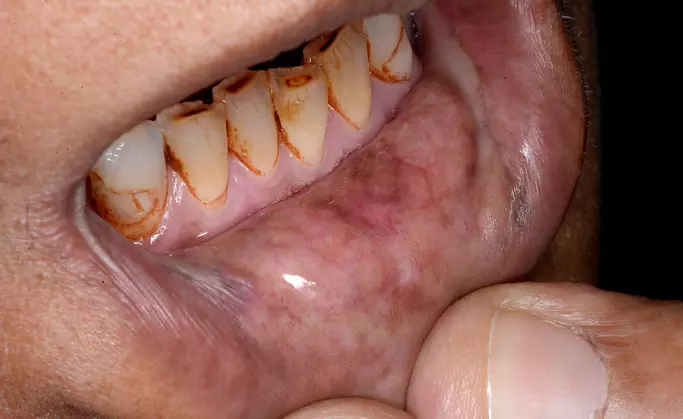


Sesamol showed significant anti-proliferative, anti-migratory, and anti-fibrotic effects on primary Oral Submucous fibrosis fibroblasts, indicating its ability to modulate key profibrotic pathways. These results suggest that sesamol holds promise as a potential candidate for further preclinical research in the management of Oral Submucous fibrosis.
Oral Submucous Fibrosis (OSMF) is a chronic, progressive, and potentially malignant condition of the oral cavity. Despite the availability of various therapeutic approaches, no single medication has demonstrated complete efficacy in reversing fibrosis or stopping the disease progression.
Sesamol is a naturally occurring phenolic compound that is derived from sesame seeds and has strong anti-inflammatory, anticancer, and antioxidant effects. However, its anti-fibrotic and anti-proliferative properties in Oral Submucous Fibrosis remain underexplored. Therefore, this study aimed to evaluate the anti-proliferative and anti-fibrotic effects of sesamol on the primary Oral Submucous Fibrosis cell line. This was an In-Vitro Experimental study.
The study was conducted in Ziauddin University, Clifton Campus, Karachi, from December 2024 to August 2025. The Primary Oral Submucous Fibrosis fibroblasts (passages p8-p10) were treated with sesamol at its IC50 concentration, and the standard drug was dexamethasone (IC50). Cell viability was assessed using the MTT assay, and the anti-migration ability was examined through the scratch assay. Antifibrotic actions were also evaluated in Masson's trichrome staining (MTS), and quantification of fibrosis-related genes was performed to assess the results.
Sesamol treatment suppressed Oral Submucous Fibrosis cell viability in a dose-dependent manner, demonstrating cytotoxic and significant anti-proliferative effects. Scratch assay analysis showed sesamol demonstrated significant anti-migratory efficacy with delayed wound closure, whereas dexamethasone exerted an inhibitory effect. MTS showed that sesamol markedly reduced collagen buildup, highlighting its anti-fibrotic potential. Gene expression analysis showed that sesamol increased MMP-1 and MMP-2 while reducing COL1A2, α-SMA, and TGF-β1, promoting ECM degradation and suppression of fibrotic signaling. In contrast, dexamethasone modulated MMP expression and fibrosis-related genes. Dexamethasone, a standard clinically used corticosteroid for OSMF management, was used as the reference treatment to benchmark the molecular effects of sesamol.
In conclusion, sesamol demonstrated a significant anti-proliferative, anti-migratory, and anti-fibrotic effect on primary Oral Submucous Fibrosis fibroblasts, suggesting its potential to influence key profibrotic pathways. These findings highlight sesamol as a promising candidate for further preclinical studies in Oral Submucous Fibrosis management.
Reference:
S.Ramzan, A.Liaquat, A.Islam, S.Khan, T.Mirza, and S.Usman, “Sesamol As a Potential Anti-Fibrotic Agent Targeting ECM Dynamics in Oral Submucous Fibrosis,” Journal of Biochemical and Molecular Toxicology0 (2026): e70863, https://doi.org/10.1002/jbt.70863.