Short-Diameter Implants Comparable to Conventional Implants for Single Crowns: Study
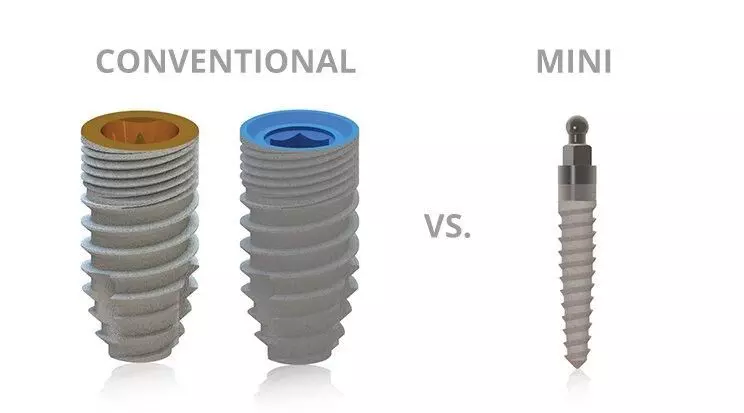


A systematic review and meta-analysis has found that short-diameter implants (SDIs) provide clinical outcomes comparable to conventional-length dental implants (CLDIs) for both splinted and non-splinted single crowns. Implant survival rates remained similar for up to 10 years, indicating that SDIs are not inferior to conventional implants. Despite some methodological limitations in the available evidence, the findings suggest that SDIs may be a viable, less invasive treatment option for single-tooth replacement.
Short dental implants (SDIs) have emerged as a promising, less invasive alternative to conventional-length implants (CLDIs) for oral rehabilitation in patients with limited bone height, reducing the need for additional surgical procedures while maintaining functional and aesthetic success. This systematic review and meta-analysis aimed to answer: “Do single crowns supported by SDIs have a clinical success rate comparable to (or non-inferior to) that of CLDIs?”, focusing on survival rates, periodontal health, marginal bone loss (MBL), and biological complications. A comprehensive search was performed in Embase, Lilacs, PubMed/MEDLINE, Science Direct, Scopus, Google Scholar, and ProQuest, including all available years. Randomized and non-randomized clinical trials comparing single crowns supported by SDIs and CLDIs were included. Studies had to assess survival, periodontal health, MBL, and biological complications. Retrospective, non-comparative, and unspecified designs, reviews, and case reports were excluded. Screening and selection were conducted through titles, abstracts, and full-text reviews.
Following PRISMA guidelines, data extraction and quality assessment were performed. The review was registered in PROSPERO. Risk of bias was evaluated using RoB2 and ROBINS-I, and meta-analyses were conducted with random-effects models, with a statistical significance of p < 0.05.
The outcomes evaluated were implant survival, MBL, and probing depth (PD), measured by standardized mean differences (SMD) and relative risks (RR) with 95% confidence intervals (CIs). A total of 1146 potential studies were identified; 626 were screened, 30 fully reviewed, and 17 included. All studies showed a high risk of bias. SDIs presented survival rates comparable to CLDIs in both splinted (RR = 0.98; 95% CI = 0.96–1.00; p = 0.05) and non-splinted single crowns (RR = 0.96; 95% CI = 0.91–1.00; p = 0.07). MBL showed a small but statistically significant reduction for both (non-splinted: SMD = − 0.11; p = 0.03; splinted: SMD = − 0.41; p = 0.01), with lower PD in non-splinted crowns (SMD = − 0.64; p = 0.03). This systematic review with meta-analysis suggests that SDIs achieve clinical outcomes comparable to, and not inferior to, CLDIs for splinted or non-splinted single crowns regarding implant survival up to 10 years. Despite methodological limitations, SDIs may represent a viable and less invasive treatment alternative.
Reference:
Uehara, L.M., Brincas, M.E.D., Carvalho-Silva, J.M. et al. Clinical success of single crowns supported by short implants-a systematic review and meta-analysis. Odontology (2026). https://doi.org/10.1007/s10266-026-01435-y
Keywords:
Short-Diameter, Implants, Comparable, Conventional, Implants, Single Crowns, Study, Uehara, L.M., Brincas, M.E.D., Carvalho-Silva, J.M.