
'Turkey Ear' Reported 20 Years After Earlobe Piercing in Rare Cutaneous Tuberculosis Case
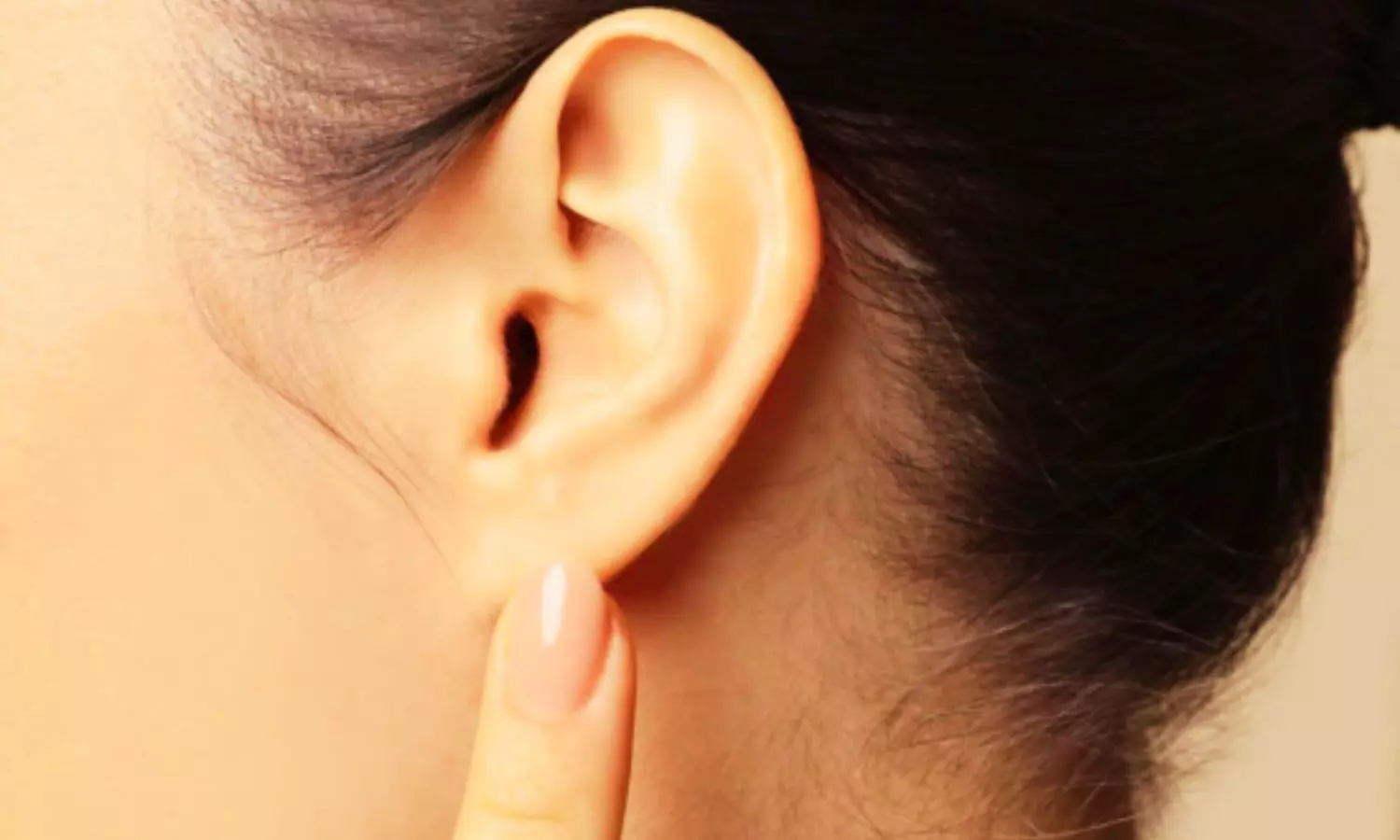


A rare case of "Turkey ear" cutaneous tuberculosis emerging two decades after a routine earlobe piercing. The discovery underscores the remarkable clinical latency of Mycobacterium tuberculosis, which can remain dormant at a localized trauma site for 20 years before progressing into erosive lupus vulgaris.
The case report finding was published in the Indian Journal of Dermatology in March 2026 by lead author Qi-Hao Yao of the Hangzhou Third People’s Hospital and Zhejiang University School of Medicine.
The case underscores that cosmetic piercing sites may harbor latent Mycobacterium tuberculosis for decades, often without systemic symptoms or prior exposure. Prompt identification of lupus vulgaris in chronic earlobe nodules is essential to prevent permanent tissue destruction and scarring.
A 45-year-old female presented with a 20-year history of progressive earlobe swelling and ulceration. Although initial cultures and next-generation sequencing (NGS) were negative, histopathology revealed tuberculous granulomas with caseous necrosis, confirming a diagnosis of lupus vulgaris. A four-month regimen of oral rifampicin and isoniazid resulted in complete clinical recovery with only minor residual hyperpigmentation.
The spatial and temporal correlation between the piercing and the lesion points to exogenous inoculation rather than typical endogenous spread. The case demonstrates a slow, unilateral infection with prolonged dermal dormancy before sudden clinical deterioration.
Clinical Relevance and Implementations
The relevance of the finding for practitioners lies in the need to differentiate 'Turkey ear' from other granulomatous diseases like sarcoidosis or leishmaniasis, particularly since tuberculosis remains a major public health challenge in many regions. Furthermore, the report stresses the importance of traditional diagnostic methods like acid-fast staining when modern molecular tools fail to detect infections in cases with low bacterial loads.
Reference
Yao Q, Liu Z. A case of delayed ‘Turkey ear’ caused by earlobe piercing: What is new about an existing phenomenon? Indian J Dermatol 2026;71:155-7.
