
Dupilumab Highly Effective in Refractory Atopic Dermatitis: Study
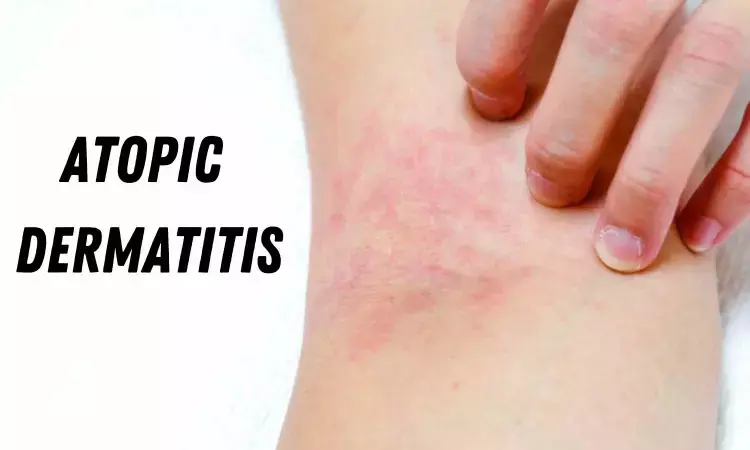


A new study published in the journal of Pediatric Dermatology revealed that treatment with dupilumab achieved effective disease control in 87.8% of patients with moderate-to-severe atopic dermatitis that was refractory to conventional, guideline-recommended systemic therapies.
While international treatment guidelines recommend systemic therapies for patients whose disease activity cannot be controlled with topical options, data from the region have remained scarce. Thus, this study was set to better understand patient characteristics, treatment patterns, and outcomes in routine clinical practice rather than controlled clinical trials.
Data were collected for 41 children and adolescents, which offered a snapshot of real-world care. The median age of patients was just over 11 years, and girls made up slightly more than half of the cohort (56.1%). Also, AD began very early in life for most patients, where 61% developed symptoms by the age of one year or younger, highlighting the chronic and early-onset nature of the disease in this population.
Atopic comorbidities were present in more than 70% of patients, with asthma being the most common, affecting nearly half of the group. These findings illuminate the systemic and multifaceted burden of AD beyond the skin. Before starting dupilumab, many patients had already been exposed to conventional systemic treatments.
Methotrexate emerged as the most frequently prescribed systemic therapy, used in 58.5% of cases, which reflected its longstanding role as a first-line systemic option for severe pediatric AD in many settings. However, despite guideline-recommended use, these therapies were insufficient to adequately control disease activity in this cohort.
Dupilumab was initiated at a median age of 10 years, with patients ranging broadly from early childhood to mid-adolescence. Treatment duration varied, but the median exposure was one year, allowing clinicians to assess sustained effectiveness rather than short-term response alone.
87.8% of patients achieved adequate control of moderate-to-severe AD after starting dupilumab. This high effectiveness was observed in patients whose disease had been refractory to conventional systemic treatments, which reinforced the role of dupilumab as a transformative option for difficult-to-treat pediatric AD. Overall, the findings suggest that children and adolescents with early-onset, severe AD and frequent atopic comorbidities can achieve substantial disease control with dupilumab in real-world clinical practice.
Source:
Larralde, M., Almassio, A., Ferrari, B., Angles, V., Eugenia Abad, M., Boggio, P., Santos Muñoz, A., Olivera, A., Crowe, C., Perrotat, L., Plafnik, R., Salinas, V., & Luna, P. C. (2026). Real-world experience of dupilumab in children and adolescents with atopic dermatitis in Argentina. Pediatric Dermatology, 43(1), 88–90. https://doi.org/10.1111/pde.16047

