
Alopecia Areata Associated With Increased Risk of Retinal Abnormalities: Study
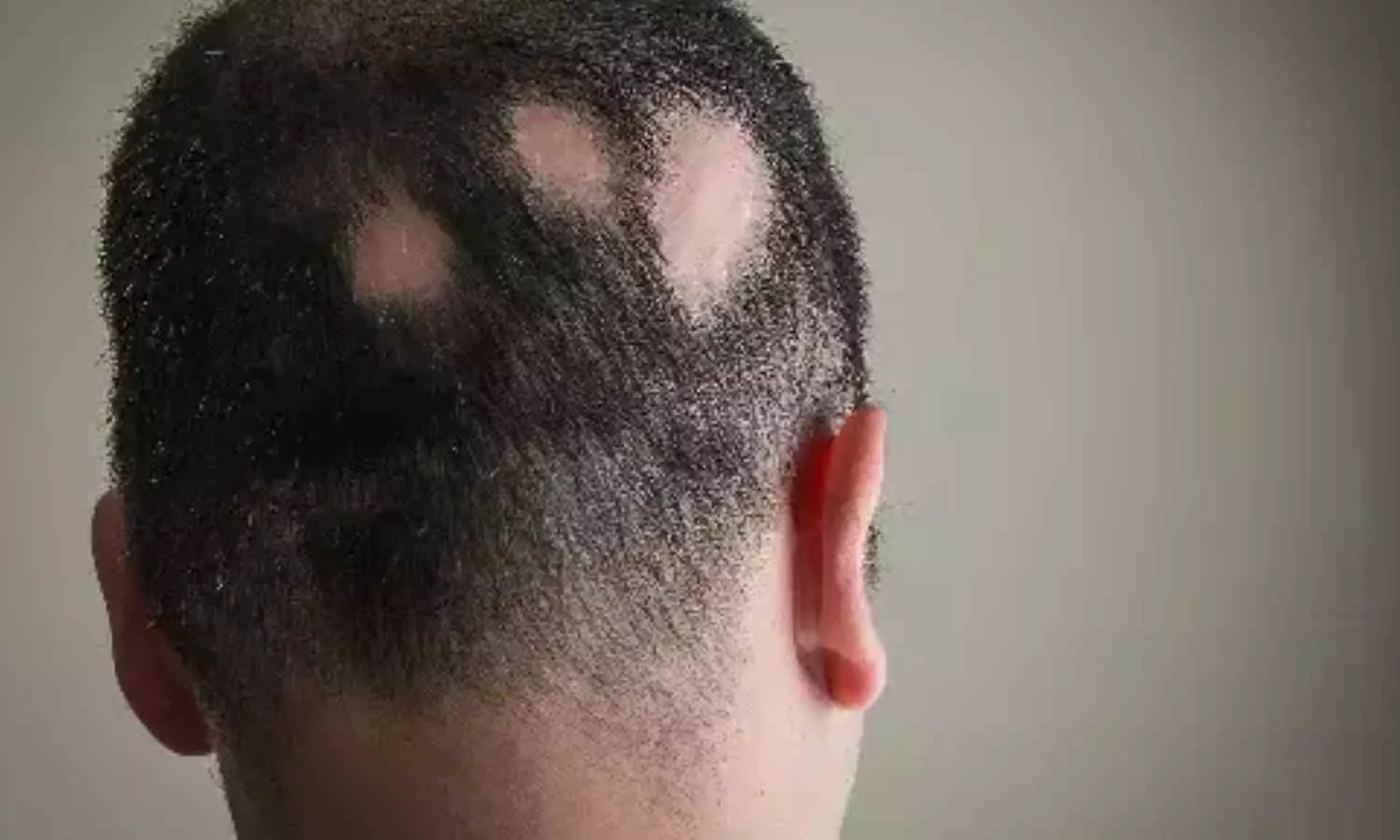


Canada: Researchers have found in a new systematic review and meta-analysis that people with alopecia areata were approximately four times more likely to have retinal abnormalities than individuals without the condition. However, these abnormalities remained uncommon overall, occurring in about 2% of patients with alopecia areata compared with 0.7% of controls. The findings were published in the Journal of the American Academy of Dermatology by Kimia Ameri, Faculty of Medicine, University of British Columbia, Vancouver, Canada, and colleagues.
Alopecia areata (AA) is an autoimmune disorder characterized by patchy, partial, or complete hair loss. Because both the hair follicle and the retina are considered sites of immune privilege, researchers have proposed that similar immune-mediated mechanisms may contribute to abnormalities in both tissues. To better understand this association, the investigators conducted a systematic review and meta-analysis to evaluate the prevalence and risk of retinal abnormalities in patients with AA.
The review followed PRISMA guidelines and included observational studies identified through searches of MEDLINE, Embase, Web of Science, and Cochrane CENTRAL from database inception to August 2025. Nine studies involving 145,615 participants met the inclusion criteria, including 10,832 patients with alopecia areata and 134,783 controls. The average age of participants with AA was 30.5 years, while controls had a mean age of 36 years.
The following were the key findings:
- Retinal abnormalities were identified in 214 patients with alopecia areata (2.0%) compared with 940 individuals in the control group (0.7%).
- The most frequently reported retinal abnormalities included retinal pigment epithelium (RPE) dysfunction, pigmentary changes (such as drusen and pigment clumping), and retinal detachment.
- RPE dysfunction may be asymptomatic in its early stages but can progress to impair vision, color perception, or contrast sensitivity if the macula is affected.
- A meta-analysis of seven studies involving 109,693 participants found that individuals with alopecia areata had nearly a fourfold higher risk of retinal abnormalities than controls (risk ratio 3.88).
- Sensitivity analyses confirmed the robustness of the findings, with no major evidence of publication bias.
The researchers found no consistent association between retinal abnormalities and alopecia areata severity, patient age, or disease duration, suggesting that shared immune mechanisms, including immune privilege collapse and interferon gamma-mediated T-cell activity, may underlie both conditions rather than disease progression.
The authors acknowledged limitations such as variations in retinal assessment methods, inconsistent reporting of visual outcomes, and the observational design of the included studies. They concluded that despite the significantly increased relative risk of retinal abnormalities in alopecia areata, the low absolute risk does not justify routine ophthalmic screening. Instead, ophthalmology referral should be reserved for patients with visual symptoms or suspected ocular involvement.
Reference:
Ameri, K., Ashamalla, M., Shunmugam, M., Kipfer, S., & Donovan, J. (2026). Retinal abnormalities in alopecia areata: A systematic review and meta-analysis. Journal of the American Academy of Dermatology. https://doi.org/10.1016/j.jaad.2026.06.137

Next Story