
Amlitelimab Shows Promise in Moderate-to-Severe Atopic Dermatitis in Phase 3 trial
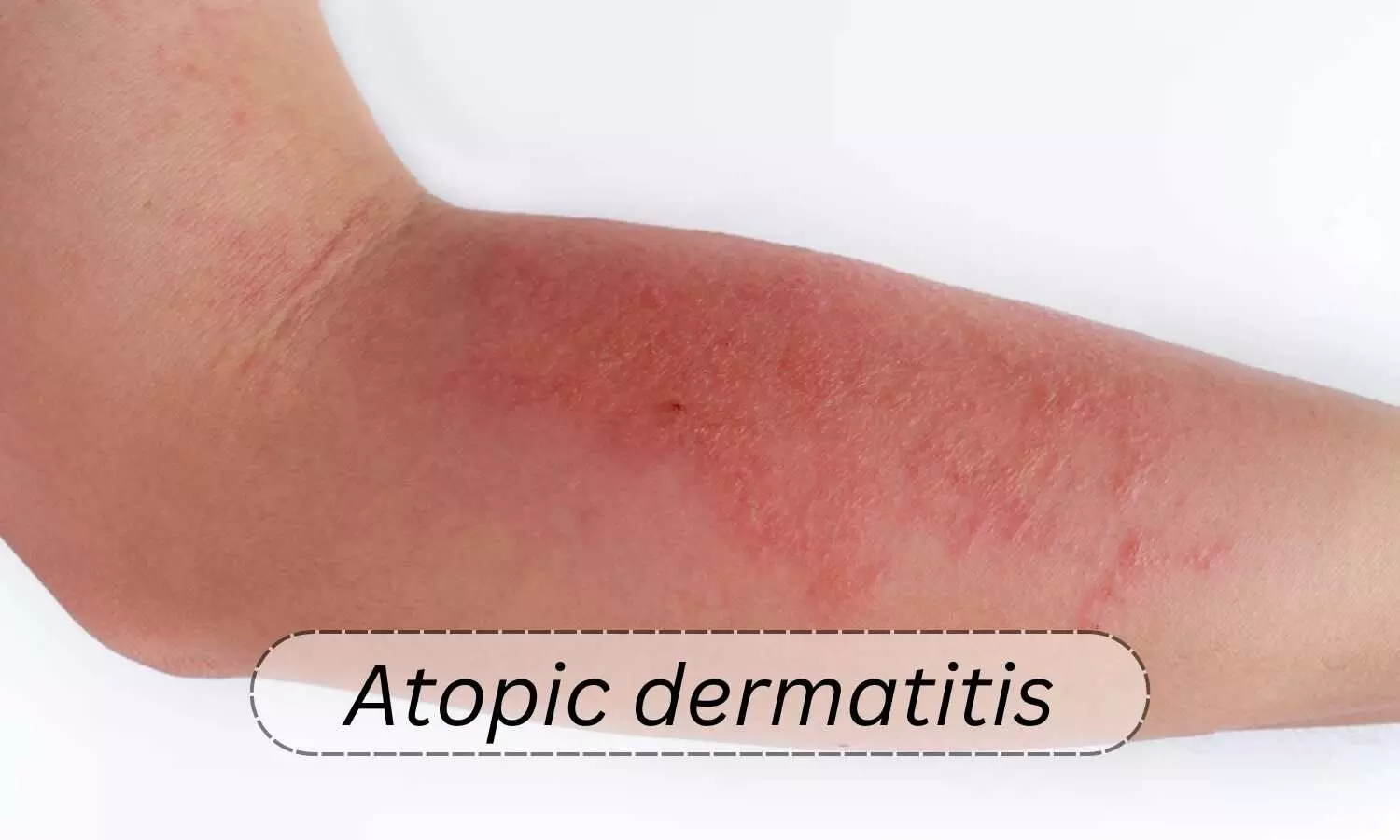


Amlitelimab, an OX40 ligand-targeting therapy that modulates T-cell-mediated inflammation without causing cell depletion, demonstrated clinical benefit in patients aged 12 years and older with moderate-to-severe atopic dermatitis. In global phase 3 trials, the SHORE and COAST 2 studies met primary endpoints in the US, though COAST 2 did not reach statistical significance for some EU endpoints. While the treatment was generally effective and safe, several key secondary endpoints-including measures of erythema-were not consistently achieved across all analyses.
In these two phase 3 studies amlitelimab was well-tolerated and the safety profile was consistent with previously reported data.
"Importantly, these results validate amlitelimab’s novel mechanism of action to block OX40-ligand without T-cell depletion and its promise to normalize the immune system over time," said Houman Ashrafian, Executive Vice President, Head of Research & Development at Sanofi. "The totality of data seen to date reinforce our confidence in amlitelimab’s potential to deliver both Q12W dosing from the start and progressive efficacy through Week 52. We look forward to sharing additional results, including longer-term data, as we move toward global regulatory submissions.”
For both SHORE and COAST 2 phase 3 studies, key endpoints were measured at Week 24 in patients aged 12 years and older with moderate-to-severe AD who received amlitelimab either every four weeks (Q4W) or every 12 weeks (Q12W). For US and US reference countries, the single primary endpoint was the proportion of patients with a validated investigator global assessment scale for AD (vIGA-AD) of 0 (clear) or 1 (almost clear) and a reduction from baseline score of ≥2 points, analyzed using non-responder imputation (US estimand). For the EU, EU reference countries and Japan, the co-primary endpoints comprised the proportion of patients with vIGA-AD 0/1 and a reduction from baseline score of ≥2 points along with the proportion of patients reaching a 75% or greater improvement in the eczema area and severity index total score (EASI-75), both analyzed using treatment policy (EU estimand).
SHORE study
In the SHORE study, amlitelimab, dosed either Q4W or Q12W in conjunction with medium-potency background topical corticosteroids (TCS) with or without topical calcineurin inhibitors (TCI), met all primary and key secondary endpoints compared to placebo plus TCS with or without TCI at Week 24, across both US and EU estimands.
* Non-responder imputation (NRI): patients with rescue or prohibited medication use before Week 24 or with missing efficacy assessments at Week 24 are classified as non-responders.
** Treatment policy: all data are included regardless of rescue medication use prior to Week 24. Patients with prohibited medication use before Week 24 or with missing efficacy assessments at Week 24 are classified as non-responders.
+ Statistical analyses followed a pre‑specified hierarchical testing procedure to control for multiplicity. For the pre-specified endpoints across the two doses, the statistical significance level was adjusted (alpha‑split) to two-sided p<0.025.
COAST 2 study
In the COAST 2 study, amlitelimab monotherapy dosed either Q4W or Q12W met the primary endpoint of the proportion of patients achieving vIGA-AD 0/1 and a reduction from baseline score of ≥2 points compared to placebo at Week 24, as assessed for the US and US reference countries. The key secondary endpoint of the proportion of patients who achieved vIGA-AD 0/1 with barely perceptible erythema (BPE), as assessed for the US and US reference countries, did not achieve statistical significance. For the EU and EU reference countries, amlitelimab dosed either Q4W or Q12W did not achieve statistical significance for the co-primary endpoints of proportion of patients achieving vIGA-AD 0/1 and EASI-75 compared to placebo. Therefore, in accordance with hierarchical statistical testing procedures, p-values presented below for additional secondary endpoints reflect nominal significance without adjustment for multiplicity.
* Non-responder imputation (NRI): patients with rescue or prohibited medication use before Week 24 or with missing efficacy assessments at Week 24 are classified as non-responders.
** Treatment policy: all data are included regardless of rescue medication use prior to Week 24. Patients with prohibited medication use before Week 24 or with missing efficacy assessments at Week 24 are classified as non-responders.
+ Statistical analyses followed a pre‑specified hierarchical testing procedure to control for multiplicity. For the pre-specified endpoints across the two doses, the statistical significance level was adjusted (alpha‑split) to two-sided p < 0.025. Nominal p-values <0.05 are also reported.
*** P-values are nominal without multiplicity adjustment.
The most common treatment-emergent adverse events (TEAEs) in SHORE (≥5% in any dose arm; pooled amlitelimab vs. placebo) were nasopharyngitis (9.5% vs 12.5%), upper respiratory tract infection (7.9% vs 4.4%), dermatitis atopic (2.7% vs 5.6%). Overall, rates of TEAEs, serious adverse events, and TEAEs resulting in treatment discontinuation were similar in the pooled amlitelimab arms and placebo arm.
The most common TEAEs in COAST 2 (≥5% in any dose arm; pooled amlitelimab vs. placebo) were nasopharyngitis (5.9% vs 7.4%), upper respiratory tract infection (4.8% vs 4.0%), dermatitis atopic (5.3% vs 2.7%). Overall, rates of TEAEs, serious adverse events, and TEAEs resulting in treatment discontinuation were similar in the pooled amlitelimab and placebo arms.
Preliminary analysis from ATLANTIS phase 2 open-label study
In addition, a preliminary analysis of the ongoing, open-label ATLANTIS phase 2 study (clinical study identifier: NCT05769777) indicated that amlitelimab dosed Q4W progressively improved skin clearance and disease severity beyond Week 24 to Week 52 in 591 patients aged 12 years and older with moderate-to-severe AD. In this preliminary analysis, amlitelimab was well-tolerated through Week 52.
Patients with missing data are classified as non-responders. Concomitant use of TCS with or without TCI is allowed as needed2. Short-term (<4 weeks) oral corticosteroids rescue therapy is permitted.
The most common TEAEs in this preliminary analysis of ATLANTIS (≥5%) were nasopharyngitis (19.1%), headache (10.3%), influenza (9.1%), dermatitis atopic (8.6%), upper respiratory tract infection (7.2%) and accidental overdose (5.1%, due to dose scheduling). Serious TEAEs and TEAEs resulting in treatment discontinuation at Week 52 were low, 4.7% and 2.9% respectively. In addition, an event of Kaposi’s sarcoma, determined to be cutaneous, was reported in a patient with known risk factors. The patient stopped amlitelimab and is in the recovery phase.
Results for COAST 1, COAST 2, SHORE, and this preliminary analysis of ATLANTIS will be presented at forthcoming medical congresses.
Two additional phase 3 studies, AQUA (clinical study identifier: NCT06241118) and ESTUARY (clinical study identifier: NCT06407934) are anticipated to report results in H2 2026. Global regulatory submissions are planned for H2 2026, unchanged.
Amlitelimab is currently in clinical development, and its safety and efficacy have not been evaluated by any regulatory authority.
