
Baricitinib Effective and Safe for Severe Alopecia Areata when Started Early: Study
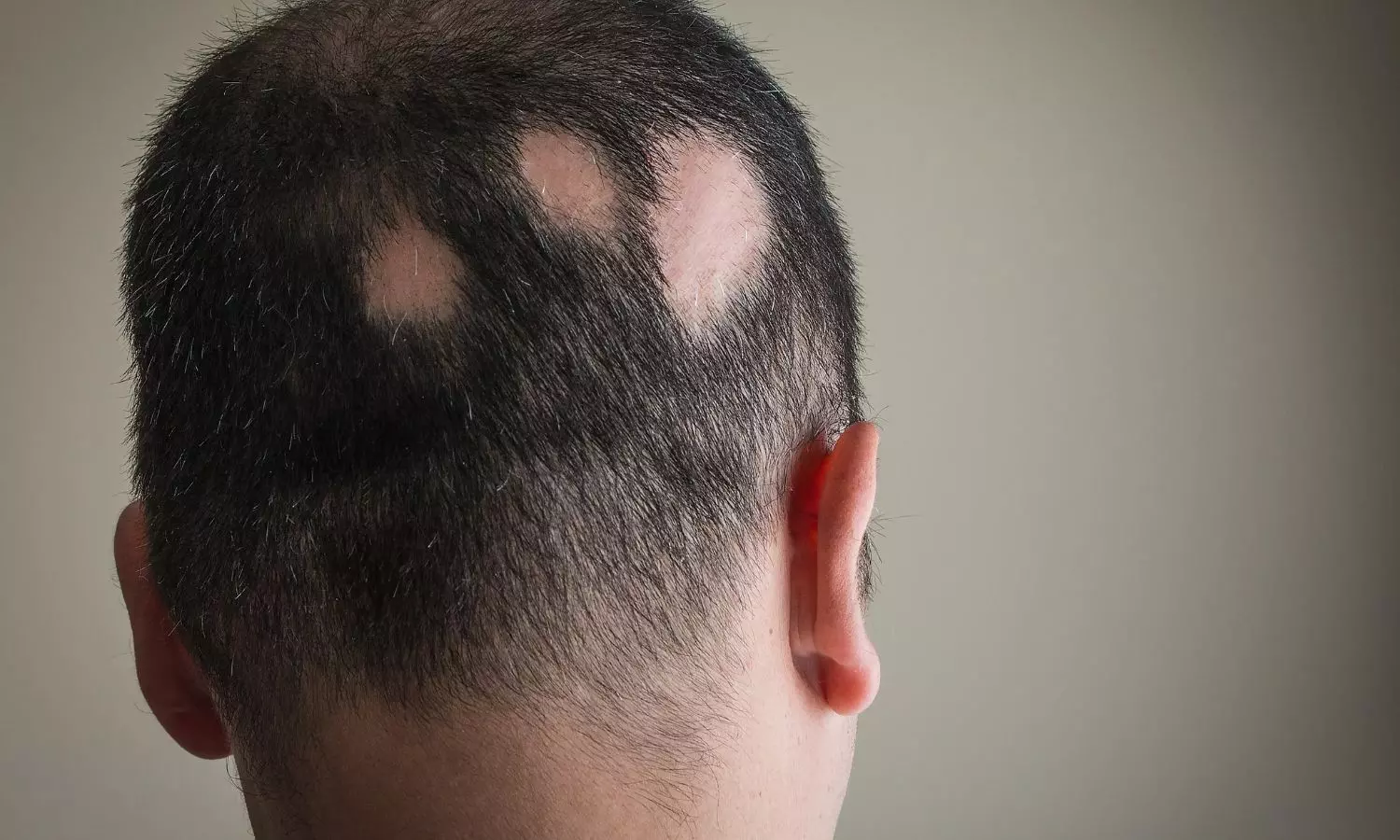


Spain: Researchers have found in a real-world prospective study of adults with severe Alopecia Areata that treatment with Baricitinib demonstrated good efficacy and safety over 12 months, particularly when initiated early. In the study, a clinically meaningful response was observed in 58.3% of patients, while 37.5% achieved the primary endpoint of near-complete hair regrowth (SALT score <0.01). These findings support baricitinib as an effective treatment option in severe cases.
The study published in the Journal of Dermatological Treatment by Daniel Muñoz-Barba and colleagues provides valuable real-world evidence on the use of baricitinib in managing severe alopecia areata (AA). While earlier clinical trials established the drug’s efficacy, prospective observational data from routine clinical settings have been limited, making this study an important contribution to current knowledge.
The investigation followed 48 adult patients with severe AA over 12 months. Researchers assessed treatment outcomes through clinical response measures, laboratory parameters, and safety monitoring. The primary endpoint was defined as achieving a Severity of Alopecia Tool (SALT) score below 20%, maintained across at least two consecutive evaluations spaced by a minimum of 12 weeks during the first year of therapy.
The study led to the following findings:
- More than half of the patients (58.3%) achieved a meaningful clinical response.
- 37.5% of participants experienced near-complete hair regrowth.
- Early responders accounted for nearly one-third of the cohort, highlighting the benefit of early treatment.
- Significant improvement was observed not only in scalp hair but also in eyebrow and eyelash growth.
- Better outcomes were associated with lower baseline disease severity.
- Shorter duration of alopecia was linked to improved response.
- Higher baseline erythrocyte sedimentation rate (ESR) was also associated with favorable outcomes.
- No serious adverse events were reported during the study period.
- The overall safety profile was favorable and consistent with existing evidence.
- No unexpected issues were identified in routine laboratory monitoring.
Overall, the study highlights the effectiveness and safety of baricitinib in the real-world management of severe alopecia areata. The findings emphasize the importance of early treatment initiation and careful patient selection to optimize outcomes. As real-world data continue to emerge, baricitinib is likely to play an increasingly important role in the therapeutic landscape for alopecia areata, particularly for patients with more severe or refractory disease.
Reference:
Muñoz-Barba D, García-Moronta C, Haselgruber-de Francisco S, Sánchez-Díaz M, Arias-Santiago S. Effectiveness and safety of Baricitinib in alopecia areata: a prospective cohort study. J Dermatolog Treat. 2025 Dec;36(1):2583877. doi: 10.1080/09546634.2025.2583877. Epub 2025 Nov 24. PMID: 41277365.

Next Story