
Medical Dialogues
  • Dermatology
Login Register
This site is intended for healthcare professionals only
Login Register
  • MD Brand Connect
  • Webinars
  • Vaccine Hub
  • MDTV
    • Breaking News
    • Medical News Today
    • Health News Today
    • Latest
    • Journal Club
    • Medico Legal Update
    • Latest Webinars
    • MD Shorts
    • Health Dialogues
  • Fact Check
  • Health Dialogues
Medical Dialogues
  • Medical News & Guidelines
      • Anesthesiology
      • Cardiology and CTVS
      • Critical Care
      • Dentistry
      • Dermatology
      • Diabetes and Endocrinology
      • ENT
      • Gastroenterology
      • Medicine
      • Nephrology
      • Neurology
      • Obstretics-Gynaecology
      • Oncology
      • Ophthalmology
      • Orthopaedics
      • Pediatrics-Neonatology
      • Psychiatry
      • Pulmonology
      • Radiology
      • Surgery
      • Urology
      • Laboratory Medicine
      • Diet
      • Nursing
      • Paramedical
      • Physiotherapy
  • Health news
      • Doctor News
      • Government Policies
      • Hospital & Diagnostics
      • International Health News
      • Medical Organization News
      • Medico Legal News
      • NBE News
      • NMC News
  • Fact Check
      • Bone Health Fact Check
      • Brain Health Fact Check
      • Cancer Related Fact Check
      • Child Care Fact Check
      • Dental and oral health fact check
      • Diabetes and metabolic health fact check
      • Diet and Nutrition Fact Check
      • Eye and ENT Care Fact Check
      • Fitness fact check
      • Gut health fact check
      • Heart health fact check
      • Kidney health fact check
      • Medical education fact check
      • Men's health fact check
      • Respiratory fact check
      • Skin and hair care fact check
      • Vaccine and Immunization fact check
      • Women's health fact check
  • AYUSH
    • Ayurveda
    • Homeopathy
    • Siddha
    • Unani
    • Yoga
  • State News
      • Andaman and Nicobar Islands
      • Andhra Pradesh
      • Arunachal Pradesh
      • Assam
      • Bihar
      • Chandigarh
      • Chattisgarh
      • Dadra and Nagar Haveli
      • Daman and Diu
      • Delhi
      • Goa
      • Gujarat
      • Haryana
      • Himachal Pradesh
      • Jammu & Kashmir
      • Jharkhand
      • Karnataka
      • Kerala
      • Ladakh
      • Lakshadweep
      • Madhya Pradesh
      • Maharashtra
      • Manipur
      • Meghalaya
      • Mizoram
      • Nagaland
      • Odisha
      • Puducherry
      • Punjab
      • Rajasthan
      • Sikkim
      • Tamil Nadu
      • Telangana
      • Tripura
      • Uttar Pradesh
      • Uttrakhand
      • West Bengal
  • Medical Education
      • Ayush Education News
      • Dentistry Education News
      • Medical Admission News
      • Medical Colleges News
      • Medical Courses News
      • Medical Universities News
      • Nursing education News
      • Paramedical Education News
      • Study Abroad
  • Industry
      • Health Investment News
      • Health Startup News
      • Medical Devices News
      • Pharma News
      • Pharmacy Education News
      • AI and healthcare
      • Industry Perspective
  • MDTV
      • Health Dialogues MDTV
      • Health News today MDTV
      • Latest Videos MDTV
      • Latest Webinars MDTV
      • MD shorts MDTV
      • Medical News Today MDTV
      • Medico Legal Update MDTV
      • Top Videos MDTV
      • Health Perspectives MDTV
      • Journal Club MDTV
      • Medical Dialogues Show
This site is intended for healthcare professionals only
LoginRegister
Medical Dialogues
LoginRegister
  • Home
  • Medical news & Guidelines
    • Anesthesiology
    • Cardiology and CTVS
    • Critical Care
    • Dentistry
    • Dermatology
    • Diabetes and Endocrinology
    • ENT
    • Gastroenterology
    • Medicine
    • Nephrology
    • Neurology
    • Obstretics-Gynaecology
    • Oncology
    • Ophthalmology
    • Orthopaedics
    • Pediatrics-Neonatology
    • Psychiatry
    • Pulmonology
    • Radiology
    • Surgery
    • Urology
    • Laboratory Medicine
    • Diet
    • Nursing
    • Paramedical
    • Physiotherapy
  • Health news
    • Doctor News
    • Government Policies
    • Hospital & Diagnostics
    • International Health News
    • Medical Organization News
    • Medico Legal News
    • NBE News
    • NMC News
  • Fact Check
    • Bone Health Fact Check
    • Brain Health Fact Check
    • Cancer Related Fact Check
    • Child Care Fact Check
    • Dental and oral health fact check
    • Diabetes and metabolic health fact check
    • Diet and Nutrition Fact Check
    • Eye and ENT Care Fact Check
    • Fitness fact check
    • Gut health fact check
    • Heart health fact check
    • Kidney health fact check
    • Medical education fact check
    • Men's health fact check
    • Respiratory fact check
    • Skin and hair care fact check
    • Vaccine and Immunization fact check
    • Women's health fact check
  • AYUSH
    • Ayurveda
      • Ayurveda Giuidelines
      • Ayurveda News
      • Top Ayurveda News
    • Homeopathy
      • Homeopathy Guidelines
      • Homeopathy News
    • Siddha
      • Siddha Guidelines
      • Siddha News
    • Unani
      • Unani Guidelines
      • Unani News
    • Yoga
      • Yoga Guidelines
      • Yoga News
  • State News
    • Andaman and Nicobar Islands
    • Andhra Pradesh
    • Arunachal Pradesh
    • Assam
    • Bihar
    • Chandigarh
    • Chattisgarh
    • Dadra and Nagar Haveli
    • Daman and Diu
    • Delhi
    • Goa
    • Gujarat
    • Haryana
    • Himachal Pradesh
    • Jammu & Kashmir
    • Jharkhand
    • Karnataka
    • Kerala
    • Ladakh
    • Lakshadweep
    • Madhya Pradesh
    • Maharashtra
    • Manipur
    • Meghalaya
    • Mizoram
    • Nagaland
    • Odisha
    • Puducherry
    • Punjab
    • Rajasthan
    • Sikkim
    • Tamil Nadu
    • Telangana
    • Tripura
    • Uttar Pradesh
    • Uttrakhand
    • West Bengal
  • Medical Education
    • Ayush Education News
    • Dentistry Education News
    • Medical Admission News
    • Medical Colleges News
    • Medical Courses News
    • Medical Universities News
    • Nursing education News
    • Paramedical Education News
    • Study Abroad
  • Industry
    • Health Investment News
    • Health Startup News
    • Medical Devices News
    • Pharma News
      • CDSCO (Central Drugs Standard Control Organisation) News
    • Pharmacy Education News
    • AI and healthcare
    • Industry Perspective
  • Home
  • Dermatology
  • Dermatology News
  • Optimising...

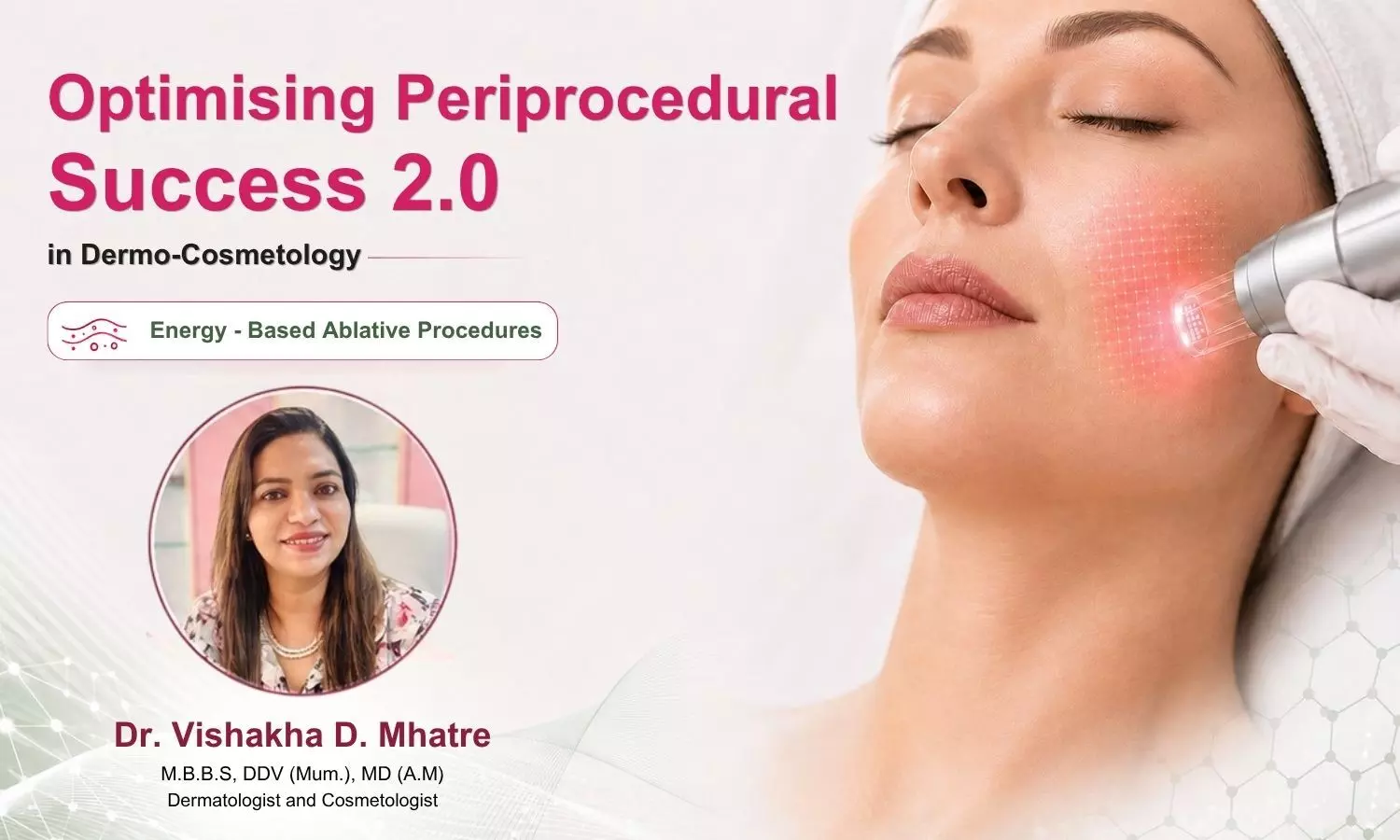
Optimising Periprocedural Success 2.0 in Dermo-Cosmetology: Energy-Based Ablative Procedures-Dr Vishakha D. Mhatre
Written By : Dr Vishakha D Mhatre Published On 2026-08-27T10:26:08+05:30  |  Updated On 27 Aug 2026 4:22 PM IST
Optimising Periprocedural Success 2.0 in Dermo-Cosmetology: Energy-Based Ablative Procedures-Dr Vishakha D. Mhatre
  • facebook
  • twitter
  • linkedin
  • whatsapp
  • Telegram
  • Email

Energy-based ablative techniques have revolutionised dermo-cosmetics by efficiently treating acne scars, photoaging, wrinkles, dyschromia, enlarged pores, skin laxity, and benign cutaneous lesions. Fractional CO₂ and Erbium-doped Yttrium Aluminium Garnet (Er: YAG) lasers are among the primary technologies, with plasma energy and radiofrequency-assisted systems broadening aesthetic therapeutic options (1,2). Fractional CO₂ laser and microneedling radiofrequency (MNRF) have demonstrated comparable improvement in acne scars in Indian studies, with MNRF showing shorter downtime and a lower incidence of post-inflammatory hyperpigmentation (PIH) in Fitzpatrick skin types III–V (3,4).

By inducing controlled epidermal and dermal injury, these procedures stimulate wound healing, collagen remodelling, and tissue regeneration (2). Recently, more evidence continues to demonstrate that peri-procedural skin care can improve healing, reduce treatment-related side effects and downtime, increase patient satisfaction, and improve overall clinical outcomes (1,2,5).

Understanding the Biological Response to Energy-Based Ablative Procedures

The clinical benefits of ablative procedures are mediated through a tightly regulated wound-healing response initiated by controlled thermal injury. This injury induces the release of inflammatory cytokines and growth factors, which coordinate keratinocyte migration, fibroblast proliferation, angiogenesis, and ultimately lead to neo-collagenesis, elastogenesis, and tissue regeneration (6,7,8)

Concomitantly, ablative procedures transiently compromise epidermal barrier integrity, resulting in increased Trans-Epidermal Water Loss (TEWL), disruption of epidermal lipids, activation of inflammatory pathways, and heightened skin sensitivity.

Clinically, these changes manifest as erythema, oedema, burning, tightness, and crusting. Although these responses are expected components of tissue repair, delayed barrier restoration may prolong recovery and increase the risk of persistent erythema, post-inflammatory hyperpigmentation (PIH), and other treatment-related complications in some cases, particularly in individuals with darker skin phototypes (1,5,9).

These biological insights underscore that successful outcomes depend not only on procedural precision but also on evidence-based periprocedural care that promotes timely skin barrier restoration and supports the natural healing process (1,2,5).

Preparing the Skin Before Treatment: The First Step Towards Better Outcomes

• Skin preparation should begin approximately two weeks before an energy-based procedure, particularly when substantial barrier disruption is anticipated. A gentle, soap-free cleanser (pH ~5.5), regular moisturisation and broad-spectrum photoprotection can improve hydration and barrier resilience.

• Depending on the patient and procedure, barrier-supportive ingredients such as ceramides, niacinamide, hyaluronic acid and antioxidants may be incorporated.

• Potentially irritating products, including retinoids, alpha- and beta-hydroxy acids, benzoyl peroxide and abrasive exfoliants, should be temporarily discontinued according to procedural intensity and individual tolerance to minimise irritation and support recovery (1,2,5).

Barrier Repair: A Therapeutic Target Beyond Supportive Care

• Restoration of the epidermal barrier is now considered an integral component of post-procedural management rather than merely supportive care. Current expert recommendations advocate the early use of barrier-repair formulations tailored to the degree of epidermal disruption.

• Moisturisers (pH ~5.5), enriched with physiological lipids, including ceramides and cholesterol, together with humectants such as glycerin, panthenol, and hyaluronic acid, help replenish barrier lipids, improve hydration, and support epidermal recovery (2,5).

• Gentle, pH-balanced cleansers (pH ~5.5) are also recommended to preserve the skin's mildly acidic environment (pH 4.5–5.5), which is essential for lipid-processing enzymes, antimicrobial defence, and microbial homeostasis during healing (1,10).

• Collectively, these measures support faster barrier restoration, improve patient comfort, and optimise post-procedural recovery (1,2,5).

Personalising Periprocedural Care for Every Patient Within a Structured Framework

Periprocedural skincare should be individualised according to both the procedure and patient characteristics. Fully ablative resurfacing procedures produce greater epidermal barrier disruption than fractional or minimally ablative techniques and therefore require more intensive barrier support. Patient-related factors, including age, baseline skin condition, inflammatory dermatoses, concomitant medications, and previous aesthetic procedures, could also guide skincare recommendations (1).

This personalised approach is particularly relevant in India, where most individuals have Fitzpatrick skin phototypes IV and V, with considerable regional variation (11). Patients with darker phototypes are more susceptible to PIH following cutaneous injury. Current recommendations therefore emphasise minimising inflammation through gentle cleansing, early barrier restoration, rigorous photoprotection, and avoidance of unnecessary irritants throughout the healing period (9).

Future Evidence Generating Opportunities

Future research should focus on establishing standardised, procedure-specific protocols, generating robust evidence in diverse populations, particularly individuals with darker skin phototypes, and refining personalised skincare strategies to further enhance the safety, efficacy, and predictability of aesthetic procedures (2,5,6).

Key Takeaways

  • Periprocedural skincare is an evidence-based therapeutic strategy that complements energy-based ablative procedures by supporting skin barrier restoration, optimising healing, and improving clinical outcomes.
  • Effective periprocedural care begins before treatment and continues throughout recovery, emphasising gentle cleansing, barrier repair, moisturization with regeneration, and rigorous photoprotection.
  • Individualised skincare protocols based on the procedure, extent of barrier disruption, and patient factors, including darker Indian skin phototypes, are important to minimise complications such as post-inflammatory hyperpigmentation.
  • Integrating a structured, evidence-based periprocedural skincare framework into routine aesthetic practice can enhance procedural safety, reduce downtime, and improve the predictability of treatment outcomes and patient satisfaction.

Abbreviations- Er: YAG- Erbium-doped Yttrium Aluminium Garnet; MNRF- Micro- Needling Radio-Frequency; PIH- Post-Inflammatory Hyperpigmentation; TEWL- Trans-Epidermal Water Loss; HA – Hyaluronic Acid; CoQ10 – Coenzyme Q10

References:
  • 1.Goodman G, Yip L, McDonald C, Lin F, Liu W, Sullivan J. 2025. Recommendations on Periprocedural Skincare for Energy-Based Dermatologic Procedures.Aesthet Surg J Open Forum.
  • 2.Bjerring P, Gold MH, Hexsel D, et al. 2026. International expert consensus on integrated skincare active ingredients for pretreatment and posttreatment use with medical aesthetic procedures to enhance skin benefits.J Cosmet Dermatol.
  • 3.Rajput CD, Gore SB, Ansari MK. 2021. A prospective, nonrandomized open-label study comparing the efficacy, safety, and tolerability of fractional CO₂ laser versus fractional microneedling radiofrequency in acne scars.J Cutan Aesthet Surg.14177-183
  • 4.Sriram R, Chandrashekar BS, Madura C, Gowda HH. 2024. Comparative study in treatment of acne scars: Fractional carbon dioxide laser versus micro needling fractional radiofrequency—a retrospective study.J Cutan Aesthet Surg.17214-218
  • 5.Nikolis A, Gold MH, Draelos ZD, et al. 2026. Concomitant use of dermocosmetic skincare in aesthetic procedures: A systematic review with expert panel recommendations.Clin Cosmet Investig Dermatol.1-24
  • 6.Levy T, Lerman I, Waibel JS, Gauglitz GG, et al. 2025. Clinical recommendations for fractional ablative CO₂ laser in facial skin rejuvenation treatment: Expert consensus.Lasers Surg Med.5715-26
  • 7.Debeuf MEPH, Rauwenhoff MHP, van Geel M, Steijlen PM, Verstraeten VLRM. 2025. Biomolecular changes upon ablative laser therapy of the skin: A scoping review.Int J Dermatol.
  • 8.Eming SA, Martin P, Tomic-Canic M. 2014. Wound repair and regeneration: Mechanisms, signaling, and translation.Sci Transl Med.
  • 9.Alexis AF, Andriessen A, Beach RA, et al. 2025 Periprocedural skincare for nonenergy and nonablative energy-based aesthetic procedures in patients with skin of color.J Cosmet Dermatol.
  • 10.Lambers H, Piessens S, Bloem A, Pronk H, Finkel P. 2006. Natural skin surface pH is on average below 5, which is beneficial for its resident flora.Int J Cosmet Sci.28359-370
  • 11.Sharma VK, Gupta V, Jangid BL, Pathak M. 2018. Modification of the Fitzpatrick system of skin phototype classification for the Indian population, and its correlation with narrowband diffuse reflectance spectrophotometry.Clin Exp Dermatol.43274-280
Dr Vishakha D. Mhatredermo-cosmeticsphotoagingwrinklespost-inflammatory hyperpigmentationenergy based ablative proceduresneo-collagenesisaesthetic procedure
Dr Vishakha D Mhatre

    Dr. Vishakha D Mhatre is a renowned and experienced Dermatologist , Cosmetologist and Trichologist in Adai. She brings with her an experience of 16+ years and has been associated with some of the best hospitals in Panvel. A dedicated compassionate doctor who handles many challenging cases with the latest cutting edge technology. She offers patient-friendly scientific advice to your problems while maintaining the highest professional and ethical values.

    Print Article
    Show Full Article
    Next Story

    Editorial

    SURMOUNT -5 clinical trial data,Tirzepatide vs Semaglutide in  obesity

    SURMOUNT -5 clinical trial data,Tirzepatide vs Semaglutide in obesity

    Key Takeaways on the Emerging Role of PPAR Agonists in MASLD/MASH: ADA 2026 Update

    Key Takeaways on the Emerging Role of PPAR Agonists in MASLD/MASH: ADA 2026 Update

    The AI Imperative: Preparing Indian Medicine for Transformation - Dr Raju Vaishya

    The AI Imperative: Preparing Indian Medicine for Transformation - Dr Raju Vaishya

    Metastatic Prostate Cancer Treated with TPGS-Docetaxel-Based Chemotherapy: A Case Profile - Dr Kaushal Patel

    Metastatic Prostate Cancer Treated with TPGS-Docetaxel-Based Chemotherapy: A Case Profile - Dr...

    Real-World NSCLC Case Study | Concurrent Uncommon EGFR Mutations & ALK Rearrangement Treated with Brigatinib

    Real-World NSCLC Case Study | Concurrent Uncommon EGFR Mutations & ALK Rearrangement Treated with...

    View All

    Journal Club Today

    Women With Type 2 Diabetes More Likely to Develop Mental Health Conditions: Study

    Women With Type 2 Diabetes More Likely to Develop Mental Health Conditions: Study

    View All

    Health News Today

    Health Bulletin 26/August/2026

    Health Bulletin 26/August/2026

    View All
    © 2022 All Rights Reserved.
    Powered By: Hocalwire
    X
    We use cookies for analytics, advertising and to improve our site. You agree to our use of cookies by continuing to use our site. To know more, see our Cookie Policy and Cookie Settings.Ok