
Topical Antioxidant Serum Improves Healing in Atrophic Acne Scars: Study
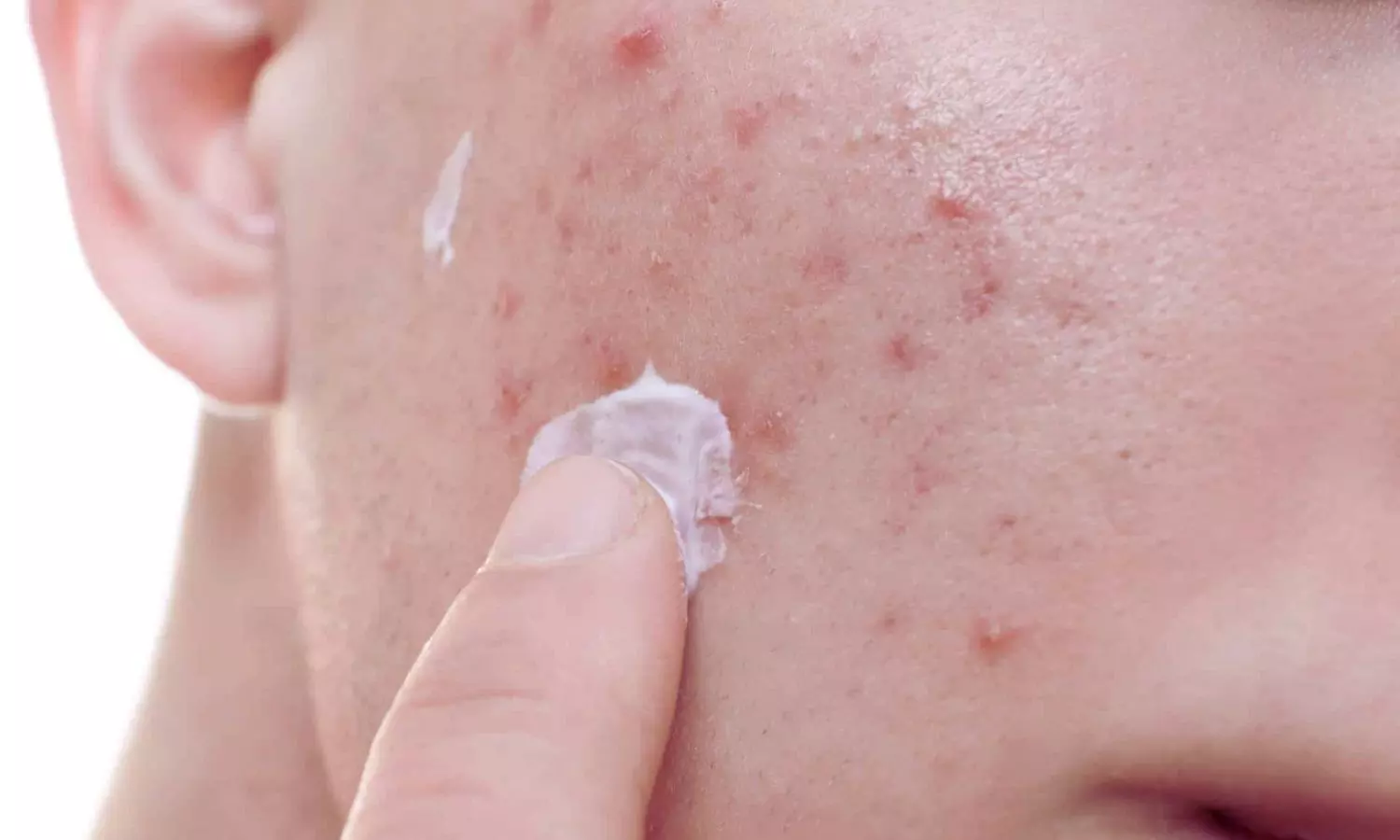


A new study published in the Journal of Cosmetic Dermatology showed that a topical antioxidant serum comprising vitamins C, E, and ferulic acid improved wound healing and decreased post-laser problems when compared to saline placebo.
When inflammatory acne heals, aberrant collagen remodeling causes acne scarring, most frequently the atrophic kind. Atrophic acne scars can be effectively treated with ablative fractional CO2 laser therapy, which improves skin texture by promoting dermal collagen and eliminating damaged tissue. However, it is often linked to side effects such telangiectasia, erythema, dyspigmentation, and extended downtime, which might have a detrimental impact on quality of life.
Since Asian cultures are more prone to scarring and post-inflammatory hyperpigmentation, these issues are especially pertinent. To enhance results and recuperation, integrated skincare techniques that combine targeted dermatological products with procedural treatments have been developed. Thus, in Chinese patients with atrophic acne scars, this study sought to assess the post-procedure reparative effects of a combination of vitamin C, E, and ferulic acid (CE Ferulic).
Patients with moderate-to-severe atrophic acne scars, aged 18 to 50, were randomly assigned to apply CE Ferulic to the intervention-side face and normal saline (NS) to the control-side face immediately following ablative CO2 laser treatment for 14 days in this split-face, randomized, investigator-blinded, controlled trial. Patients were then separated into subgroups for once-daily and twice-daily applications. Skin hydration, transepidermal water loss (TEWL), erythema index (EI), melanin index (MI), and wound healing (defined by scabbing stage on Day 7) were assessed throughout the 14-day follow-up. This research did not include a direct evaluation of scar improvement.
The analysis comprised sixty-four subjects. The intervention side had a greater percentage of full scab detachment on Day 7 compared to the control side (60.9% vs. 34.4%, p = 0.0026). On Days 3, 7, and 14, EI and MI decreased much more on the intervention side than on the control side (p < 0.0001). Additionally, on Day 14, the intervention side outperformed the control side in terms of skin moisture maintenance (p = 0.0367) and TEWL prevention (p = 0.0246).
Overall, topical vitamin C, E, and ferulic acid improved wound healing, decreased erythema and melanin deposition, and maintained skin barrier integrity following ablative fractional CO2 laser therapy. This outperformed normal saline suggesting potential benefits in skin repair and prevention of post-inflammatory hyperpigmentation.
Source:
Shi, Y., Xu, S., & Zhang, W. (2026). Reparative effects of a topical antioxidant serum containing vitamin C, vitamin E, and ferulic acid after ablative fractional CO2 laser treatment for atrophic acne scars: A randomized, investigator-blinded, split-face, controlled trial. Journal of Cosmetic Dermatology, 25(1), e70634. https://doi.org/10.1111/jocd.70634

