Utilization of Clotrimazole Powder as Co-Prescription in Clinical Practice: Latest Indian Real-World Evidence from 470 Centres and 8,000+ Patients
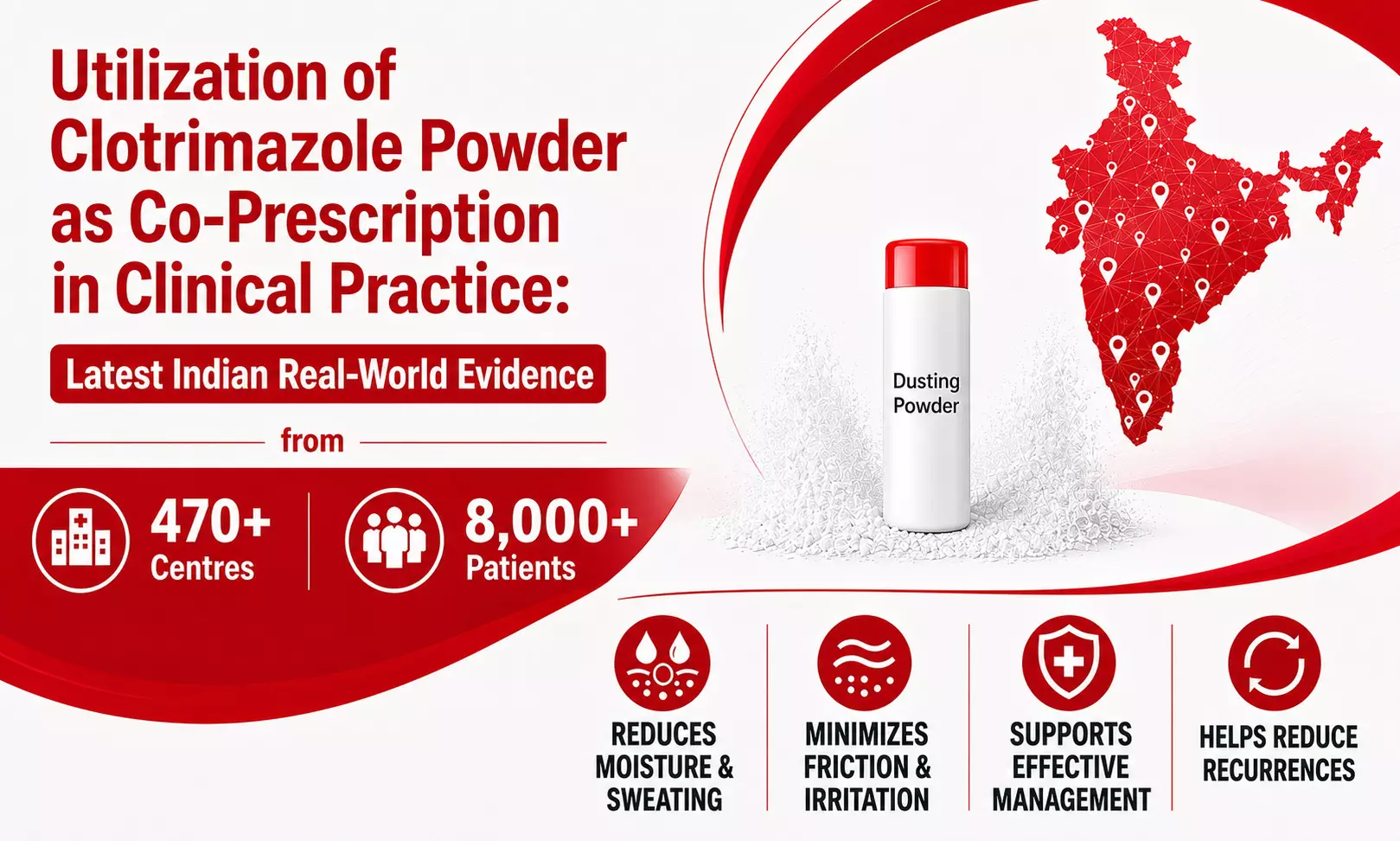


A latest large-scale study evaluating the utilization of clotrimazole dusting powder as co-prescription in clinical practice has offered significant Real-World Evidence (RWE) insights from India, reporting the clinical application of this formulation into the antifungal treatment continuum. This study was published in the International Journal of Research in Dermatology in March–April 2026.
One of the largest datasets on topical antifungal utilisation patterns in the nation, the study was carried out by Dr. Deepak Jakhar et al. across 470 dermatology centres, including more than 8000 patients.
In India, dermatophytosis is a serious public health concern due to the country's climate, population density, and pervasive topical medication abuse. Although clotrimazole has remained a standard antifungal medication, its dusting powder formulation is receiving more attention due to its potential to improve therapeutic outcomes, particularly in humid areas where moisture control is crucial.
The study analysed nearly 8000 patients from 420+ dermatology centres, making it one of the most extensive real-world databases in dermatology practice.
Key benefits driving the use of Clotrimazole Powder as Co-Prescription
• Nearly half of the dermatophytosis patients (49.24%) were between the ages of 31 and 45 years, with males accounting for 62.5% and 79.3% of patients had an illness duration of less than one year.
• Tinea cruris (53.8%) and tinea corporis (45.9%) were identified as the most common clinical indications for prescribing clotrimazole dusting powder.
• The most frequently prescribed regimen was once-daily, in 51.4% patients for clotrimazole dusting powder.
• A remarkable 90.2% of patients received combination antifungal therapy, highlighting the adjunctive role of clotrimazole powder.
• The most commonly prescribed topical medications were luliconazole cream (47.7% patients) and clotrimazole cream (32.6% patients). Systemic antifungals were utilized in 94.8% of patients, with super-bioavailable itraconazole 130 mg once daily being the most commonly prescribed regimen.
• The reasons for prescribing clotrimazole dusting powder were:
• Sweat control, reported in 72.3% of cases
• Itch and discomfort reduction, reported in 69.7% of cases
• Limiting infection spread, reported in 52.8% of cases
Figure: Reason for Prescribing Clotrimazole dusting powder as co-prescription
These findings indicate that clotrimazole dusting powder is mostly utilized as an adjuvant therapy, particularly in individuals with sweating, friction, and intertriginous involvement, where infections are likely to persist. In India's humid climate, moisture management is often as crucial as antifungal treatment.
However, the study also raises concerns about irrational antifungal usage, which is fuelled by over-the-counter access to corticosteroids and low patient understanding. This frequently results in underdosing, incorrect combinations, and inadequate treatment, which contributes to recurrence and resistance.
Asian Evidence Corroborates Combined Use of Clotrimazole Powder & Cream
A Thailand-based randomized trial adds to the Indian findings by providing additional clinical support for the use of clotrimazole powder in combination with cream formulations. The study found that patients treated with 1% clotrimazole cream and powder had higher complete cure rates at 4 weeks in the dermatophytosis group with combination therapy showing ~44 percentage points higher cure rates, than with cream alone.
The better outcomes with combined clotrimazole cream plus dusting powder were attributed to the drying properties of the powder, which help reduce moisture in intertriginous areas, conditions favourable for fungal growth, thereby enhancing antifungal efficacy. Importantly, there was no significant difference in patient satisfaction or convenience of application between treatment groups, supporting the feasibility of combination therapy in clinical practice.
Protocol-Driven Use of Clotrimazole Dusting Powder and the Need for Responsible Antifungal Use
Speaking to Medical Dialogues, Dr. Deepak Jakhar, MBBS, MD, Deramtology, and member of the review panel, said- "Clotrimazole dusting powder should be viewed as a protocol-based adjunct, especially in recurrent Fungal Infections, Along with antifungal creams and systemic therapy, it helps reduce moisture, friction, and sweating—key factors that promote fungal persistence. In high-risk patients, incorporating it into routine management may improve symptom control and reduce recurrences. Moreover, the priority is educating patients about avoiding self-medication. We should emphasize completing the full course of treatment and seeking medical advice for recurrent infections. Better adherence to treatment guidelines along with regular conversations with a medical professional before taking any OTC Creams.
This large Indian real-world investigation found that clotrimazole dusting powder is mostly utilized as an adjuvant in combination antifungal therapy for dermatophytosis. It helps to relieve symptoms, reduce sweating, and limit infection spread, all of which contribute to better treatment outcomes.
- 1. A drug utilization study to evaluate the prescribing pattern of clotrimazole dusting powder in dermatophytosis. Int J Res Dermatol. 12193-194
- 2. Efficacy and safety of 1% clotrimazole powder as adjuvant therapy in patients with superficial fungal cutaneous infection in intertriginous areas. J Med Assoc Thai. 991355-1359