
Yellow Nails Signal More Than a Nail Disorder, finds research
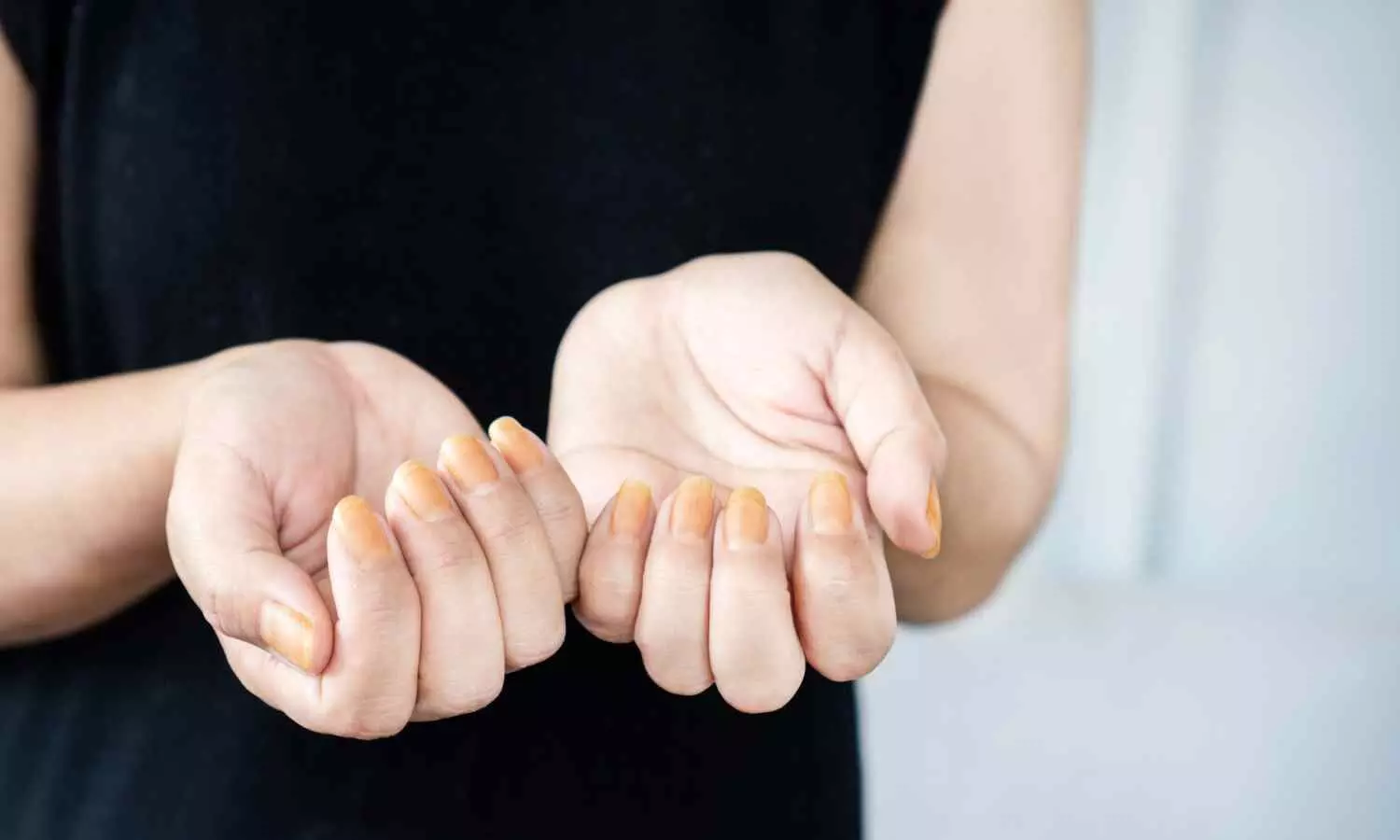


Rare yellow nail syndrome can be associated with chronic respiratory disease, lymphedema and occasionally malignancy, making early clinical recognition important.
Yellow nails are commonly attributed to fungal infections, ageing or cosmetic changes. But when nail discoloration occurs alongside persistent cough, recurrent chest infections or unexplained swelling of the legs, it may point towards a rare systemic condition that is easily overlooked.
Known as yellow nail syndrome (YNS), this disorder brings together three seemingly unrelated findings: abnormal yellow nails, lymphedema and respiratory disease.
A clinical review by Rachel A. Wetstone and Brett Sloan, published in Clinics in Dermatology, draws attention to the importance of recognising this unusual combination, particularly in patients older than 50 years.
The difficulty is that patients rarely present with all three features together. According to the review, only about one-third have the complete triad simultaneously. One manifestation may precede another by months or even years, allowing the underlying diagnosis to remain unrecognised.
Only two of the three characteristic features are required for a clinical diagnosis.
The nail changes are distinctive when carefully examined. Instead of ordinary discoloration, the nails may become thickened, excessively curved and unusually slow-growing. They may appear pale yellow or greenish, develop transverse ridges, or separate from the nail bed.
Nail growth can fall below 0.25 mm per week, considerably slower than normal. These abnormalities can resemble onychomycosis, making exclusion of fungal disease an important part of the assessment.
Yet the respiratory manifestations may be more clinically consequential than the nail appearance.
The review reports pulmonary involvement in approximately 60–70% of patients, with chronic cough being a common complaint. Recurrent lower respiratory tract infections, bronchiectasis, chronic sinusitis and pleural effusions are among the recognised manifestations.
Pleural effusions occur in approximately 40% of affected patients, while some develop chylothorax.
For pulmonologists and physicians, the combination of recurrent pleural effusion or bronchiectasis with abnormal yellow nails should therefore raise suspicion of YNS.
Lymphedema provides another diagnostic clue. It most commonly involves both lower limbs and may be the earliest manifestation. The authors note that lymphatic dysfunction is considered central to the disorder, although its underlying mechanisms remain incompletely understood.
One particularly important aspect of the review concerns the association between yellow nail syndrome and malignancy.
Reported accompanying cancers include breast, endometrial, renal and gallbladder carcinomas, as well as lymphoma and melanoma. In some patients, nail changes have improved following successful cancer treatment.
These observations have raised the possibility that YNS may occasionally represent a paraneoplastic syndrome. However, the association does not establish that yellow nail syndrome is caused by cancer in every affected patient.
An appropriate clinical assessment should therefore consider associated systemic disease and age-appropriate cancer evaluation, guided by symptoms and examination findings rather than indiscriminate screening.
Treatment remains largely directed towards individual manifestations.
Oral vitamin E has been associated with improvement in nail discoloration in some reports, although responses are inconsistent and high doses may increase bleeding risk. Antifungal agents have shown limited benefit, while topical vitamin E has not demonstrated convincing efficacy in controlled evaluation.
Respiratory treatment depends on the underlying complication. Patients with bronchiectasis may require airway clearance measures and appropriate antimicrobial treatment for infections. Recurrent symptomatic pleural effusions may require drainage or other pleural interventions.
For lymphedema, compression garments, bandaging, skin care, manual lymphatic drainage and exercise remain important supportive measures.
The authors emphasise that the clinical course is often benign, and some patients experience spontaneous improvement. Nevertheless, persistent respiratory complications can require prolonged multidisciplinary management.
This review is based largely on published clinical observations and case reports rather than controlled treatment trials, reflecting the rarity of the syndrome.
Its practical message is relevant beyond dermatology. When evaluating an older patient with unexplained leg swelling, recurrent respiratory infections or persistent pleural effusions, examination of the fingernails may provide an important diagnostic clue.
Sometimes, recognising a systemic disease begins with something as simple as looking at the patient's nails.
