
- Home
- Medical news & Guidelines
- Anesthesiology
- Cardiology and CTVS
- Critical Care
- Dentistry
- Dermatology
- Diabetes and Endocrinology
- ENT
- Gastroenterology
- Medicine
- Nephrology
- Neurology
- Obstretics-Gynaecology
- Oncology
- Ophthalmology
- Orthopaedics
- Pediatrics-Neonatology
- Psychiatry
- Pulmonology
- Radiology
- Surgery
- Urology
- Laboratory Medicine
- Diet
- Nursing
- Paramedical
- Physiotherapy
- Health news
- Fact Check
- Bone Health Fact Check
- Brain Health Fact Check
- Cancer Related Fact Check
- Child Care Fact Check
- Dental and oral health fact check
- Diabetes and metabolic health fact check
- Diet and Nutrition Fact Check
- Eye and ENT Care Fact Check
- Fitness fact check
- Gut health fact check
- Heart health fact check
- Kidney health fact check
- Medical education fact check
- Men's health fact check
- Respiratory fact check
- Skin and hair care fact check
- Vaccine and Immunization fact check
- Women's health fact check
- AYUSH
- State News
- Andaman and Nicobar Islands
- Andhra Pradesh
- Arunachal Pradesh
- Assam
- Bihar
- Chandigarh
- Chattisgarh
- Dadra and Nagar Haveli
- Daman and Diu
- Delhi
- Goa
- Gujarat
- Haryana
- Himachal Pradesh
- Jammu & Kashmir
- Jharkhand
- Karnataka
- Kerala
- Ladakh
- Lakshadweep
- Madhya Pradesh
- Maharashtra
- Manipur
- Meghalaya
- Mizoram
- Nagaland
- Odisha
- Puducherry
- Punjab
- Rajasthan
- Sikkim
- Tamil Nadu
- Telangana
- Tripura
- Uttar Pradesh
- Uttrakhand
- West Bengal
- Medical Education
- Industry
Better glycemic control linked to beneficial effect on bone metabolism, finds study
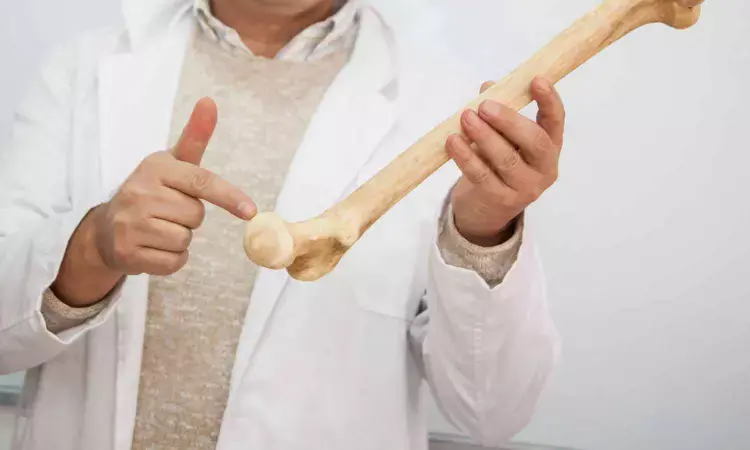
According to a new study, Glycemic Control and Bone Metabolism Fasting blood glucose levels showed a negative correlation with markers of bone formation and resorption, including total serum procollagen type I N-terminal propeptide (PINP) and age-related type I cross-linked C-telopeptide (CTX). These findings suggest that better glycemic control may have a beneficial effect on bone metabolism.
This study aimed to compare bone metabolism markers between patients with hip fracture who had and did not have type 2 diabetes mellitus (T2DM).MethodsA total of 743 patients with hip fractures were enrolled in this case-control study and were further divided into type 2 diabetes mellitus and non-type 2 diabetes mellitus groups. Biochemical parameters, including fasting blood glucose, triglycerides, and total cholesterol, and bone metabolism parameters, including total serum procollagen type N-terminal propeptide and age-related type I cross-linked C-telopeptide, were collected and compared. Correlations between fasting blood glucose and triglyceride levels and bone metabolism parameters were assessed via Spearman correlation analysis.
Results: The fasting blood glucose and triglyceride levels in the type 2 diabetes mellitus group were significantly higher than those in the non-type 2 diabetes mellitusgroup. In addition, the total serum procollagen type N-terminal propeptide and age-related type I cross-linked C-telopeptide levels in the type 2 diabetes mellitus group were significantly lower than those in the non-type 2 diabetes mellitus group.
ConclusionsThe fasting blood glucose levels were negatively correlated with the total serum procollagen type N-terminal propeptide and age-related type I cross-linked C-telopeptide levels. In addition, our study speculated that good glycemic control may be beneficial for bone metabolism.
Reference:
Yang, Shaofeng, et al. "Does Type 2 Diabetes Affect Bone Metabolism in Patients After Hip Fracture? a Case-control Study." The Journal of International Medical Research, vol. 54, no. 1, 2026, p. 3000605251411081.

Dr. Shravani Dali has completed her BDS from Pravara institute of medical sciences, loni. Following which she extensively worked in the healthcare sector for 2+ years. She has been actively involved in writing blogs in field of health and wellness. Currently she is pursuing her Masters of public health-health administration from Tata institute of social sciences. She can be contacted at editorial@medicaldialogues.in.
Dr Kamal Kant Kohli-MBBS, DTCD- a chest specialist with more than 30 years of practice and a flair for writing clinical articles, Dr Kamal Kant Kohli joined Medical Dialogues as a Chief Editor of Medical News. Besides writing articles, as an editor, he proofreads and verifies all the medical content published on Medical Dialogues including those coming from journals, studies,medical conferences,guidelines etc. Email: drkohli@medicaldialogues.in. Contact no. 011-43720751

