Incretin-Based Drugs Provide Better Glycemic Control in Type 2 Diabetes, according to CGM data
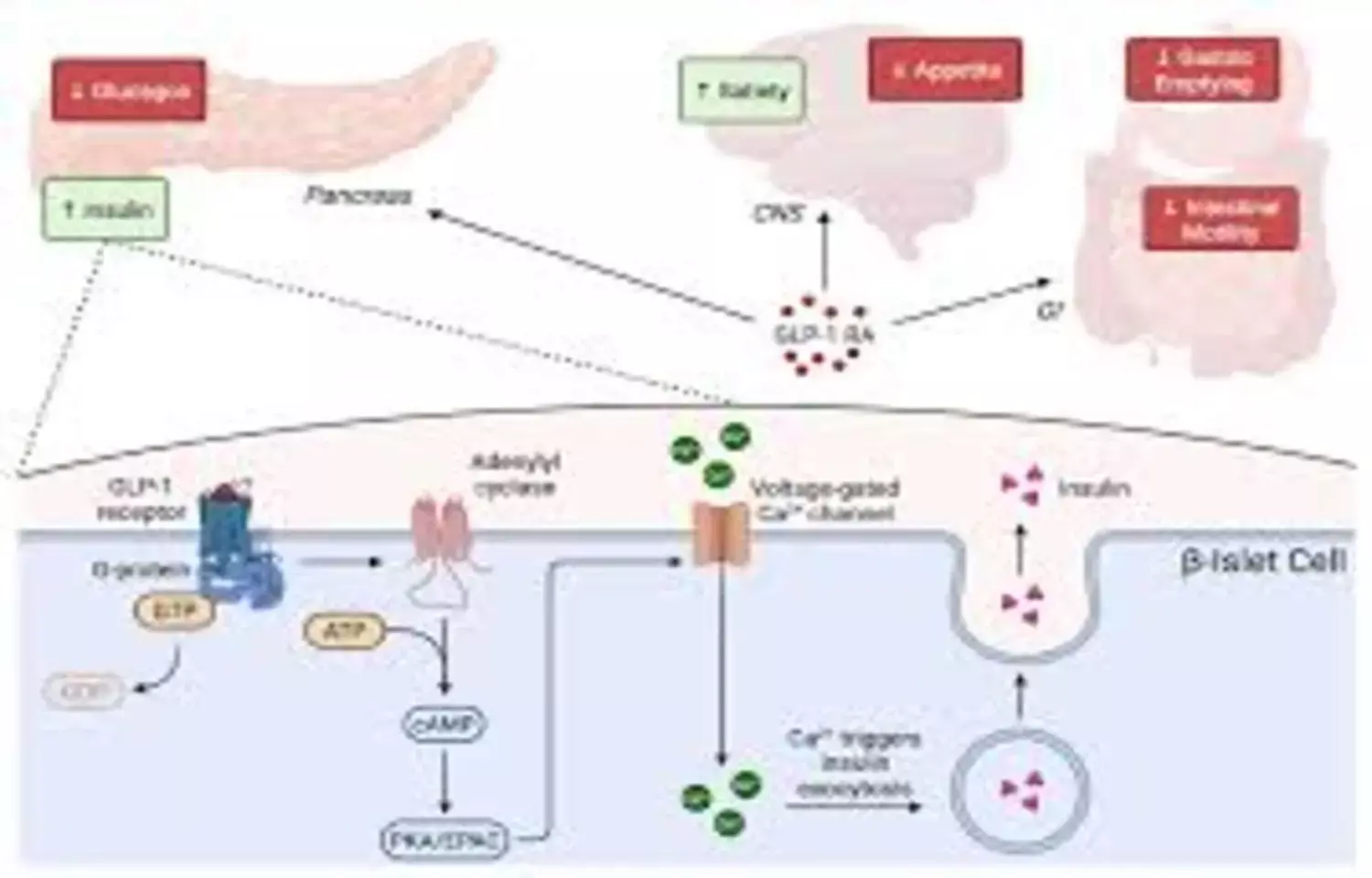


A study published in Diabetes Care has found that incretin-based therapies, including liraglutide and sitagliptin, may offer superior glycemic control in patients with type 2 diabetes compared with insulin glargine and glimepiride. Continuous glucose monitoring showed that these drugs were associated with greater time in target glucose range and lower glucose variability, suggesting more stable and effective blood sugar management.
Glycemic management metrics derived from continuous glucose monitoring (CGM) are increasingly recognized as important therapeutic targets. We performed one of the first comparisons of CGM metrics and achievement of CGM targets among four classes of glucose-lowering medications in combination with metformin. The Glycemia Reduction Approaches in Diabetes (GRADE) study randomly assigned participants with type 2 diabetes and taking metformin to add one of four glucose-lowering medications (insulin glargine, glimepiride, liraglutide, or sitagliptin) and followed them for glycemic outcomes for 5 ± 1.3 years. A 2-week masked CGM analysis was conducted midstudy in 1,080 participants to evaluate CGM metrics, 24-h ambulatory glucose profile, and achievement of consensus goals. Treatment effects among the four groups were compared.
The sitagliptin and liraglutide groups had the highest time in range 70–180 mg/dL (TIR70–180) and the lowest time below range <70 mg/dL (TBR<70) and percentage coefficient of variation (%CV). The glimepiride group had the lowest TIR70–180, and the highest %CV, TBR<70, and number of CGM-derived hypoglycemic events (P < 0.001), and was the only drug showing daytime hypoglycemia. Sitagliptin and liraglutide were best for achieving consensus goals of very low TBR<54 <1% and the combined metric of TIR70–180 >70% and TBR<70 <4% (P < 0.001). When stratified by HbA1c, mean glucose did not differ among treatments, but %CV and TBR<70 were higher with glargine and glimepiride within each HbA1c stratum.
Incretin class drugs had the lowest %CV, the least hypoglycemia, and best achievement of CGM-based glycemic targets. CGM metrics and profiles provide clinical insights, beyond HbA1c, to guide diabetes management.
Reference:
Richard M. Bergenstal, Jill P. Crandall, Samuel P. Rosin, Nicole M. Butera, Anne Bantle, Cyrus Desouza, Elizabeth Duran-Valdez, Stephanie Hall, William H. Herman, Mary L. Johnson, Violet Lagari, Mary E. Larkin, Lawrence S. Phillips, Holly J. Willis, Heidi Krause-Steinrauf, GRADE Research Group*; Comparison of the Continuous Glucose Monitoring Profiles of Four Glucose-Lowering Medications in the GRADE Randomized Trial. Diabetes Care 2026; dc253055. https://doi.org/10.2337/dc25-3055
Keywords:
Incretin-Based, Drugs, Provide, Better, Glycemic Control, Type 2 Diabetes, CGM data, Richard M. Bergenstal, Jill P. Crandall, Samuel P. Rosin, Nicole M. Butera, Anne Bantle, Cyrus Desouza, Elizabeth Duran-Valdez, Stephanie Hall, William H. Herman, Mary L. Johnson, Violet Lagari, Mary E. Larkin, Lawrence S. Phillips, Holly J. Willis, Heidi Krause-Steinrauf