
Inhaled Technosphere Insulin use tied to Modest HbA1c Increase in Youth With Diabetes at end of one year: Study
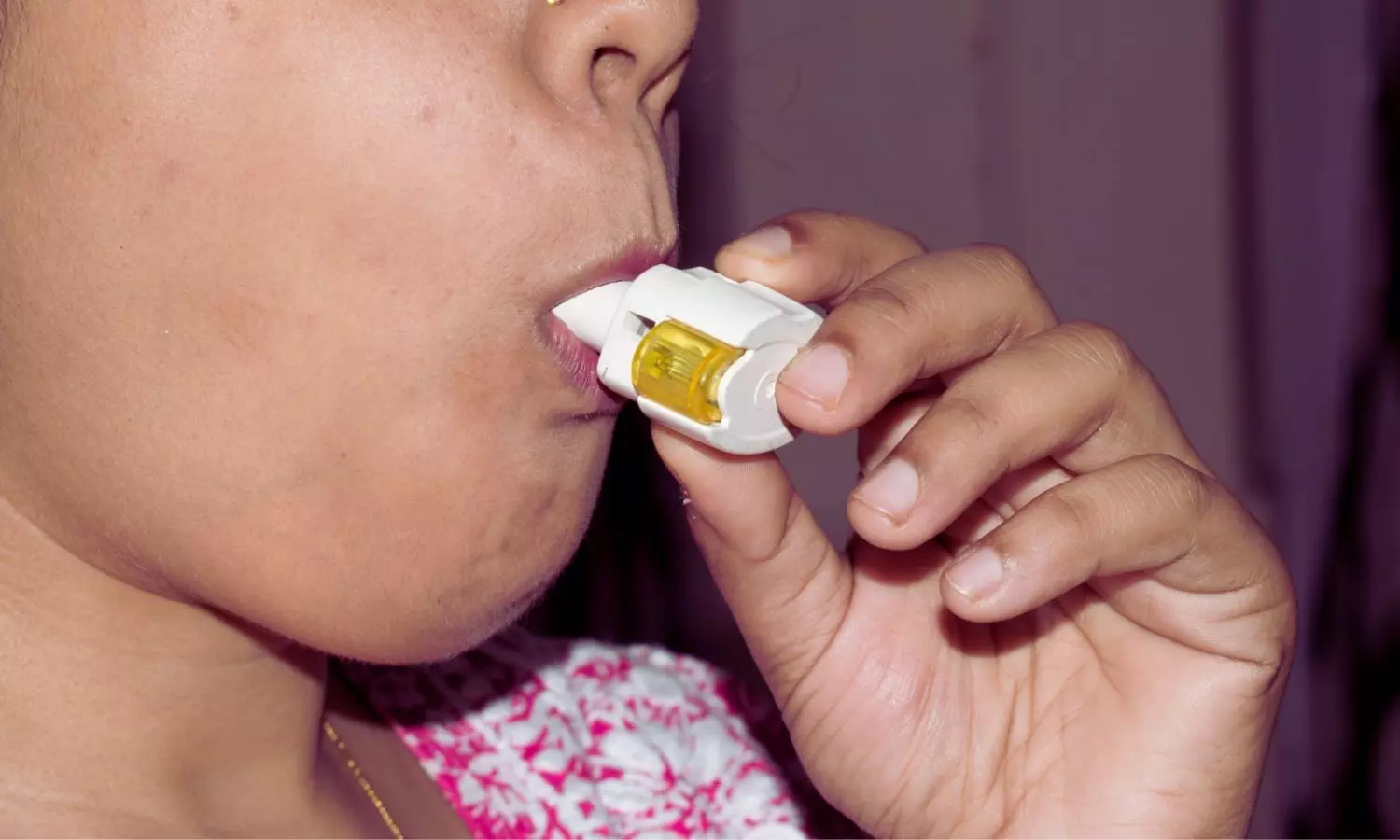


A new study published in the journal of Diabetes Technology & Therapeutics showed that the use of inhaled technosphere insulin was linked to a 0.46% rise in HbA1c from baseline to one year in children and adolescents with diabetes.
With its quicker onset and shorter duration of action, Technosphere inhaled insulin may help with glucose management. Children who participated in a 26-week experiment reported similar results, satisfactory safety, increased happiness, and decreased weight growth. The extension phase's goals were to provide further safety and efficacy data utilizing TI by the RCT RAA group and to evaluate the safety of TI over a 52-week period in the RCT TI group.
Rapid-acting analog (RAA) or TI plus continuation of long-acting basal insulin and continuous glucose monitoring (CGM) were randomly allocated to 4–17-year-olds with type 1 (98%) or type 2 (2%) diabetes treated with numerous daily insulin injections. Participants had the choice to continue in an extension phase for an additional 52 weeks after 26 weeks, during which time both treatment groups utilized TI.
The mean HbA1c in the TI group (N = 80) was 8.1 ± 0.8% at the beginning of the RCT, 8.2 ± 1.2% at 26 weeks, and 8.6 ± 1.2% at 52 weeks (mean change from 26 to 52 weeks = 0.38%, 95% confidence interval [95% CI] 0.08%–0.67%, P = 0.003). The mean HbA1c was 8.1 ± 1.1% at TI beginning (RCT week 26) and 8.4 ± 1.4% after 52 weeks in the RAA Crossover group (N = 88) (mean change = 0.31%, 95% CI −0.02%–0.64%, P = 0.08).
No significant or unanticipated pulmonary-related adverse events occurred. When the whole durations of TI exposure for both groups were combined, the change in mean percent predicted forced expiratory volume in 1 s from the beginning of TI to 4 weeks after termination was −0.5 (95% CI −1.9–0.9, P = 0.52). During TI usage, the CGM-measured time < 54 mg/dL was extremely low (TI group: 0.39 ± 0.61%; RAA Crossover group: 0.45 ± 0.59%).
Overall, there were no safety issues throughout the INHALE-1 extension phase. TI may be a helpful treatment option for some pediatric patients with diabetes, especially for young people who choose not to or are unable to use an AID system.
Source:
Beck, R. W., Kanapka, L., Monzavi, R., Willi, S. M., Tansey, M., Wood, J. R., Cymbaluk, A., Fiallo-Scharer, R., Bethin, K. E., Cossen, K., White, P. C., Hanley, P. C., Mouse, T. J., Haller, M. J., & INHALE-1 Study Group. (2026). Inhaled technosphere insulin in children with diabetes: The INHALE-1 extension study. Diabetes Technology & Therapeutics, 15209156261420176. https://doi.org/10.1177/15209156261420176

