
Interdisciplinary Care Transforms Diabetic Foot Outcomes, Suggests Study
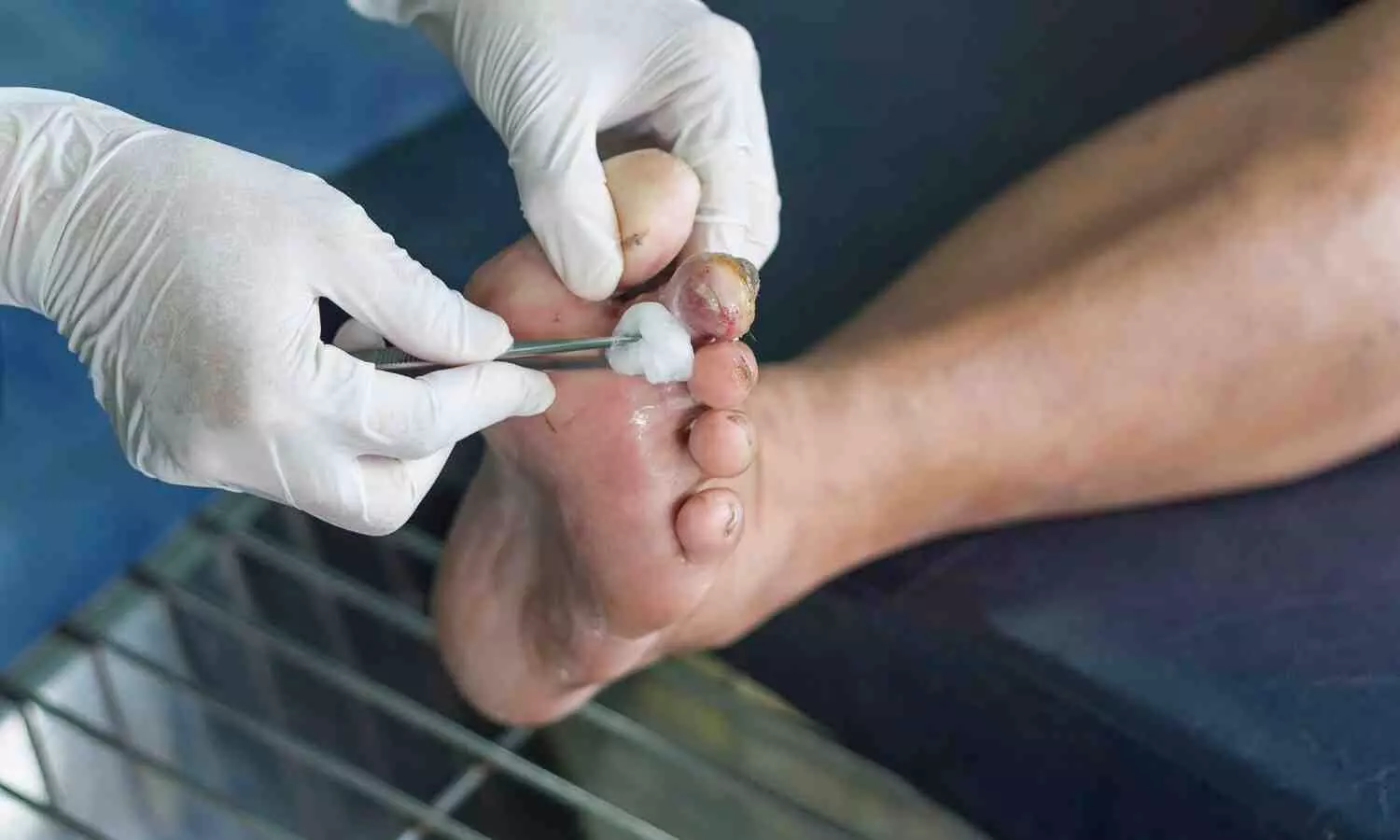


A recent study published in the Indian Journal of Surgery in March 2026 reveals that transitioning diabetic foot care to structured interdisciplinary care can dramatically halve two-year mortality from 24% to 12% and cut amputation rates from 32% to 25%, offering a powerful new standard for limb and life salvage in diabetic patients.
With India hosting approximately 90 million diabetics and 15% developing Diabetic Foot Disease (DFD)—a condition elevating 10-year mortality risk by 40%—Smruti Ghetla and colleagues at a tertiary public health center identified a critical gap in standard wound management. Their study evaluated whether replacing traditional protocols with a structured, interdisciplinary care strategy could significantly reduce amputation and mortality rates.
Therefore, the comparative study at an Indian tertiary center evaluated 1,359 patients over two distinct phases. Outcomes for a baseline group of 771 patients receiving standard wound care (2018–2019) were compared against 588 patients managed with a structured interdisciplinary approach (2021–2022). The investigation focused on primary endpoints of major and minor amputation rates and mortality.
Key Clinical Findings of the Study Include:
• Mortality Reduction: The study demonstrated a significant survival benefit, as the two-year mortality rate for patients with diabetic foot complications was halved from 24% under standard care to 12% following the implementation of the structured program.
• Limb Salvage Success: Researchers reported a meaningful decrease in surgical interventions, with the total amputation rate dropping from 32% in the pre-implementation group to 25% in the interdisciplinary care group.
• Statistical Significance: The analysis confirmed that the improvements in both mortality and amputation outcomes were highly robust, maintaining a p-value of less than 0.05.
• Clinical Efficacy: By streamlining management through an organized interdisciplinary approach, the center effectively mitigated the severe risks associated with DFD, providing a scalable model for tertiary care settings.
The results suggest that the integration of a specialized, multi-professional care pathway is associated with a profound and statistically significant decrease in both the loss of life and the loss of limbs among diabetic patients. These findings highlight that structured care is not merely an administrative change but a critical clinical intervention that saves lives.
Thus, the study concludes that practitioners and hospital administrators should consider the prompt adoption of organized, collaborative foot care models to improve long-term prognosis and reduce the heavy burden of complications in high-risk diabetic populations.
While the current evidence underscores the success of this model at a single tertiary site, there remains a pressing need to establish similar structured diabetic foot care infrastructures across all medical institutes in India to validate these benefits on a broader national scale.
Reference
Ghetla S, Nandu VV, Parmeshwar T, Tharewal A. Impact of a Structured Diabetic Foot Care Program on Mortality and Amputation Rates in a Tertiary Care Centre. Indian J Surg. 2026; March 30.
