Weekly Low-Frequency Ultrasound Improves Diabetic Foot Ulcer Outcomes: Study
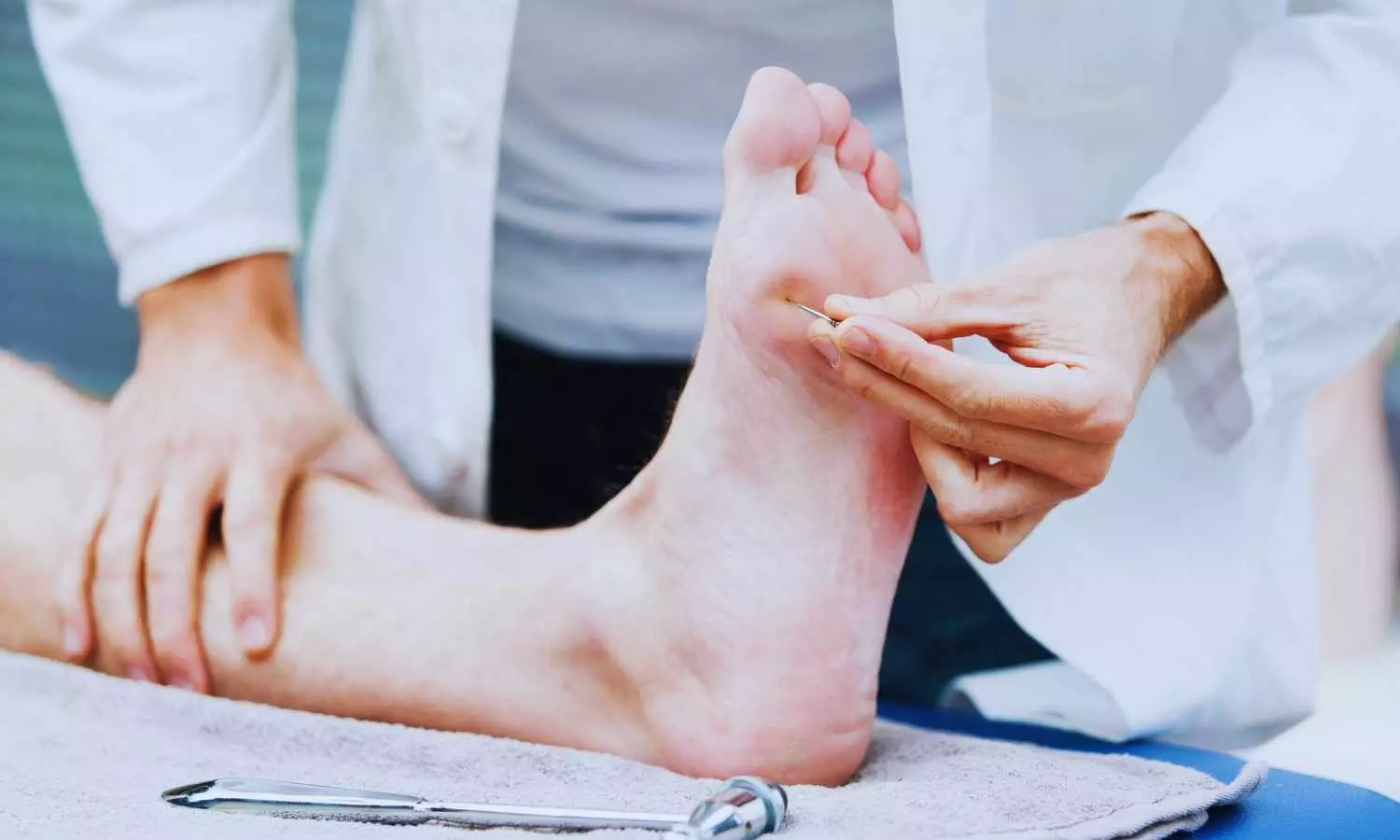


A new study published in the journal of American Journal of Translational Research showed that weekly low-frequency ultrasound debridement (UD) was linked to improved wound healing, infection management, tissue blood flow, and quality of life in patients with diabetic foot ulcers (DFUs) when compared to surgical debridement, while demonstrating a similar safety profile.
Diabetic foot ulcers are linked to slow recovery, ongoing infection, and a higher likelihood of amputation. Debridement aids in eliminating dead tissue and managing infection. This research compared low-frequency ultrasonic debridement to surgical debridement in individuals with diabetic foot ulcers, assessing wound healing, infection management, blood flow to the tissue, and quality of life results.
This retrospective study involved 298 patients with DFU treated at the Department of Burns and Plastic Surgery of the Central Hospital of Xuzhou between January 2021 and January 2025. Patients were categorized based on the initial debridement technique used: UD (n=142) or surgical debridement (n=156). To adjust for baseline confounding variables, propensity score matching (PSM) was applied at a 1:1 ratio, yielding 230 matched patients (115 in each group).
The primary endpoint was the rate of complete healing at 12 weeks. Secondary endpoints included time to healing, reduction in wound size, infection control rate, antibiotic usage, changes in transcutaneous oxygen pressure (TcPO2), Wollina Wound Score, safety assessments, and scores from the 36-Item Short Form Health Survey (SF-36).
Following PSM, the baseline characteristics were well matched. The 12-week healing rate was notably higher in the UD group when compared to the surgical debridement group (67.8% vs. 53.9%; P<0.05). The median healing duration was significantly shorter in the UD group (15.3 weeks vs. 21.6 weeks; log-rank P=0.003).
UD was linked to a greater reduction in wound area (81.4% ± 20.7% vs. 70.3% ± 24.5%; P<0.05) and a higher rate of infection control (75.7% vs. 60.9%; P<0.05). The total number of antibiotic days was lower in the UD group (median 21.0 vs. 28.0 days; P<0.05).
Enhancements in TcPO2 and Wollina Wound Score were significantly more pronounced with UD (P<0.001). The SF-36 physical and mental component summary scores showed greater improvement in the UD group (both P<0.001). There were no significant differences between the two groups in major amputation rates or overall adverse events.
Overall, weekly low-frequency ultrasonic debridement shows enhanced results in wound healing, infection eradication, improved local tissue blood flow, and overall patient quality of life when compared to traditional surgical debridement for diabetic foot ulcers, while preserving a similar level of safety.
Source:
Song, D., Chen, H., & Shao, D. (2026). Ultrasonic debridement promotes wound healing and enhances infection control compared with surgical debridement in diabetic foot ulcers: a propensity score-matched retrospective study. American Journal of Translational Research, 18(9), 8159-8170. https://doi.org/10.62347/MHUW5597