
Childhood deafness: New insights to improve genetic counseling for families
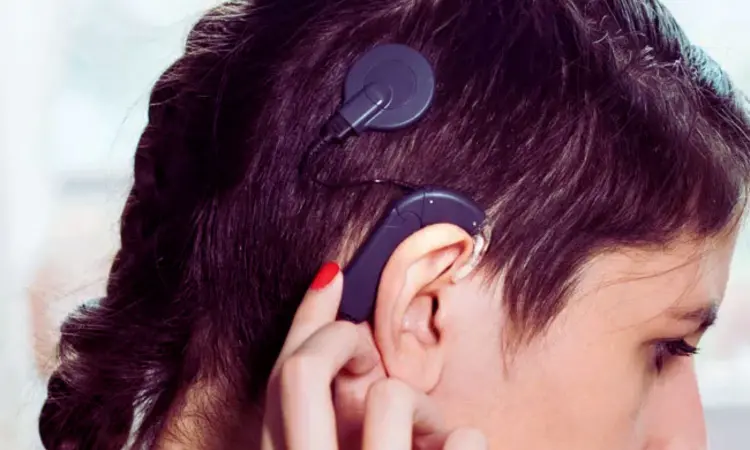


Deafness, the most common sensorineural hearing loss at all stages of life, occurs either independently or as part of syndromes associated with other symptoms, such as Usher syndrome type 1. In a study published in PNAS journal, researchers from the reConnect Institute, foundation hosted by the Institut Pasteur, at the Hearing Institute (Institut Pasteur/Inserm/CNRS) and the Pasteur Institute of Tunis, in collaboration with universities and centers in Algeria, Morrocco, Mauritania, and Jordan), have uncovered the genetic basis of deafness occurring before the onset of language. The authors identified more than 200 distinct mutations associated with deafness, over a third of which are new. The results were made possible by analyzing genetic data from an international cohort of 450 patients from the aforementioned countries. The reclassification of the identified mutations, particularly those in genes responsible for both Usher syndrome type 1 (multisensory impairment) and isolated forms of deafness, will contribute to improving the genetic counseling for parents and provide better care for deaf children around the world.
The study focuses on forms of isolated hearing loss [not associated with other impairments and Usher syndrome type 1, which involves profound congenital hearing loss, balance disorders, and progressive vision loss, caused by damage to the inner ear and retina. Severe or profound isolated congenital hearing loss is most often hereditary; while Usher syndrome type 1 is exclusively inherited. The transmission mode is usually the same.
Advances in genetics that improve the diagnosis of child-age deafness
The goal of this study is to improve the efficiency of genetic counselling provided to parents and the care of deaf children. Knowing which genes are involved, the mutation they carry and how these mutations affect symptoms, severity, and progression is essential.
In this international collaborative study, involving several members of the Pasteur Network (Institut Pasteur, Institut Pasteur de Tunis, Institut Pasteur du Maroc) as well as universities and university hospitals in Algeria, Mauritania and Jordan, the authors uncovered the genetic basis of congenital deafness in 450 unrelated patients.
"By sequencing the genomic regions known to contain genes responsible for deafness, we identified 211 distinct mutations in 49 genes, 36% of which were new. While 154 genes are known to be responsible for isolated deafness, mutations in about ten of them alone account for approximately three-quarters of deafness cases in each country. Although the genes involved in isolated deafness are similar across the four countries studied, their mutations are, in most cases, family-specific, with the exception of a few particularly frequent mutations affecting the GJB2 gene.” explains Crystel Bonnet, research engineer at the Hearing Therapy Innovation Laboratory at the reConnect Institute at the Hearing Institute, center under the aegis of the Pasteur Institute.
A study paving the way for improved care for affected individuals and their families
A recurring challenge in diagnosing deafness is that certain genes, depending on the mutations they carry, are responsible for either isolated deafness or Usher syndrome type 1. Until now, no molecular characteristics had been identified that could distinguish between these two types of mutations.
"We hypothesized that these difficulties could stem from incomplete or inaccurate classification of some of these mutations. Our analyses show that this is indeed the case Certain mutations, when present in a homozygous state in these genes, lead to isolated. deafness. However, we have observed that they can have a deleterious effect on vision. This effect can be unmasked when this mutation is associated with another mutation that inactivates the other copy of the gene,", explains Christine Petit, head of the Hearing Therapy Innovation Laboratory at the reConnect Institute at the Hearing Institute, part of the Pasteur Institute.
This reclassification of mutations should improve the quality of genetic counseling provided to families around the world by providing guidance on the most appropriate communication method for their child, such as cochlear implantation or sign language. It should also support regular ophthalmological follow-up.
Reference:
Z. Riahi,S. Boucher,S. Abdi,F. Wong Jun Tai,A. Singh-Estivalet,A. Aghaie,M. Niasme-Grare,J. Hardelin,A. Behlouli,M. Dahmani,S. Talbi,Y. Bouyacoub,R. Mkaouar,C. Charfeddine,G. Amalou,A. Bakhchane,A. Bousfiha,S. Salime,S. Elrharchi,[...] & C. Bonnet, Genetics of prelingual isolated deafness and Usher syndrome in the Maghreb and Jordan: Harnessing the potential of homozygosity, Proc. Natl. Acad. Sci. U.S.A. 122 (50) e2518445122, https://doi.org/10.1073/pnas.2518445122 (2025).
