
Early Cochlear Implantation Preserves Auditory Nerve Health and Achieves Better Outcomes: JAMA
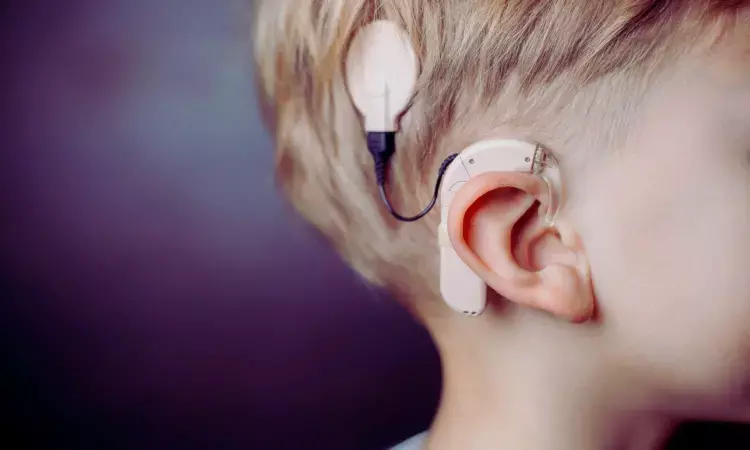


USA: A new cohort study presents a reliable and scalable method to evaluate auditory nerve function and peripheral neural plasticity in vivo across the lifespan. The results emphasize that early cochlear implantation is crucial for maintaining neural health and achieving better long-term auditory outcomes.
The researchers developed and validated an automated, standardized approach to analyze neural responses in cochlear implant users, addressing long-standing inconsistencies in how these recordings are acquired and interpreted in clinical settings. Their findings provide the strongest evidence to date that the timing of implantation—particularly in early childhood—plays a decisive role in shaping auditory nerve responsiveness and long-term neural adaptability.
Published in JAMA Otolaryngology–Head & Neck Surgery, the study evaluated electrically evoked compound action potential data from an exceptionally large population: more than 169,000 neural recordings collected from over 10,000 cochlear implants in 7416 patients. The multicenter analysis, conducted across multiple U.S. hospitals between 2002 and 2017, leveraged nonlinear curve-fitting models to track auditory nerve behavior over extended periods.
The following were the key findings:
- The automated models were able to interpret about 80% of all auditory nerve growth functions, indicating strong reliability for use in everyday clinical settings.
- Auditory nerve thresholds increased progressively from the apical to the basal regions of the cochlea, accompanied by a steady decrease in growth slope and plateau levels, and these structural patterns remained consistent across patients.
- Latency measurements remained largely unchanged regardless of the electrode location within the cochlea.
- Age at implantation was a major determinant of neural responsiveness, with younger children—particularly infants and toddlers—displaying steeper neural response slopes and clear signs of peripheral neural plasticity.
- In these younger recipients, neural response slopes continued to strengthen for as long as five years after cochlear implant activation, highlighting the brain's heightened adaptability during early development.
- Adolescents and adults showed flatter response slopes and a markedly reduced capacity for neural change over time.
- Although auditory nerve thresholds increased slightly with prolonged device use, the key neural indicators—response slope and plateau—tended to stabilize after the age of 30.
- These patterns suggest that age at first implantation has a far greater influence on auditory nerve performance than duration of implant use.
- Overall, the findings emphasize that neural pathways exhibit the greatest flexibility early in life, and delaying implantation may restrict the potential for achieving optimal auditory outcomes.
The authors highlight that their standardized, model-based framework offers clinicians an accessible and reproducible tool for tracking auditory nerve health across the lifespan. Beyond its diagnostic value, the approach provides meaningful insights into how early intervention can preserve neural integrity and expand listening capabilities in cochlear implant users.
"Overall, this landmark study reinforces a central message in pediatric hearing care: early cochlear implantation is key to supporting robust auditory nerve development and achieving the best possible long-term hearing outcomes," the authors concluded.
Reference:
Larsen E, Litvak LM, Liberman MC, Maison SF. Peripheral Neural Plasticity in Cochlear Implant Users Across the Lifespan. JAMA Otolaryngol Head Neck Surg. Published online November 20, 2025. doi:10.1001/jamaoto.2025.4050

Next Story