Fact Check: Can coriander, fennel and green cardamom cure thyroid?
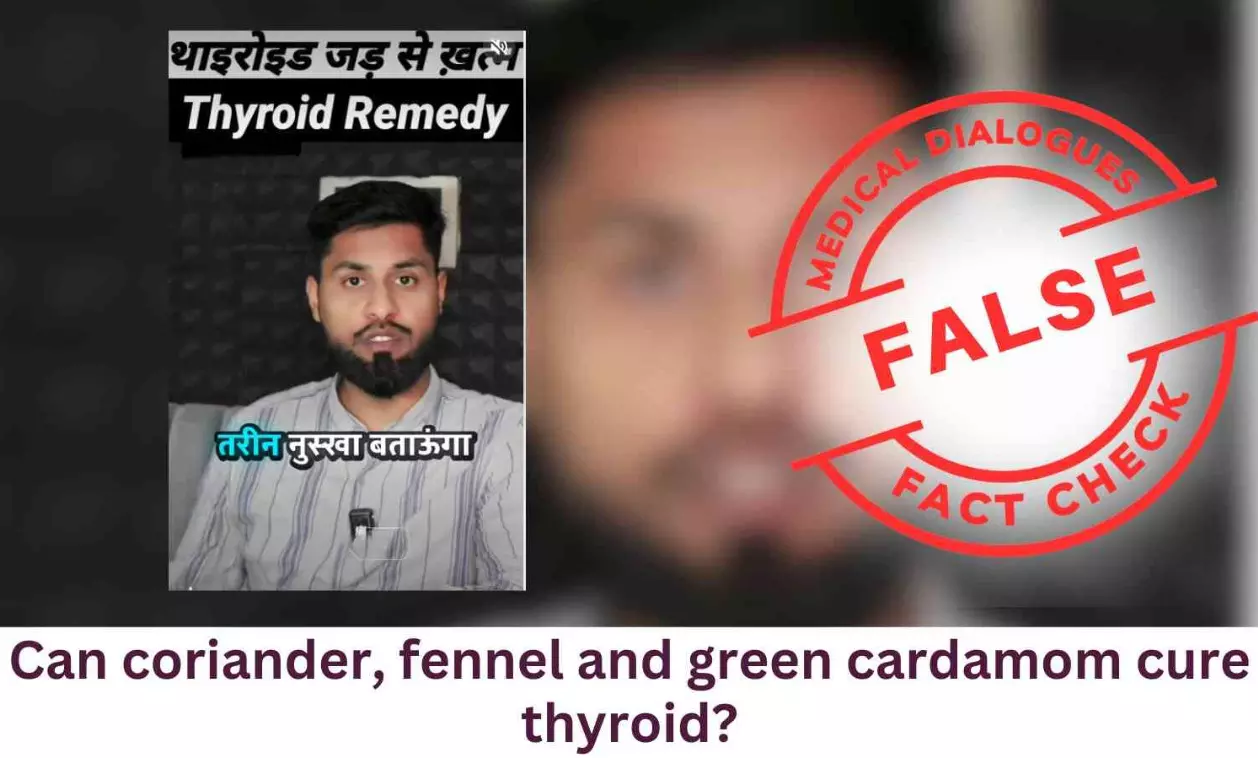


An Instagram post claims that coriander, fennel and green cardamom cures thyroid. The claim is FALSE.
Claim
The reel can be accessed here.
Fact Check
The claim by the user is FALSE.
What is Hypothyroidism?
Hypothyroidism occurs when the thyroid gland doesn't produce enough thyroid hormones to meet the body's needs. This underactivity slows down metabolic processes, leading to symptoms such as fatigue, weight gain, cold intolerance, and depression. Common causes include autoimmune conditions like Hashimoto’s thyroiditis, thyroid surgery, or radiation therapy. Without adequate thyroid hormone, many body systems are affected. Early diagnosis and treatment are essential to prevent long-term complications.
What is Hyperthyroidism?
Hyperthyroidism refers to an overactive thyroid gland that produces excessive thyroid hormones, accelerating the body’s metabolism. This condition—also known as thyrotoxicosis—can cause symptoms such as weight loss, rapid heartbeat, anxiety, and heat intolerance. It is commonly caused by autoimmune disorders like Graves’ disease, thyroid inflammation (thyroiditis), or overactive thyroid nodules (toxic nodular goiter or hot nodules). Proper evaluation and treatment are important to manage symptoms and prevent serious health issues.
Can Hypothyroidism and Hyperthyroidism Be Cured?
While hypothyroidism and hyperthyroidism are not typically curable, both conditions can be effectively managed in most patients with appropriate treatment.
For hypothyroidism, treatment involves daily use of synthetic thyroxine (T4), a hormone identical to what the thyroid naturally produces. This helps restore normal thyroid hormone and TSH levels, allowing the body to function properly.
Hyperthyroidism management depends on the cause and may include antithyroid medications, radioactive iodine therapy, or surgery. These treatments aim to control or reduce excess hormone production and relieve symptoms. With regular monitoring and medical care, patients can lead healthy, balanced lives.
Can coriander, fennel and green cardamom cure thyroid?
There is no clinical evidence or scientific research supporting the idea that coriander, fennel, or green cardamom can cure thyroid disorders. Thyroid diseases are complex endocrine conditions that typically require medical diagnosis, monitoring, and evidence-based treatment.
Coriander, widely used in cooking, is increasingly recognized for its health-promoting properties. A study by Muhammad Jawad Iqbal et al. notes that coriander possesses anti-inflammatory effects, helps regulate blood sugar, lowers cholesterol, and supports digestive health.
Dr. Sanjay Kumar Mishra, Chief Dietitian, Aditya Birla Memorial Hospital, Pune in a conversation with The Medical Dialogues Fact Check Team said, "Coriander, fennel, and green cardamom—whether used in powder form or in their natural state—are commonly known for their aroma and digestive benefits. However, there is no scientific evidence or clinical data to support their effectiveness in curing thyroid disorders. In Ayurveda, a mixture of these ingredients (about 5 grams, taken twice daily) is sometimes recommended for thyroid-related conditions. That said, such treatments are not supported or recommended in allopathic medicine."
Dr. Charushila Dhole, Endocrinologist, Aditya Birla Memorial Hospital, Pune further added, "With the rise of social media health hacks, several myths around ‘natural cures’ for thyroid disorders have gained popularity. One of the most common beliefs is that everyday spices/ingredients like coriander, fennel, or green cardamom can cure thyroid disorders. While these ingredients have digestive and metabolic benefits, there is no scientific evidence to support their role in treating or reversing thyroid conditions. Thyroid disorders are hormonal imbalances that require proper medical evaluation, regular monitoring of hormone levels, and evidence-based treatment. Relying solely on home remedies or discontinuing prescribed medication can delay diagnosis and worsen the condition. Natural ingredients may be used as supportive dietary elements, but they cannot replace medically approved thyroid treatment."
Medical Dialogues Final Take
The claim that coriander, fennel, and green cardamom can cure thyroid disorders is false. These spices may offer general wellness benefits, but they cannot treat or reverse thyroid disease. Thyroid disorders are endocrine conditions requiring medical evaluation, laboratory testing, and scientifically validated treatments.